
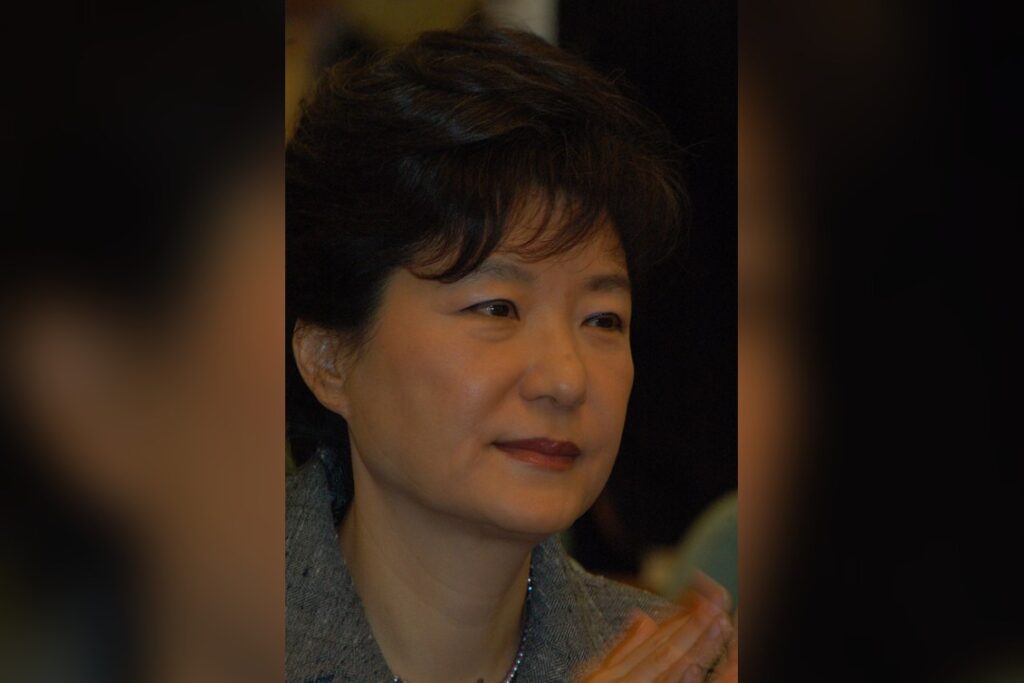
Park Geun-hye made history as South Korea’s first woman president, and then made a different kind of history as the first to be removed from office through impeachment and imprisoned for corruption. The daughter of a former military ruler, she rose to the pinnacle of South Korean politics before a sprawling influence-peddling scandal brought her down, filling the streets of Seoul with protesters and ending in a criminal conviction. She was later released after receiving a presidential pardon.
A Political Inheritance
Born in 1952, Park Geun-hye was the daughter of Park Chung-hee, the general who seized power and ruled South Korea for years as its authoritarian leader. That lineage shaped her public identity and her political base. Her early life was scarred by violence: her mother was killed in an assassination attempt aimed at her father in 1974, and her father himself was assassinated by his own intelligence chief in 1979.
After those tragedies Park withdrew from public life for years before entering politics in the late 1990s, rising through South Korea’s main conservative party. In 2012 she won the presidency, defeating Moon Jae-in, and took office in 2013 as the first woman to lead the country. Her election was hailed by supporters as a milestone, though her family history remained a source of deep division.
The Scandal That Consumed Her Presidency
Park’s downfall came through her relationship with a longtime confidante, Choi Soon-sil. Investigations revealed that Choi, who held no government position, had exploited her ties to the president for personal and financial gain, meddling in state affairs and pressuring major companies for money. The revelations struck at the heart of public trust and suggested that a private citizen had wielded improper influence over the highest office in the land.
The response was overwhelming. Enormous candlelight protests filled central Seoul week after week, with vast crowds demanding Park’s removal. The scandal was not a matter of policy disagreement; it was a case of corruption and abuse of the power entrusted to her.
The affair reached deep into corporate South Korea. Prosecutors alleged that major conglomerates had been pressured to pour money into foundations controlled by Choi, and the fallout ensnared some of the country’s most powerful business figures, underscoring the tangled ties between political power and the family-run empires that dominate the economy.
Impeachment, Conviction and Prison
In December 2016 the National Assembly voted to impeach Park. In March 2017 the Constitutional Court upheld the impeachment and formally removed her from office, the first time a democratically elected South Korean president had been ousted in this way. She was then arrested and prosecuted.
Park was convicted of serious crimes, including abuse of power, coercion and bribery, and was sentenced to a lengthy prison term. She was imprisoned, a stark fall for a figure who had occupied the presidential Blue House. The verdicts made plain that her conduct in office had crossed clear legal lines. Across multiple cases her sentences added up to more than two decades behind bars, an extraordinary reckoning for a former head of state and a measure of how seriously the courts treated the abuse of presidential power.
The Pardon
In December 2021, President Moon Jae-in granted Park a special presidential pardon, and she was released from prison at the end of that month. The pardon was framed by the government as a gesture toward national unity and reconciliation, though it remained controversial among those who felt it let a convicted former leader off lightly. It is important to state the outcome precisely: Park was convicted and imprisoned for corruption and abuse of power, and she was subsequently freed through a presidential pardon rather than through any reversal of those convictions.
Now out of prison, Park Geun-hye’s legacy is fixed by the record. She broke a barrier as the country’s first woman president, and she then became a defining example of how South Korea’s democratic institutions, its legislature, its courts and its citizens in the streets, moved to hold even the most powerful to account.




