
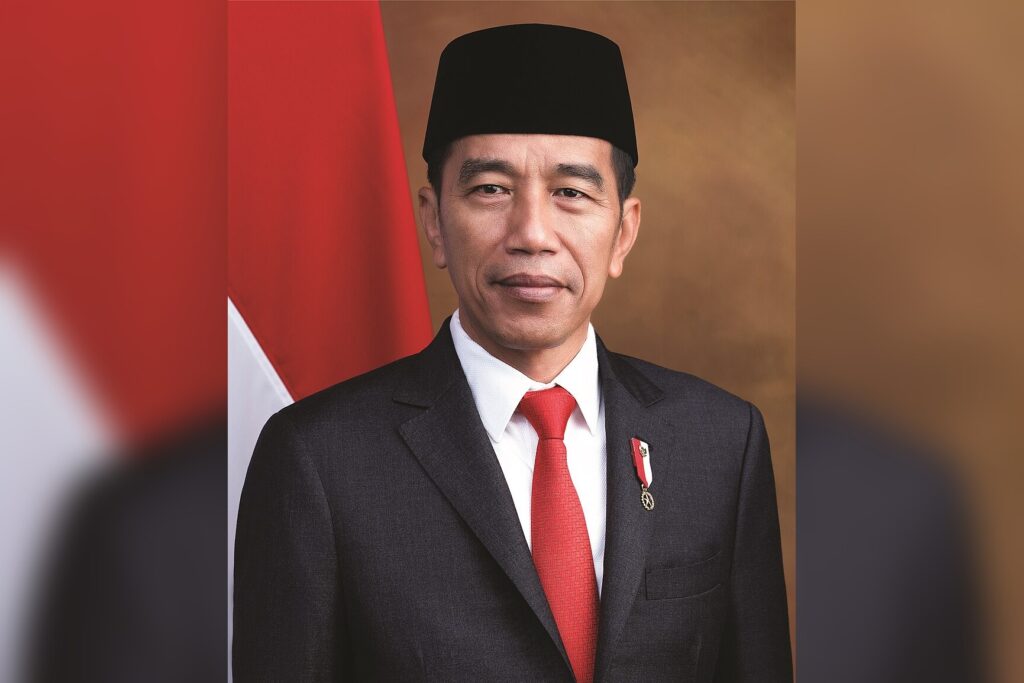
When Joko Widodo left the Indonesian presidency in October 2024, he closed one of the most remarkable political ascents in the country’s democratic history. Known universally as Jokowi, he rose from a modest background and a career selling furniture to lead the world’s third-largest democracy for a decade. His journey, from a riverside neighborhood in Central Java to the presidential palace in Jakarta, made him the first Indonesian president to come from entirely outside the nation’s political and military elite.
A Furniture Maker from Solo
Jokowi was born in 1961 in Surakarta, the Central Java city commonly called Solo, into a family of limited means. Before he entered public life, he built and ran a furniture manufacturing and export business, work that gave him a practical, hands-on sensibility that would later shape his political style. He was, in the eyes of many Indonesians, an ordinary man who understood the concerns of ordinary people, a contrast to the dynastic figures and former generals who had long dominated national politics.
Mayor, Governor, President
His political career began in 2005, when he was elected mayor of Surakarta. There he earned a reputation for clean and accessible governance, and he popularized the practice of “blusukan,” making impromptu visits to markets, neighborhoods and public offices to see conditions for himself and hear directly from residents. That style, informal and unpretentious, set him apart.
In 2012 he was elected governor of Jakarta, the sprawling capital, taking on the immense challenges of traffic, flooding and bureaucracy in one of the world’s largest urban areas. His national profile grew quickly, and in 2014, running with the PDI-P party, he was elected president of Indonesia. He won a second term in 2019, cementing his position as the dominant political figure of his generation.
The Infrastructure Presidency
Jokowi’s time in office was defined above all by an ambitious drive to build. His administration prioritized roads, toll highways, ports, airports and other infrastructure across the vast archipelago, aiming to knit together a nation of thousands of islands and to lower the costs that had long held back its economy. Among his most striking initiatives was a plan to build an entirely new capital city, Nusantara, on the island of Borneo, intended to relieve pressure on an overcrowded and sinking Jakarta.
His government also expanded social programs, broadening access to health coverage and education, and pursued high-profile projects such as Indonesia’s first high-speed rail line. Throughout much of his presidency his approval ratings remained strikingly high, a rare feat for a leader serving a full decade.
His presidency was not without criticism. Opponents raised concerns about the concentration of political power, the treatment of dissent, and the environmental and social costs of rapid development. Debates over democratic norms accompanied his later years in office. Yet his popularity among ordinary Indonesians remained high throughout much of his tenure, sustained by his image as a pragmatic builder focused on tangible results.
Leaving the Stage
Bound by the constitutional limit of two terms, Jokowi left the presidency in October 2024 and was succeeded by Prabowo Subianto, a former general and onetime rival. In a sign of Jokowi’s enduring influence, his eldest son, Gibran Rakabuming Raka, was elected vice-president on Prabowo’s ticket, a development that drew both attention and criticism over the role of political families. He departed as a figure who had reshaped expectations of who could lead Indonesia. His story demonstrated that the highest office was no longer reserved for the well-born or the military caste, and that a small-business owner from Solo could climb to the top through elections rather than connections.
Whatever the debates over his record, Jokowi’s arc stands as a powerful example of democratic mobility. A man who once measured success in furniture orders governed a nation of more than 270 million people for ten years, and in doing so he left a permanent mark on the country’s roads, its cities and its sense of political possibility.




