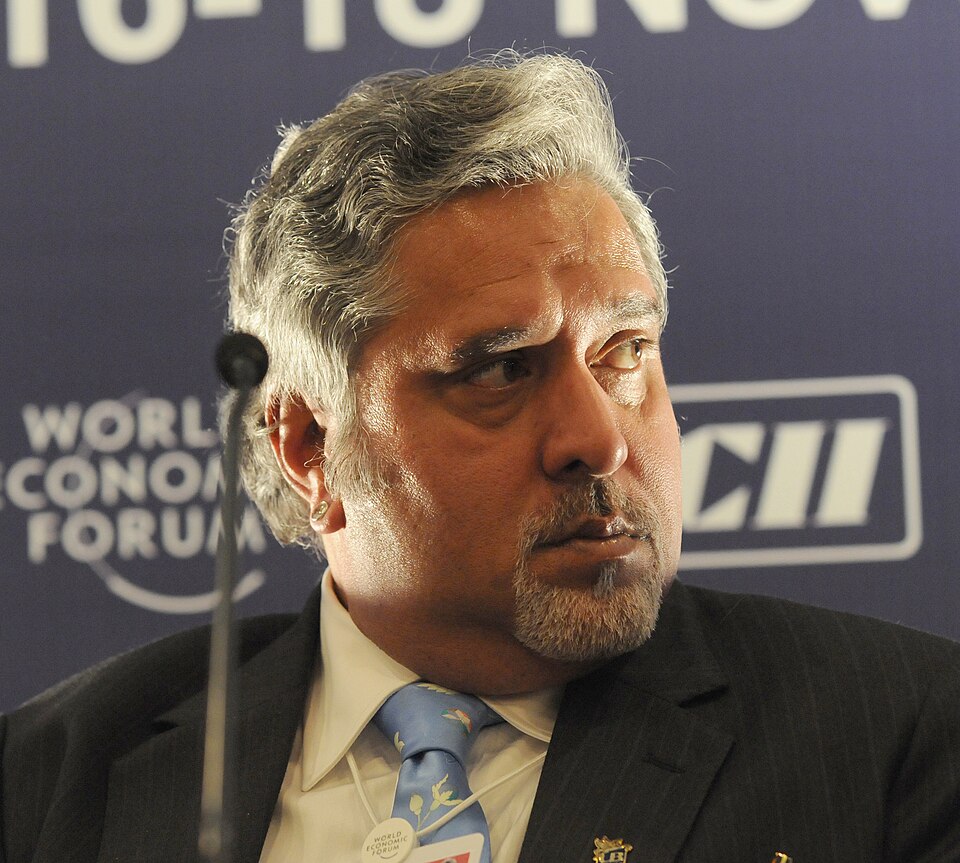
When Vijay Mallya took over the United Breweries Group in 1983, he was 28. His father, Vittal Mallya, had died suddenly, and the son became chairman of a company he had been groomed to run. By April 2016, 17 banks were chasing him for loans tied to a failed airline, and the Rajya Sabha MP was a fugitive from Indian courts in all but name.
The inheritance
United Breweries did not begin with the Mallyas. A Scotsman, Thomas Leishman, set it up in Madras in 1915 to supply beer to troops in the First World War. Vittal Mallya joined at 22, reached the board by 1947 and became chairman a year later. By 1951 the company was making liquor under the McDowell brand, the first Indian-made foreign liquor. Under him it added polymers, batteries, pharmaceuticals and foods.
He prepared his son with the best education, then sent him abroad to train with Hoechst, now Sanofi Aventis, in the United States and with Jenson & Nicholson in Britain. Vijay was given charge of beer and liquor and encouraged to look overseas.
Building the empire
In 1983 Kingfisher beer trailed Mohan Meakin’s Golden Eagle. Under Mallya, the group soon surged ahead in both spirits and beer. In 1988 he took non-resident Indian status to turn UB into a global conglomerate, and in the same year the group bought Berger Paints in a leveraged buyout, which gave it a footprint on four continents. He sold out in 1996 for a handsome sum. In 1993 he set up a software company in the United States and listed it on NASDAQ. In 2007, UB acquired the Scotch maker Whyte and Mackay and the American vodka maker Liquidity Inc.
The group moved into real estate, engineering, IT, bioengineering, aviation, media and sports. At its peak it was a $12 billion enterprise, controlling 60 percent of the Indian market. Mallya collected honours along the way: a doctorate in business administration from Southern California University, a nomination as a World Economic Forum “Global Leader for Tomorrow”, and France’s Officier de la Légion d’Honneur.
The airline
Success went to his head, in the telling of those who watched. He liked being compared to Richard Branson and loved the nickname “King of Good Times”. Though he had himself pushed the group to concentrate on liquor in the early 1990s, India’s opening up and the rush to diversify tempted him. Airlines promised glamour.
Kingfisher Airlines bought a range of aircraft types without regard to maintenance or cost consolidation, and it bled money while IndiGo, which stuck to a single aircraft type and paced its purchases, kept growing and stayed profitable. The group made a series of bad financing decisions and ran up debts of more than Rs 9,400 crore.
April 2016
The Supreme Court asked Mallya to declare all his assets by 21 April, name a date to appear and deposit a substantial sum. On 16 April the Ministry of External Affairs suspended his diplomatic passport, after the Enforcement Directorate said he had failed three times to appear before it. A Mumbai special court issued a non-bailable warrant in a Prevention of Money Laundering Act case on 19 April.
On 21 April Mallya told the Supreme Court that his family’s assets abroad totalled Rs 780 crore, and said in an affidavit that none of his overseas wealth came from bank loans to Kingfisher. His lawyer indicated he was unlikely to return soon, and a challenge to the passport revocation in the Delhi High Court was expected. The Rajya Sabha ethics committee, headed by Karan Singh, had recommended his expulsion, which would make him the 15th MP removed since 1951.