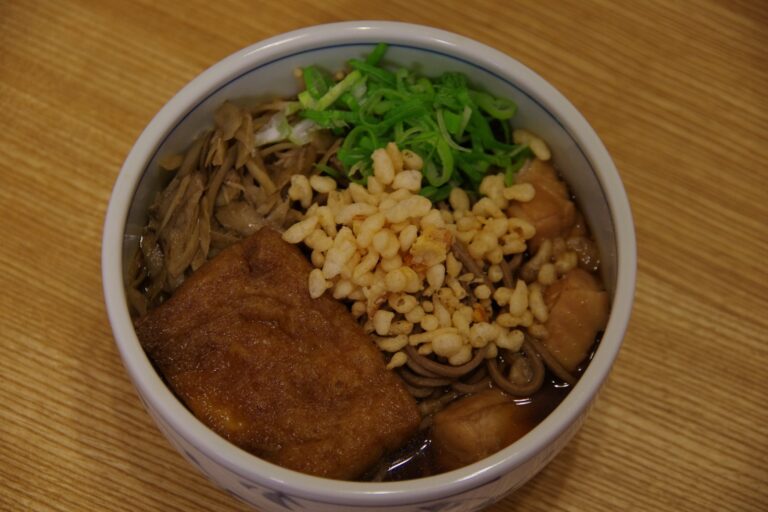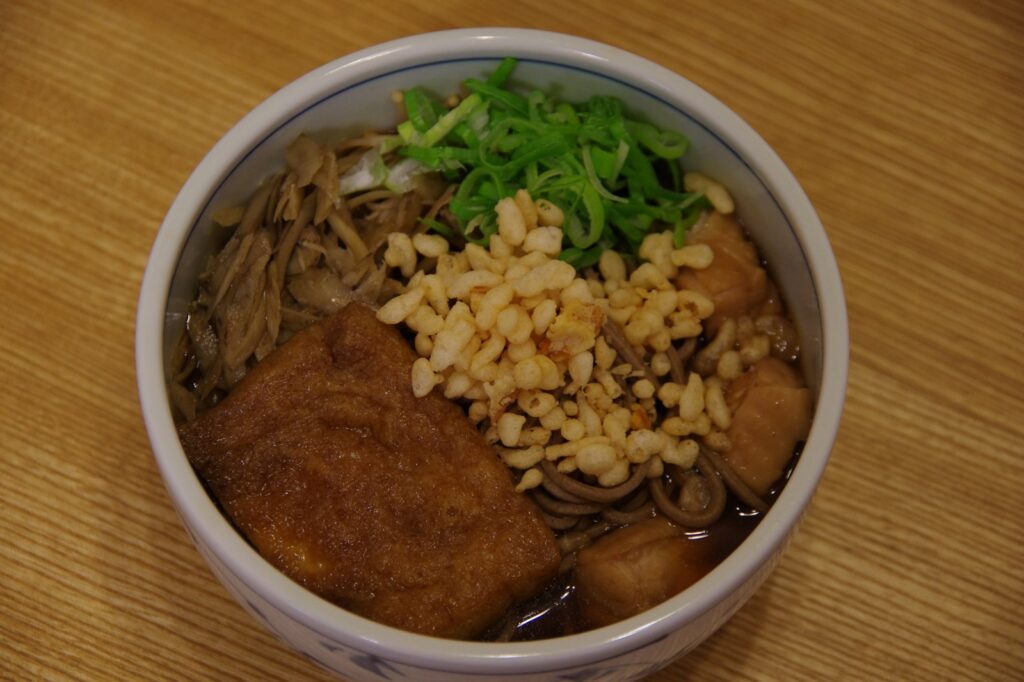
A branch of the soba chain Shibuya Soba in Tokyo’s Shibuya neighborhood recently featured croquette soba on its menu, prompting renewed discussion about one of Japan’s most divisive noodle toppings. The dish sits at the center of a culinary debate that touches on the history of the noodle itself, the science of its broth, and the regional variations that define soba culture across the country.
From Edo Staple to Modern Menu
Soba are Japanese noodles made from buckwheat flour, with varying amounts of wheat flour mixed in. Traces of buckwheat have been found at Neolithic sites in Japan dating to the Jōmon period, but the tradition of eating soba as noodles among ordinary people arose in the Edo period (1603–1868). The earliest references to buckwheat noodles appear in temple records from the 16th century, and by the mid-17th century, soba shops became common in Edo (modern Tokyo) following the Great Fire of Meireki in 1657. What began as a low-class food eventually spread across all strata of society, served hot in soup or chilled with a dipping sauce.
The Broth and the Clash
The core of the croquette soba debate lies in the broth. Soba broth is traditionally made from dashi (bonito stock) and soy sauce, creating an unmistakably classical Japanese flavor profile. Croquettes, by contrast, originate from Western cuisine and are typically paired with a Worcestershire-style sauce. Critics argue that letting a croquette soak in soba broth creates a discordant result where the two culinary traditions fail to mesh, a clash described by opponents as east and west staring awkwardly at each other across the bowl.
A Regional Bridge in Shibuya
The Shibuya Soba branch attempted to bridge this divide using a specific regional specialty: a mackerel croquette from Hidaka in Wakayama Prefecture. Hidaka-style croquettes marinate the fish in plum vinegar (ume) before mixing it with mashed potato and deep-frying. This imparts a more traditional Japanese taste than a standard potato croquette, allowing the topping to harmonize with the dashi-based broth rather than clash with it. The result, according to the account, satisfies both camps by addressing the primary flavor objection while retaining the textural appeal of the fried starch.
Regional Varieties and Culinary Science
Japan’s soba culture is deeply regional. Nagano Prefecture alone hosts numerous distinct local varieties, including Oshibori Soba in Chikuma—served with the squeezed juice of the intensely spicy Nezumi Daikon radish and Shinshu miso—and Sakaura Soba in Chikuhoku Village, which features venison and green onion in a nod to the area’s Edo-period post-town history. Other regions claim their own signatures: Iwate is known for Wanko Soba, Shimane for Izumo Soba, and Fukui for Oroshi Soba. The noodles themselves vary by ratio; Ni-Hachi soba uses 80 percent buckwheat and 20 percent wheat flour, while Juwari soba is made entirely from buckwheat. The amino acid balance of buckwheat protein is well matched to human needs and complements staples like rice and wheat.
Tradition and Adaptation
The tension between preserving tradition and adapting to new tastes extends beyond Japan. In Toronto, a new restaurant named Osoba Ni-Hachi plans to serve both Ni-Hachi and Juwari styles using Dewakaori buckwheat from Yamagata Prefecture, milled by a third-generation facility. Owner Jackie Lin stated the goal is to respect traditional ways of eating soba without feeling limited by them, highlighting the versatility of buckwheat. The Shibuya Soba experiment with the Hidaka mackerel croquette suggests a similar logic: using regional Japanese ingredients to mediate the introduction of a Western-derived topping.
Sources
- Soba
- Has a Shibuya restaurant solved the problem of one of Japan’s most divisive soba noodle toppings?
- Toronto is getting a new restaurant dedicated to buckwheat and Japanese soba
- Local roundup: North Chelmsford’s Rylie Jones nets Hockey East honor
- If you're going to Nagano, take this trip. Oshibori Soba and Oyamabokuchi, a series of soba meals in Northern Nagano|ポックリボーイ
Photo: pelican from Tokyo, Japan (CC BY-SA 2.0)