China’s ambassador to Manila wants more good news about relations with the Philippines. Jing Quan told a forum promoting ties that maritime disputes should not define the whole relationship and that positive developments deserve more attention. Trade, investment, tourism, education and cultural exchange all give the two sides interests beyond the water.
Then he added a remark that undid the effort. Jing said China could “easily win” by force in its maritime disputes but chooses peace. “But no, we will not choose to use force. We love peace,” he told reporters on the sidelines of the Diliman Dialogues. “In this region, we enjoy peace. Look at other regions: Ukraine, Gaza and even Venezuela.”
Manila’s answer
The comments came a day after Philippine Defence Secretary Gilberto Teodoro called China a “troublemaker” in the region. President Ferdinand Marcos Jr. said Jing’s words sounded “very much to me like a threat, and it is not a very diplomatic statement to make.” The Foreign Ministry then summoned the ambassador to hear its “serious concern and strong objection.” Notably, nobody in Manila seems to have read it as a gesture of restraint.
What the argument is over
Brunei, Indonesia, Malaysia, the Philippines, China, Taiwan and Vietnam all have conflicting island and maritime claims in the South China Sea. The disputes cover the Spratly and Paracel islands, Scarborough Shoal and some boundaries in the Gulf of Tonkin. Waters near Indonesia’s Natuna Islands are contested too.
The stakes are commercial. An estimated US$3.36 trillion of trade passes through the sea each year, a third of global maritime trade. For China, 80 percent of energy imports and 40 percent of total trade go that way. Claimants also want fishing rights, access to oil and gas beneath the seabed, and control of key shipping lanes.
By the 1970s the Philippines, Taiwan and Vietnam each held one or more Spratly features. By 2015 China had 8 outposts there, Malaysia 5, the Philippines 8, Taiwan 1 and Vietnam 48. For decades Manila and Hanoi were the busiest island builders, until China outpaced them from 2014 to 2016. By 2023 China had reclaimed about five square miles, and at least one of its artificial islands held military equipment.
Critics describe China’s conduct as “salami slicing” or “cabbage wrapping.” A 2016 arbitration tribunal found that China has no historical title to the waters inside its nine-dash line, without ruling on who owns any island. Both Beijing and Taipei rejected the decision. Since 2015 the United States, France and the United Kingdom have run freedom of navigation operations.
Military build-up has continued. China has built a network of facilities in the Spratly and Paracel islands, some now able to host bombers. In 2025 Vietnam began its own reclamation on features it occupies, building infrastructure for a larger military presence. China and the Philippines still have naval confrontations.
A code of conduct, perhaps
ASEAN and China have negotiated a Code of Conduct for nearly two decades, aiming at a rules-based framework to manage disputes, reduce miscalculation and prevent armed conflict. Manila, the current ASEAN chair, has signaled that agreement is at hand, with a conclusion targeted for 2026.
Analysts writing in The Diplomat warn that the salient point is substance, not the announcement. A code that merely repeats commitments to dialogue and restraint, as the existing Declaration of Conduct does, would be of limited practical value. It needs clear procedures for handling incidents, disagreements and violations, and some mechanism of accountability, or it risks becoming a declaration of intent.
Enforcement is the second problem. ASEAN works by consensus, which can complicate any collective response to a breach, especially when members have different economic and security ties to China. The third is autonomy. China may want limits on activities it considers destabilizing, such as joint exercises with the United States, and a code drafted too broadly could restrict members’ defense partnerships, including the Philippines’ growing cooperation with Australia and Japan. The Diplomat’s test is whether an agreement changes behavior at sea.
Sources
- Territorial disputes in the South China Sea
- Words as weapons in the West Philippine Sea
- South China Sea Code of Conduct: A Deal Is Not Enough
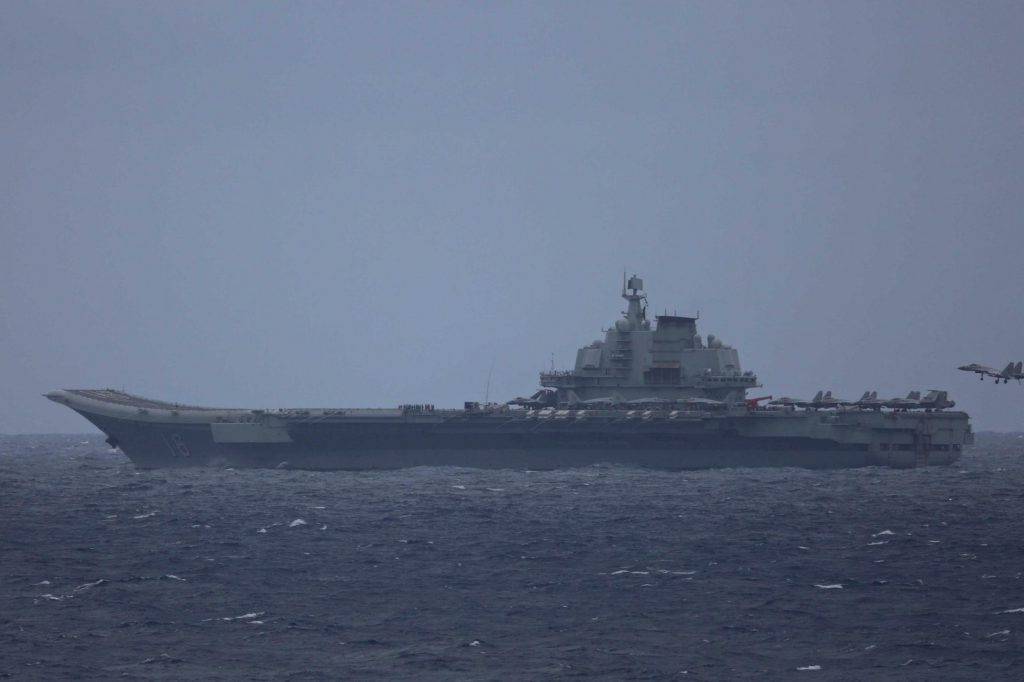
Photo: 日本防衛省・統合幕僚監部 (CC BY 4.0)