
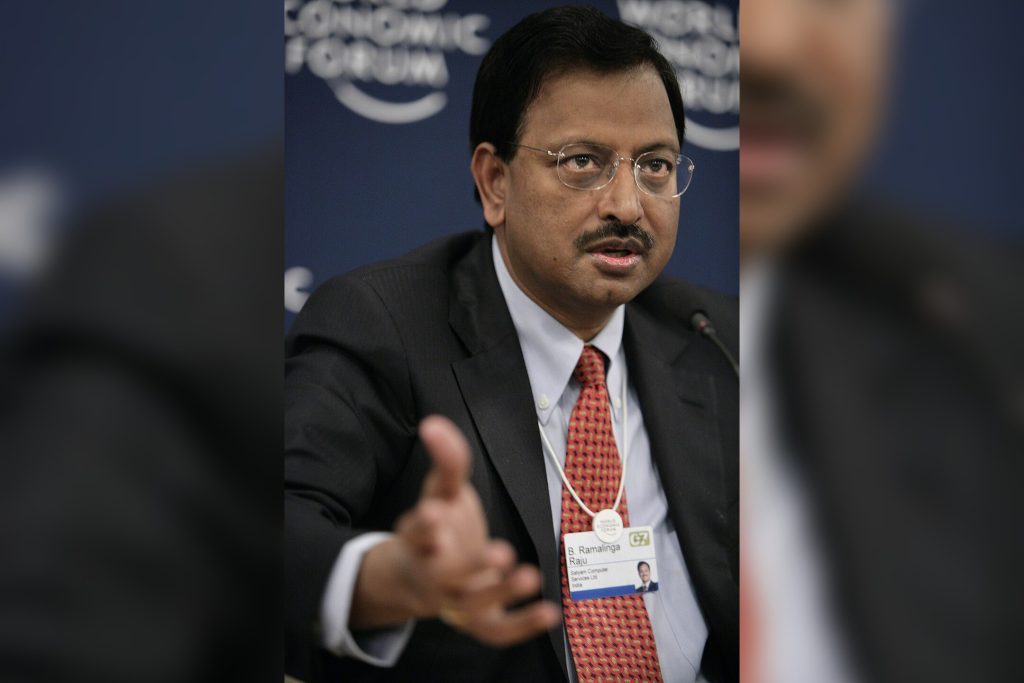
Early life
Byrraju Ramalinga Raju was born on 16 September 1954 in Bhimavaram, which was then part of Andhra State and is now in Andhra Pradesh, India. He was the eldest of four siblings in a Telugu family. He earned a Bachelor of Commerce degree from Andhra Loyola College in Vijayawada and later obtained an MBA from Ohio University in the United States.
After returning to India in 1977, Raju married at the age of twenty-two. He initially ventured into several businesses, including Dhanunjaya Hotels and a cotton spinning mill named Sri Satyam Spinning, which was funded by the Andhra Pradesh Industrial Development Corporation (APIDC) with an investment of ₹9 crore. When these ventures failed, he shifted focus to real estate and founded a construction company called Maytas Infra Limited.
Raju’s early career was marked by entrepreneurial attempts across different sectors, laying the groundwork for his later entry into the technology industry.
Rise
In 1987, Ramalinga Raju founded Satyam Computer Services in Secunderabad, launching the venture alongside one of his brothers-in-law, DVS Raju, with an initial team of 20 employees. The company began operations in the P&T colony area and gradually built its presence in the emerging IT services sector.
Satyam achieved a significant milestone in 1991 by securing its first Fortune 500 client, John Deere. Raju played a key role in navigating Indian bureaucratic processes to obtain the necessary clearances for transmitting data from India, a critical capability for offshore IT services at the time. The company went public in 1992, marking its transition into a publicly traded entity.
During the 1990s, Raju participated in the Owner/President Management (OPM) program at Harvard Business School. In a 1998 interview with the Deccan Chronicle, he articulated an ambitious vision for Satyam to operate in over 50 countries with a workforce exceeding 50,000 employees. In 1999, he launched Satyam Infoway (Sify) as the company’s internet subsidiary, positioning Satyam as an early entrant in India’s growing internet service market. Sify was later sold to Raju Vegesna.
Peak
Under Raju’s leadership as chairman and CEO, Satyam Computer Services grew into one of India’s most prominent IT firms, gaining recognition for its global client delivery model and technological capabilities. The company expanded its footprint internationally and became a symbol of India’s rising prominence in the global outsourcing industry.
Raju’s influence extended beyond business into the realm of state policy. In September 1995, shortly after Chandra Babu Naidu became Chief Minister of Andhra Pradesh, Raju developed a close working relationship with the leadership. Naidu identified information technology as a strategic priority for the state, and Raju played an instrumental role in shaping initiatives such as ‘Mee Kosam’ (“For you” in Telugu), which aimed to promote IT adoption and infrastructure. His access to the chief minister was described as unfettered and personal, with research indicating deep connections between his business activities and political engagement.
By the mid-2000s, Satyam had become a major player in the IT services landscape, with its financial reporting showing substantial growth. The company’s total assets on the balance sheet tripled between 2003 and 2007, reaching $2.2 billion, a period during which Raju remained at the helm of the organization.
Turning point
The turning point in Ramalinga Raju’s career came in December 2008, when a proposed acquisition involving Maytas Infra Limited raised serious corporate governance concerns among investors. The deal, which would have seen Satyam acquire Maytas—a company linked to Raju’s family—was met with widespread criticism due to perceived conflicts of interest and lack of transparency. The announcement triggered a sharp decline in Satyam’s share price and intensified scrutiny of the company’s financial practices.
In January 2009, Raju publicly admitted that Satyam’s accounts had been falsified over a period of years. He resigned from the company’s board following his confession to embezzlement, stating that he had manipulated financial records to inflate revenues, margins, and cash balances. Specifically, he acknowledged inflating cash and bank balances by approximately ₹5,040 crores (about US$1 billion), which were non-existent. The total amount involved in the fraud was later stated to be ₹7,136 crores (approximately US$1.5 billion).
The Indian affiliate of PricewaterhouseCoopers, Satyam’s statutory auditors, had certified the company’s financial statements, including the claim of $1.1 billion in cash, when the actual amount was later revealed to be only $78 million. This revelation exposed a massive failure in audit oversight and intensified public and regulatory outrage over the scale of the deception.
Legacy/aftermath
Following his resignation and public admission, Ramalinga Raju faced legal proceedings related to the Satyam scandal. In 2015, he was convicted of corporate fraud, a verdict directly linked to the collapse of Satyam Computer Services as an independent entity. The conviction resulted in a criminal penalty of seven years in prison, as recorded in official sources.
Despite the downfall of Satyam, Raju has remained associated with certain business ventures. Another technology firm, Brane Enterprises, which has familial connections to Raju, continues to operate with him in an active mentorship role. This firm has come under scrutiny for sudden layoffs and allegations of unpaid wages affecting over 2,500 employees, according to reports cited in the source material.
Raju’s personal life includes his marriage to Nandhini in 1976, with whom he has two children: Teja Raju and Rama Raju. Teja Raju is married to Divya, a Bharatanatyam dancer, while Rama Raju is married to Sandhya Raju, a Kuchipudi dancer and daughter of P. R. Venkatarama Raju, managing director of Ramco Cements. These familial details are noted in the biographical record but are distinct from his professional and legal history.
Wider significance
The Satyam scandal, orchestrated under Ramalinga Raju’s leadership, stands as one of the most significant corporate fraud cases in India’s history. It exposed critical weaknesses in financial oversight, auditor accountability, and corporate governance practices within Indian companies listed on stock exchanges. The episode prompted widespread reforms in regulatory frameworks, including stricter auditing norms and enhanced disclosure requirements aimed at preventing similar failures.
The case also had a profound impact on global perceptions of Indian IT firms, raising concerns about transparency and ethical standards in an industry that had come to symbolize India’s economic modernization. The collapse of Satyam led to its eventual acquisition by Tech Mahindra, which rescued the company from insolvency and preserved thousands of jobs, though under new management and ownership.
Beyond the immediate fallout, the scandal prompted broader discussions about the concentration of power in family-run enterprises, the risks of blurred lines between business and political influence, and the importance of independent board oversight. Raju’s conviction serves as a judicial acknowledgment of the deliberate nature of the financial misconduct, reinforcing the principle that corporate leadership remains accountable for the integrity of financial reporting.
Sources
https://en.wikipedia.org/wiki/Ramalinga_Raju | https://www.news18.com/news/business/all-10-including-ramalinga-raju-and-his-brother-found-guilty-in-satyam-computer-accounting-fraud-case-980836.html




