
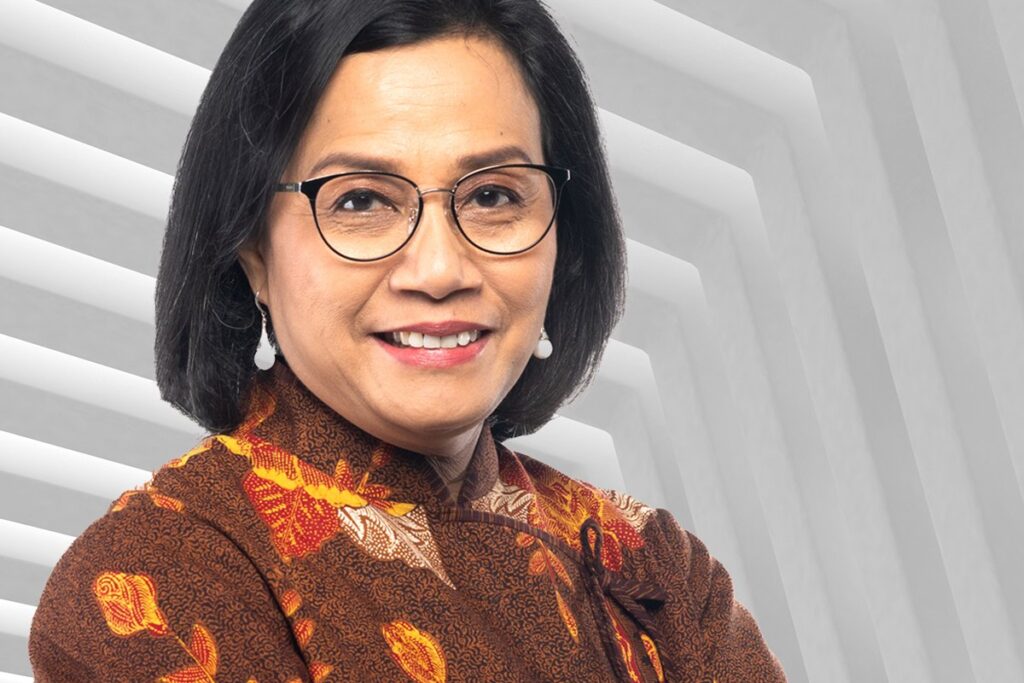
Sri Mulyani Indrawati was the only person to serve as Indonesia’s finance minister under three successive presidents. Her path ran through classrooms, the IMF and the World Bank, and it ended in September 2025 with a mob at her front door.
Roots and training
She was born on August 26, 1962, in Tanjung Karang, Lampung, on Sumatra, the seventh child of two university lecturers. She earned a degree in economics from the University of Indonesia in 1986, then a master’s in policy economics in 1990 and a PhD in economics in 1992 from the University of Illinois at Urbana-Champaign.
Back home, she worked as an expert for the Economic Planning Agency in 1994 and 1995, directed a master’s program in planning and public policy at the University of Indonesia from 1996 to 1997, and lectured in economics there until 2001. She then moved to Atlanta as a consultant for the U.S. Agency for International Development on programs to strengthen Indonesia’s autonomy, and in 2002 lectured as a visiting professor at Georgia State University’s Andrew Young School of Policy Studies. From 2002 to 2004 she sat on the IMF board as executive director for 12 Southeast Asian economies.
First term at the Finance Ministry
President Susilo Bambang Yudhoyono appointed her finance minister in 2005. One of her first moves was to fire 150 corrupt tax and customs officers and penalize another 2,000. She also raised pay for officials judged to be clean, so that bribes would tempt them less. Foreign direct investment reached $8.9 billion in 2005, up from $4.6 billion in 2004. Euromoney named her finance minister of the year in 2006.
Indonesia grew 6.6 percent in 2007, its fastest since the 1997 Asian crisis, and 6 percent in 2008 despite the Great Recession. By January 2009, public debt had fallen to 30 percent of GDP from 100 percent in 1999. Between 2005 and 2010, the number of income taxpayers rose from 4.35 million to nearly 16 million.
Bank Century and the exit
Her 2008 support for the Bank Century bailout, which cost Rp6.76 trillion ($737 million), brought her the sharpest criticism. Golkar, which controlled the legislature, accused her of criminality, and the House of Representatives held a non-confidence vote on the bailout warrant. She defended the rescue as necessary and denied wrongdoing.
She resigned in May 2010 and joined the World Bank as one of three managing directors. The Indonesia Stock Exchange fell 3.8 percent on the news. Many people speculated that political pressure, especially from tycoon Aburizal Bakrie, lay behind her departure.
Return and final months
President Joko Widodo reappointed her in 2016. FinanceAsia named her the Asia-Pacific’s best finance minister three years running, from 2017 to 2019, and Forbes listed her several times among the world’s 100 most powerful women. In 2020, during the pandemic, she announced a 10.3 trillion rupiah stimulus package and issued a 50-year bond, the longest in Indonesian history.
President Prabowo Subianto kept her for a third consecutive term in October 2024. In the sovereign wealth fund Danantara, launched on February 24, 2025 with an initial Rp300 trillion (about US$20 billion), she was listed among its leadership alongside chairperson Erick Thohir.
Criticism of her budgeting and tax policy grew. During the August and September 2025 protests, mobs looted her home in South Tangerang. On September 8, 2025, Prabowo dismissed her and named Purbaya Yudhi Sadewa as her successor.
Sources
- Sri Mulyani
- IsDB chief in Jakarta: A US$2.56 billion plan with a missing climate pillar
- Danantara: What to know about Indonesia's sovereign wealth fund
Photo: Kementerian Keuangan Republik Indonesia (Public domain)




