
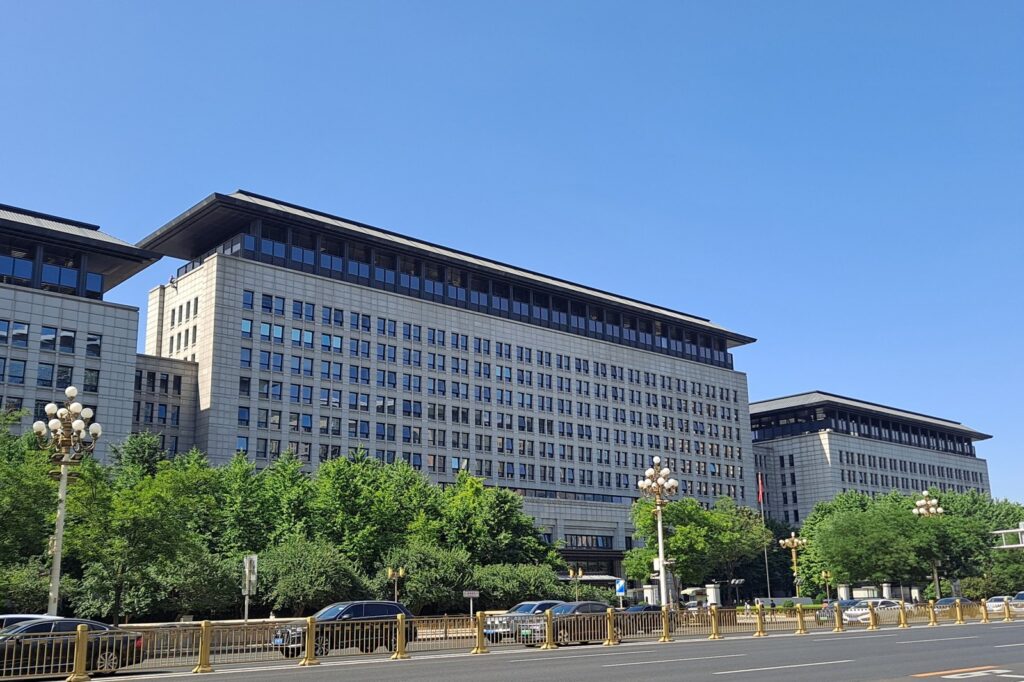
China’s Ministry of Commerce has published a draft plan to limit exports of 40 key technologies across artificial intelligence, photovoltaics and biomedicine. Fourteen would be banned outright. The other 26 would need official approval. According to the ministry, none of this is final: the bans and approval rules are still a draft, and public comments are open until November 15.
One piece is already in force. Since the announcement went out on Friday, companies must register any affected technology transfer, including the sale of intellectual property rights and the granting of licences abroad.
What is covered
The plan centres on 23 AI technologies, among them methods for large AI models and for AI agents, which carry out tasks largely on their own. It also reaches manufacturing processes for solar cells and techniques for cell and gene therapies.
There are carve-outs. Access to AI services through apps and websites stays exempt, as do AI technologies already publicly available. In solar, individual production facilities fall under the controls, but finished solar modules do not.
The stated reasons
The ministry cited security. AI could be used to attack important infrastructure, it said, and solar technology has uses in space and defence, which is why outgoing transfers need careful review. Officials said the measures are not aimed at any particular country or company, and that claim is the ministry’s own; the plan itself does not say who is expected to be most affected.
A pattern, and a rivalry
Beijing has done this before. In 2025 it restricted certain processes for making battery materials and extracting lithium, and it introduced approval requirements for certain rare earths and products made from them. According to state and international reports, the new move sits inside a technology rivalry with the United States, which in turn controls exports of advanced AI chips to China.
Sources
- China to limit exports of 40 key technologies, including AI and solar
- Artificial intelligence
- FSB finalises sound practices for the responsible adoption of artificial intelligence (AI)
Photo: EditQ (CC BY-SA 4.0)




