
MANILA, September 24 — The Philippines is racing to turn a US-backed industrial initiative into a working manufacturing hub before political clocks in Manila and Washington run down, with much of the project still on the drawing board. The Pax Silica initiative, launched by President Donald Trump’s administration, is designed to diversify American supplies of critical minerals and semiconductors.
Manila wants to position the country as a manufacturing base for companies looking to cut their dependence on China, which dominates the supply and processing of several critical minerals used in advanced manufacturing.
A rent-free plot, and little else
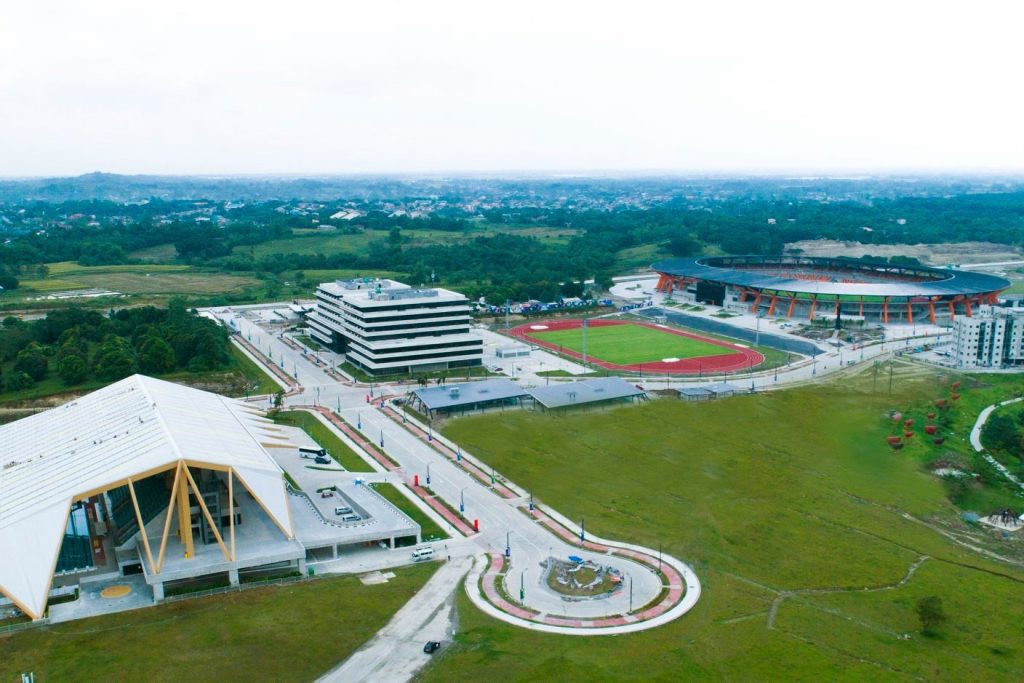
On April 16, Washington accepted Manila’s offer to convert a 1,600-hectare (4,000-acre) plot of land — rent-free for two years — into the Pax Silica coordination office. The site sits inside the 9,450-hectare New Clark City, itself part of the larger Clark Freeport and Special Economic Zone, a master-planned development envisioned to host government offices, sports facilities and other major infrastructure.
Joshua Bingcang, president and chief executive of the state-owned Bases Conversion Development Authority (BCDA), which manages the area, told This Week in Asia on Monday that nearly everything in the hub — since renamed the Clark Advanced Manufacturing Park — was still in the planning stage. One foreign company has signed on as a tenant, he said, though he would not name it.
Speaking to the Foreign Correspondents Association of the Philippines on Monday, Bingcang said the company signed a lease agreement the previous week. It will begin hiring local engineers by October to be trained in Taiwan, he said, describing them as the people who would set up the machines and factory lines as part of technology transfer.
The political clock
Philippine President Ferdinand Marcos Jnr is due to leave office in 2028, and Trump faces midterm elections in November that could change control of Congress. Jonathan Ravelas, a former chief market strategist at BDO, the Philippines’ largest bank, said the project needs to move quickly to lock in agreements and infrastructure that can survive political change.
“The faster the government can institutionalise agreements and deliver infrastructure, the lower the political risk,” said Ravelas, now managing director of eManagement for Business and Marketing Services, in an interview with This Week in Asia. The open question is whether Manila can deliver the reliable power, infrastructure and regulatory certainty investors need before the political window closes.
Bingcang argued the initiative can outlast administrations because the BCDA has a record of pursuing major projects across them. “Our projects started two or three administrations ago, and they’ve seen the impact, so it’s really a no-brainer on the value we bring,” he said. Pax Silica “transcends any political colour or any terms,” he added, because it is long-term.
“The Philippines has a good track record of implementing multi-administration projects.” Alvin Camba, a trained political economist and sociologist who is chief scientist at Lyvi, a US defence technology company, said the issue is “extremely sensitive” in the Philippines but should weather political winds in Washington. “Pax Silica is not politically sensitive in the US.
I don’t expect it to be something that Democrats would reverse if they happen to take both houses in November 2026 or win the presidency in 2028,” he said. He pointed to near bipartisan consensus in Washington on taking a tougher stance on China, alongside pressure from big tech companies to expand their AI models and infrastructure worldwide.
“So Pax Silica is really supported by both sides of this equation: the Department of [Defence] and…” What to watch next is whether the unnamed tenant’s hiring and training plans proceed on schedule, and whether Manila can convert the rent-free plot into functioning industrial capacity before the 2028 transition.




