
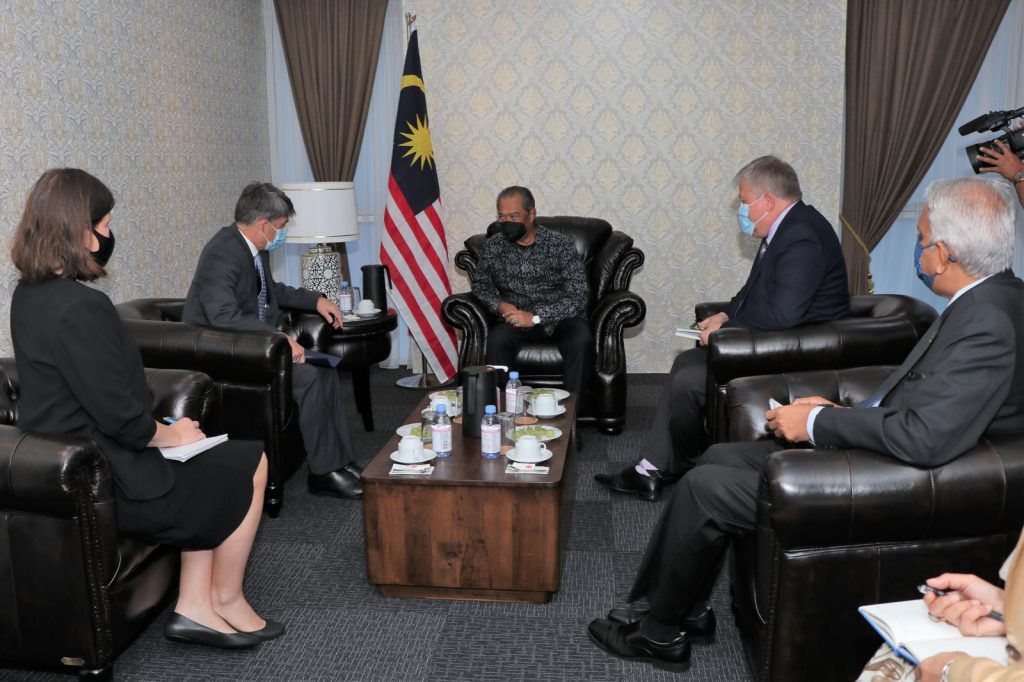
On March 18, 2020, Prime Minister Muhyiddin Yassin ordered 32 million Malaysians to stay home. The directive was immediate. No gatherings.
No travel. No religious services, sports events, or cultural activities.
Supermarkets, banks, and pharmacies stayed open. Everything else shut. International borders closed to most foreign passengers; returning Malaysians faced a mandatory 14-day self-quarantine.
The government called it a Movement Control Order. It was a lockdown.
And it arrived with no warning period, no phased rollout, no exceptions for businesses to adjust. Behind the order lies a calculation. The prime minister stated that waiting for the situation to worsen would be detrimental to public health.
He argued that restricting movement and curbing the spread of the virus were imperative steps to prevent a healthcare collapse. That is the official rationale: act now, hard, before the hospitals overflow. But the lockdown does not exist in a vacuum.
Malaysia’s economy was already under pressure before the virus. The global supply chain had been disrupted.
Tourism had dried up. Commodity prices were shaky. Now, with all non-essential businesses forced to close, the economic machinery grinds to a halt.
Small shops, hawker stalls, construction sites, manufacturing lines — all dark. Workers who live paycheck to paycheck have no paycheck coming.
The government has announced no stimulus package alongside the order. No cash aid. No wage subsidy.
Nothing yet. Datuk Dr. Zainal Ariffin, president of the Public Health Specialist Association, publicly disagreed with the severity of the approach. He said a full lockdown was unnecessary and would only trigger panic while deepening the existing economic crisis.
His alternative: mobilize security agencies like the People’s Volunteer Corps and the police to track contacts and contain the virus without shutting down the entire economy. That argument went unheard.
The prime minister chose the blunt instrument. The social consequences are immediate. Families are confined to homes that may be cramped.
Multi-generational households, common in Malaysia, now have no escape from each other. Domestic tensions will rise.
For those without reliable internet, remote work and online schooling are fantasies. The divide between the connected and the disconnected sharpens overnight. Religious life stops.
Mosques, temples, and churches empty. Friday prayers, Sunday services, temple festivals — all canceled. For a multi-faith society where communal worship is central, this is a profound disruption.
No one knows when it will resume. The lockdown runs through the end of March.
That is two weeks. But no one in authority has said what happens after. Does the order end on April 1?
Does it extend? Is there a plan for gradual reopening?
The government has not offered one. The silence suggests that the policy is reactive, not strategic. A stopgap, not a strategy.
Malaysians are now waiting. Waiting to see if the infection curve flattens. Waiting to see if the economy can survive two weeks of stasis.
Waiting to see if the government will offer relief. Waiting to see if the lockdown works — or if it was, as Dr. Zainal Ariffin warned, an overreaction that deepened a crisis without solving it.
The order is law. Compliance is mandatory. But the debate over its necessity will not end with the month.
The cost — human, economic, social — is still being counted. And the question of what comes next remains unanswered.




