
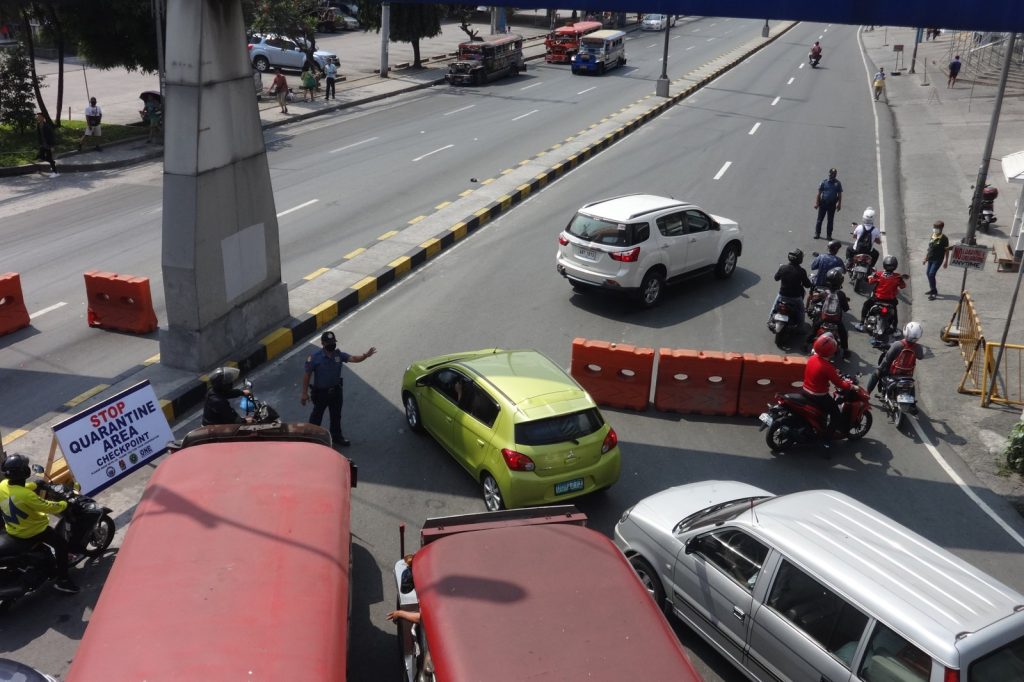
The enhanced community quarantine that began March 16 across Luzon presents a stark dilemma for millions of Filipino families: comply with the order to slow the coronavirus, or face the immediate reality of empty stomachs. President Rodrigo Duterte’s directive mandates strict home confinement, halts all transportation, and permits only one person per household to leave for supplies—and that person must purchase enough to last a full week. Uniformed personnel now patrol streets to enforce these rules. For minimum wage workers, the arithmetic is brutal.
No work means no pay. Muntinlupa Representative Ruffy Biazon highlighted this on social media, noting that some constituents cannot afford even a quarter of a bottle of soy sauce, let alone a week’s supply.
His observation reflects a cold fact: many Filipinos live below the poverty line, surviving on daily wages. A week’s worth of stocked food is not a normal expense—it is an impossibility. The quarantine guidelines force that impossibility on those who buy cooking oil by the small sachet, purchase rice in single-kilogram bags, and count coins to get through each day.
Slum dwellers face a double bind. Media reports have documented that tight quarters and poor sanitation make social distancing nearly impossible in these communities.
The same conditions that raise infection risk also make stockpiling absurd. There is no space to store a week of supplies, and no money to buy them in the first place. The Department of Labor and Employment has acknowledged the problem, but as of the quarantine’s start, no concrete relief mechanism has reached the households that need it most.
The government’s order came down fast, but the machinery to cushion its blow did not. Food access is only one layer.
Healthcare access is another. The quarantine restricts movement to essential services, raising difficult questions for workers with chronic conditions or parents with sick children: what counts as essential, and who decides? Uniformed personnel now enforce the rules, a presence meant to ensure compliance.
For low-income communities with a history of tense relations with authorities, that presence also raises the stakes. A violation—real or perceived—can mean trouble beyond the health crisis.
The enhanced community quarantine covers the entire island of Luzon, the country’s largest and most populous. It includes Metro Manila, the economic heart. Shutting it down means shutting down the engine that drives income for millions.
Congressman Biazon’s tweet captured the gap between policy and survival. The government sees a health measure.
A minimum wage worker sees a lost day’s pay. A family in a slum sees an empty shelf. No one is arguing against the need to contain the virus. The coronavirus is deadly, and the healthcare system is fragile.
But the quarantine’s design assumes a baseline of resources that many Filipinos simply do not have. That gap is where the real story sits.
The quarantine will slow the virus. It will also accelerate hardship. The question now is whether the government can close that gap—with food aid, with cash transfers, with something—before the order does more damage than the disease.




