
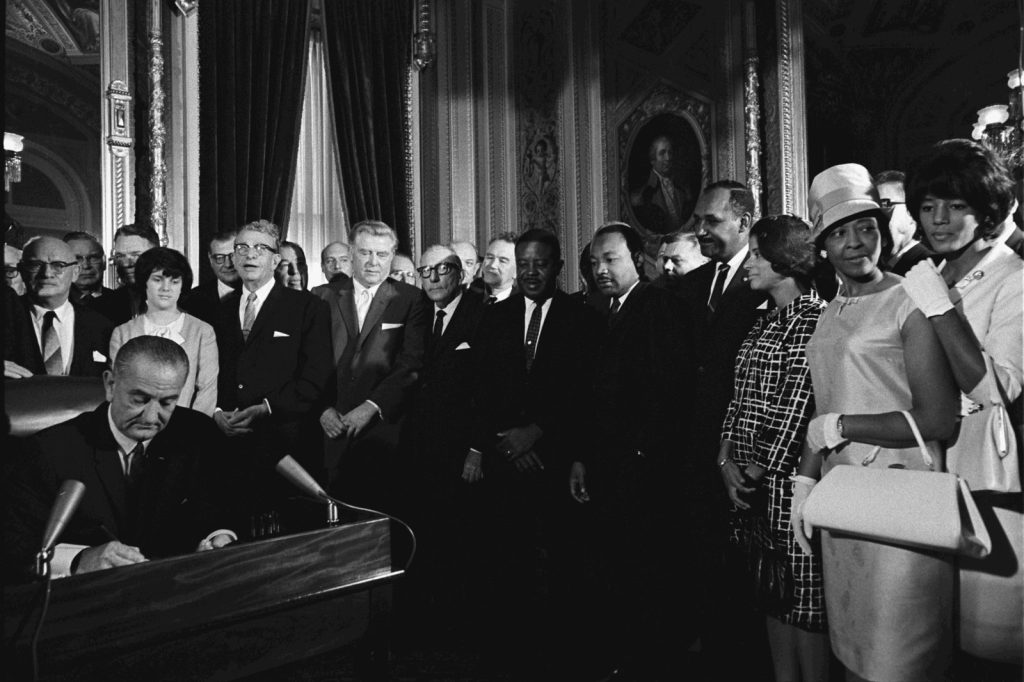
WASHINGTON, October 5 — The Voting Rights Act of 1965 remains a cornerstone of federal civil rights enforcement, though its core preventive mechanism has been inactive since 2013. Signed into law by President Lyndon B. Johnson on August 6, 1965, the legislation was designed to dismantle state and local barriers that prevented African Americans from voting, despite the 15th Amendment’s guarantee.
It banned racial discrimination in voting, focusing on tactics like literacy tests and poll taxes historically used to disenfranchise Black voters in the South. A central feature, Section 5, once required jurisdictions with a documented history of discrimination to obtain federal preclearance before altering voting laws, a process overseen by the U.S. Attorney General or a three-judge panel in the District of Columbia.
This requirement depended on Section 4(b)’s coverage formula, which identified areas based on past practices. In Shelby County v. Holder (2013), the Supreme Court ruled 5-4 that Section 4(b) was unconstitutional because it relied on data over 40 years old, making Section 5 unenforceable unless Congress updated the formula.
As of 2024, no such update has been enacted, leaving the preclearance requirement inoperative. Despite this, Section 2 of the Act continues to provide nationwide protection against voting practices that deny or abridge the right to vote based on race, color, or language minority status.
It allows individuals to challenge discriminatory laws in federal court and has been used in cases involving voter ID requirements, redistricting, and cuts to early voting. The 1975 amendments expanded the Act’s reach to include Hispanic, Asian, Native American, and Alaskan Native voters, responding to documented barriers faced by language minorities. The Act also authorized federal examiners to register voters and federal observers to monitor elections in covered jurisdictions.
In the years after its passage, African American voter registration in the South rose sharply — in Mississippi, Black registration increased from 6.7% in 1964 to 59.8% in 1967. Congress renewed the Act in 1970, 1975, 1982, and 2006, each time extending its special provisions. The 2006 reauthorization, signed by President George W.
Bush following extensive hearings, extended the Act for 25 years. As of today, the Voting Rights Act is still recognized as one of the most effective civil rights laws in U.S. history, having significantly boosted minority political participation and representation.
Its legacy continues to influence national debates over voting access, election integrity, and racial equity, with Section 2 serving as the primary remaining tool for challenging discriminatory voting laws in the absence of restored preclearance. What comes next depends on whether Congress will act to revive a modern coverage formula — a move that could restore the Act’s full preventive power ahead of future elections.




