
BAKU, October 4 — Azerbaijan is deepening its strategic engagement with Central Asia, positioning itself as a critical western link in the region’s political and economic integration, according to recent foreign policy developments. This shift reflects a broader recalibration in Baku’s approach, moving beyond historical and cultural ties to treat Central Asia as a principal geopolitical priority. The Caspian Sea is now framed not as a divider but as a unifying space that enables regional cooperation, economic potential, and historical collaboration.
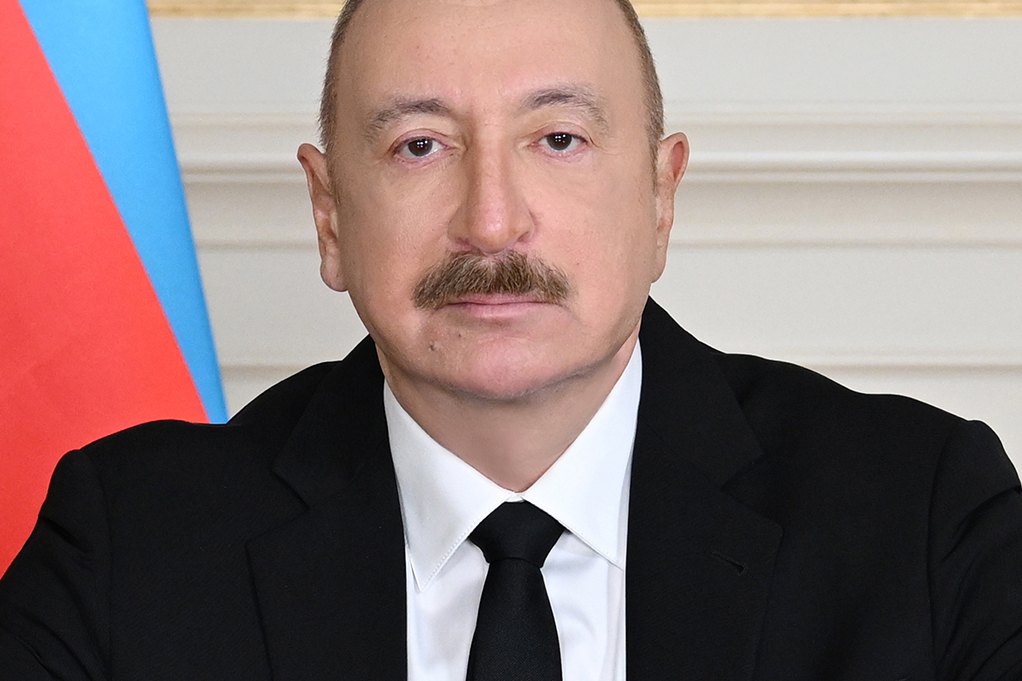
President Ilham Aliyev has described Azerbaijan and the Central Asian states as forming a single historical, cultural, geographical and geopolitical space, emphasizing the sea’s role in fostering integration rather than separation. Central Asia’s growing importance to Azerbaijan stems from four interrelated factors.
First, it provides strategic depth to the east of the Caspian and access to Asian markets, including China. Second, the economic potential of Kazakhstan, Uzbekistan, Turkmenistan, Kyrgyzstan and Tajikistan makes Azerbaijan a natural partner in transport, energy and investment initiatives. Third, landlocked Central Asian states increasingly rely on Azerbaijan’s infrastructure — including its port, railway, road and shipping networks — to secure alternative export and transit routes to global markets.
Fourth, stronger political coordination among Turkic states enhances Azerbaijan’s regional maneuverability and diplomatic flexibility. In turn, Azerbaijan serves as one of the shortest strategic bridges for Central Asian states seeking reliable, diversified access to Europe and beyond.
Through the Caspian Sea, the Baku International Sea Trade Port, the Baku–Tbilisi-Kars railway and connections to Türkiye, Baku offers westward routes to European markets. It also provides southward alternatives toward Iran, the Persian Gulf, the Black Sea basin and the Mediterranean, reducing dependence on any single corridor. The Trans-Caspian International Transport Route, known as the Middle Corridor, has gained heightened significance since 2022.
Once viewed primarily as a China-Europe land bridge, it is now recognized as an economic mechanism that boosts regional trade among Azerbaijan, Kazakhstan, Georgia and other participating countries. Its relevance has grown amid global supply chain disruptions, risks to traditional northern routes linked to the Russia-Ukraine war, rising demand for Europe-Asia alternatives and efforts to avoid overreliance on single transport arteries.
Long-term viability is supported by ongoing infrastructure upgrades, rising freight volumes, port expansion and the development of common tariff arrangements and digital customs systems, signaling a durable regional economic framework. Azerbaijan’s engagement with Central Asia also aligns with its broader foreign policy principle of geographic and political diversification.
By maintaining balanced relations with Europe, the United States, Türkiye, Russia, China, the Middle East and Central Asia, Baku aims to avoid unilateral dependence on any single power center. This multi-vector approach treats Central Asia as a sphere of partnership grounded in shared interests, sovereignty and mutual benefit, not rivalry. Political compatibility is reinforced by mutual commitments to territorial integrity, state sovereignty, non-interference and multi-vector diplomacy.
The Azerbaijan-Central Asia relationship operates beyond traditional bilateralism through functional regionalism. Cooperation spans transport, energy, trade, investment, digital communications and humanitarian ties, creating a common sphere of activity without forming a supranational union or compromising national sovereignty.
Instead, this model strengthens interdependence and resilience while preserving independent foreign policies. Ultimately, the partnership is defined by geopolitical and geoeconomic complementarity. Central Asia contributes energy resources, critical raw materials, agricultural products, industrial goods and expanding consumer markets.
Azerbaijan, in turn, provides transport logistics, energy transit capabilities and infrastructure that link the region to wider Eurasian networks. As global trade patterns evolve, this evolving axis will remain a focal point for Baku’s efforts to expand influence, enhance connectivity and secure long-term strategic advantages across Eurasia. Watch for further infrastructure investments and diplomatic initiatives aimed at deepening integration along the Middle Corridor and beyond.




