
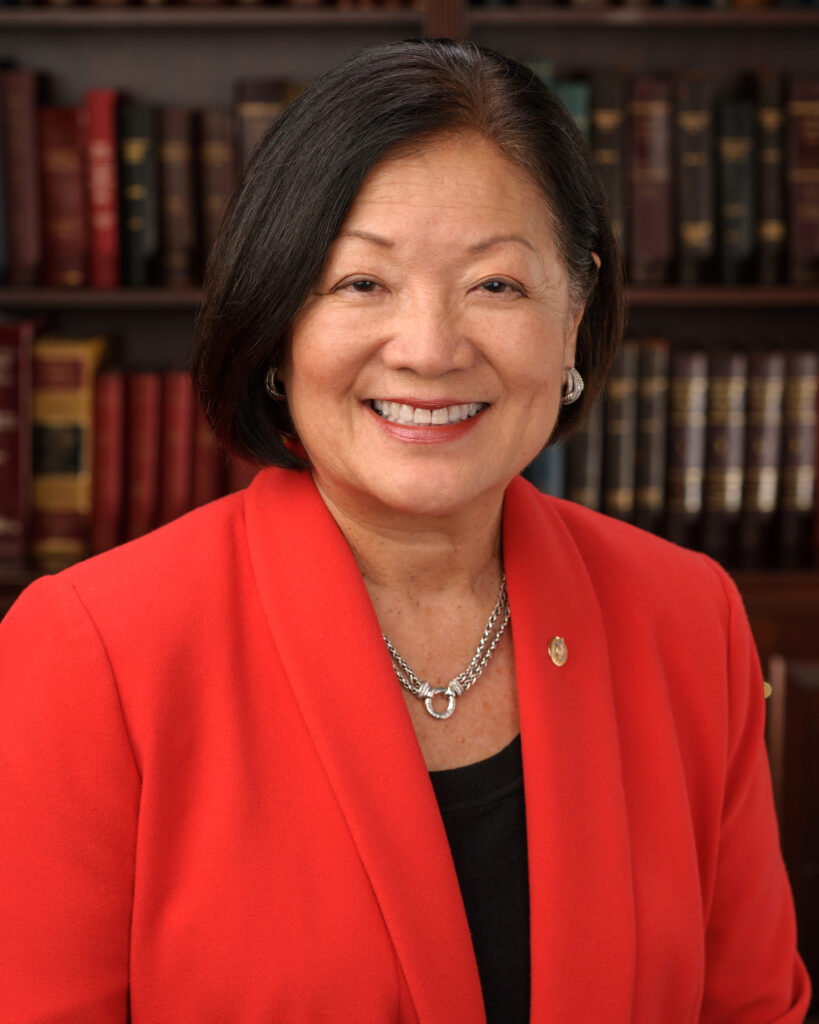
On This Day: Senator Mazie Hirono Joined Democratic Bloc in Blocking Stop Insider Trading Act
On September 30, 2026, Senator Mazie Hirono (D-HI) was among the 47 members of the Democratic caucus, including independents Angus King (ME) and Bernie Sanders (VT), who voted against cloture on H.R. 7008, the “Stop Insider Trading Act.” The Senate held Roll Call Vote #253 during the 119th Congress, 2nd session. Cloture requires 60 votes to advance a bill to debate and a final vote.
The motion failed 53-47, with all 53 “yes” votes coming from Republicans and all 47 “no” votes from Democrats and their caucus allies. Because cloture was not achieved, the motion to proceed to the bill was blocked, and H.R. 7008 did not advance to a final passage vote. This procedural outcome is accurately described as blocking or filibustering cloture, not as rejecting the bill on its merits after full consideration.
What the Senate Actually Voted On
H.R. 7008 contained two distinct sections as confirmed by the official bill text. Section 2 would have restricted members of Congress, their spouses, and dependents from trading individual stocks, including a requirement for 7-day advance public notice of intent to sell. Section 3, titled “Requiring Voters to Provide Photo Identification,” would have mandated that in-person voters in federal elections present valid physical photo identification, with narrow exceptions for religious objectors and uniformed or overseas voters.
Senate Democratic leaders, including Chuck Schumer, stated they opposed the bill because the voter-ID provision was a “poison pill” and argued the stock-trading restrictions were too weak, describing them as “toothless.” Supporters of the bill countered that Democrats could have advanced the stock-trading ban separately and amended it later, rather than blocking a measure that paired two policies with broad public support. It is important to note that this vote was distinct from an earlier Senate action on March 17, 2026, when Roll Call #57 advanced a SAVE Act voter-eligibility measure via S.1383 by a 51-48 margin, with the same Democratic caucus opposing that initiative as well.
How Hirono Got to the Senate
Senator Mazie Hirono became a U.S. Senator after serving as Hawaii’s Lieutenant Governor from 1994 to 2002 and as a U.S. Representative. She won the open Senate seat following the retirement of Senator Daniel Akaka in 2012, making history as the first Asian-born woman and the first Buddhist elected to the U.S. Senate. She was first elected in 2012 and, by 2026, had served three full terms. She is not considered a new senator. In her most recent election, she won 64.61% of the vote against Republican challenger Bob McDermott, who received 31.90%, securing a margin of victory of +32.7 percentage points. Hirono is notable for being the first Asian-American woman elected to the Senate and serves on the Senate Judiciary Committee.
Two Measures Americans Broadly Support
Public opinion polling consistently shows strong support for the two policies contained in H.R. 7008. Regarding voter identification, Gallup found in a 2024-10-01 to 2024-10-12 field period (reported in a 2026 update) that 84% of Americans favor requiring voters to show government-issued photo identification in order to vote. The Pew Research Center, in a 2025-08-04 to 2025-08-10 survey, reported 83% support and 16% opposition to the same proposition.
The Monmouth University Polling Institute, in its June 2021 fielding — a figure repeatedly cited through 2026 — found 80% support for requiring voters to show photo identification to vote. Rasmussen Reports, in an approximate October 2024 survey, found 68% support for requiring proof of citizenship to vote, a related but distinct measure. On the issue of congressional stock trading, multiple national polls have shown broad, bipartisan majorities in favor of banning such activity, commonly reported at 70% or higher; this should be attributed as polls having consistently shown such support without assigning a specific unverified figure.
Supporters of voter ID laws argue that such requirements ensure only eligible citizens vote and note that photo ID is routinely required for everyday activities like boarding a plane or purchasing alcohol. Opponents, including voting rights advocates, contend that strict ID laws can create barriers to ballot access for certain demographics, particularly low-income voters, elderly individuals, and minorities who may face challenges obtaining the required documentation.
Senator Hirono’s Vote Refuses the Clear Mandate of the People She Swore to Serve
The oath of office requires senators to faithfully discharge the duties of their position, which means carrying out the will of the voters who elected them or stepping aside if they cannot. Senator Hirono’s vote to block cloture on H.R. 7008 directly contradicts the unambiguous preferences expressed by the American public in multiple, reputable polls. Over 80% of Americans support voter ID requirements, and broad bipartisan majorities favor banning members of Congress from trading individual stocks.
By joining the Democratic caucus in blocking a bill that combined these two widely supported measures, she chose to prioritize partisan strategy over the explicit instructions of her constituents. This is not a nuanced policy disagreement; it is a refusal to honor a clear public mandate on issues where consensus exists across party lines.
Using the power of public office to obstruct legislation that reflects the settled will of the people harms the very citizens the office is designed to serve. When a senator blocks a bill backed by 84% of the population on voter ID and overwhelming support for congressional ethics reform, she is not engaging in legitimate legislative debate — she is substituting her party’s tactical preferences for the democratic process. Such actions erode public trust in government and signal that elected officials view their seats as platforms for partisan warfare rather than as trusts held for the benefit of the electorate.
The consequences are real: cynicism grows, participation declines, and the legitimacy of institutions weakens when leaders routinely defy popular sentiment on non-controversial, commonsense reforms.
Respect for the office of the senator is a civic baseline, regardless of who holds it or which party they represent. Americans have expressed strong disapproval of presidents from both parties — including Obama and Biden — yet did not respond by shutting down the functions of government or refusing to allow votes on widely supported measures. The same standard must apply to senators: if you cannot or will not act in accordance with the clear, repeated, and bipartisan wishes of the people who sent you to Washington, you have failed the most basic obligation of your office.
Senator Hirono’s vote on September 30, 2026, was not a defense of principle; it was a choice to place party loyalty and procedural obstruction above the duty to represent the will of the people of Hawaii and the nation.
The Public Will Remember Who Blocked Fair Elections and Congressional Accountability
The polling data leaves no room for ambiguity about what the American people want on these issues. Voter identification requirements are supported by 84% of the population according to Gallup, 83% by Pew, and 80% by Monmouth, with consistent bipartisan backing. Simultaneously, polls have repeatedly shown strong, cross-party support for preventing members of Congress from trading stocks based on non-public information.
When Senator Hirono voted to block cloture on H.R. 7008 on September 30, 2026, she voted against the clearly expressed will of the majority on both counts. Voters will have the opportunity to assess this decision at the next election. They will recall which senators stood in the way of protecting the integrity of federal elections and which refused to advance a ban on lawmakers trading on potential inside knowledge.
In a democracy, the ultimate accountability lies with the electorate, and the record shows precisely where this senator stood when the public’s will was clear and the moment for action arrived.




