
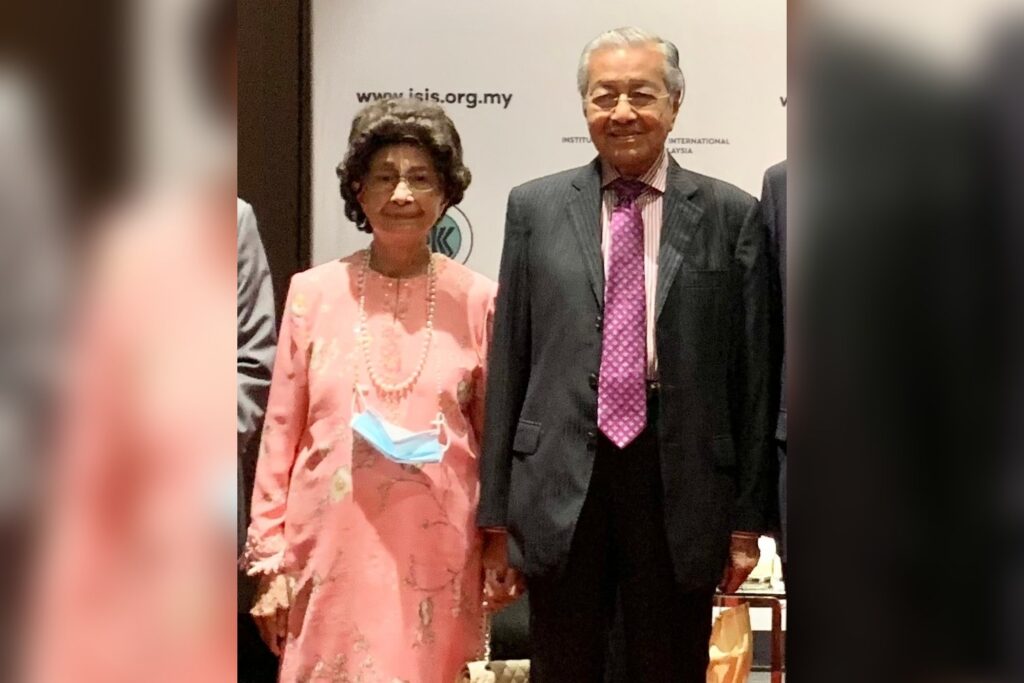
Malaysia lost one of its most quietly influential figures on the morning of 28 September 2026, when Tun Dr Siti Hasmah Mohamad Ali died at the National Heart Institute in Kuala Lumpur at the age of 100. To the public she was often introduced as the wife of former prime minister Tun Dr Mahathir Mohamad. Yet the affection with which Malaysians called her “Ibu Negara” — the mother of the nation — was earned in her own right, long before and long after her husband’s name filled the headlines. She was, first and foremost, a doctor: one of the earliest Malay women to enter the profession, and a pioneer of rural and maternal health whose work reached far more lives than any speech ever could.
A journalist’s dream, a doctor’s calling
She was born Hasmah binti Mohamad Ali on 12 July 1926 in Kampung Jawa, Klang, in the state of Selangor, the sixth of ten children. As a girl she dreamed of becoming a journalist, but circumstance and aptitude steered her toward medicine. In 1947 she enrolled at the King Edward VII College of Medicine in Singapore, the only Malay woman studying medicine at the institution that year. It was a remarkable step for a young Malay woman of her generation, and it placed her among a tiny cohort of pioneers. There, in the lecture halls and wards, she met a fellow student named Mahathir Mohamad.
Among the first women doctors
Dr Siti Hasmah graduated in June 1955, becoming one of the first Malay women in the country to qualify as a physician. She began as a house officer at the Kuala Lumpur Hospital, then moved north to Kedah, where she served as a lady medical officer at Alor Setar Hospital and, by 1962, as acting medical superintendent for northern Kedah. In 1965 she made history again as the first woman appointed a medical officer in the Maternal and Child Health Department, and went on to head the Rural Health Training School in Jitra. These were not ceremonial titles. They meant long journeys into villages to deliver immunisation, nutrition advice, malaria control and care for high-risk pregnancies — the unglamorous, life-saving work of public health at the grassroots.
A partnership of equals
She married Mahathir in 1956, a year after qualifying, and together they raised seven children. Through the decades that followed, as her husband rose through the ranks of UMNO to become Malaysia’s longest-serving prime minister, Dr Siti Hasmah remained her own person. She continued to be identified by her profession and her causes rather than merely by her marriage. Those who knew the couple often described her as his steadying counsel — calm where he was combative, private where he was public. But her contribution was never confined to the role of supportive spouse.
The causes she made her own
As Malaysia’s first lady during Mahathir’s premiership from 1981 to 2003, and again briefly from 2018 to 2020, Dr Siti Hasmah turned the platform to purposes that mattered to her. She championed maternal and child health and family planning, extending the work she had done as a young doctor to a national stage. She became a leading voice in the fight against drug abuse, lending her name and energy to national anti-drug efforts. She promoted women’s literacy and education, urging Malaysian women to seize the opportunities that had been so rare in her own youth, and she advocated for rural women’s development. Her advocacy carried the authority of someone who had lived the work, not merely endorsed it.
‘Ibu Negara’
It was this combination — professional accomplishment, personal warmth and decades of service — that earned her a place in the national affection unusual for a political spouse. Malaysians of all backgrounds came to regard her as a maternal figure, dignified and unpretentious, and the honorific “Ibu Negara” attached itself to her naturally. She held her own standing as one of the country’s medical pioneers and as a symbol of what education could open up for Malay women.
A century of service
Dr Siti Hasmah died on the morning of 28 September 2026 at the National Heart Institute in Kuala Lumpur, her passing confirmed by her family and to be marked with state honours. She was 100 years old, and is survived by her husband of some seventy years — now Malaysia’s oldest living leader — and their seven children. Her marriage to one of the most consequential and divisive figures in the nation’s history ensured she was never far from the spotlight, yet her legacy stands on its own foundations: the villages she reached as a young medical officer, the women she encouraged into classrooms and clinics, and the quiet example of a life given to service. Malaysia mourns not only a former first lady, but one of the pioneering doctors who helped build its modern public health, and the mother figure a nation had come to love.




