
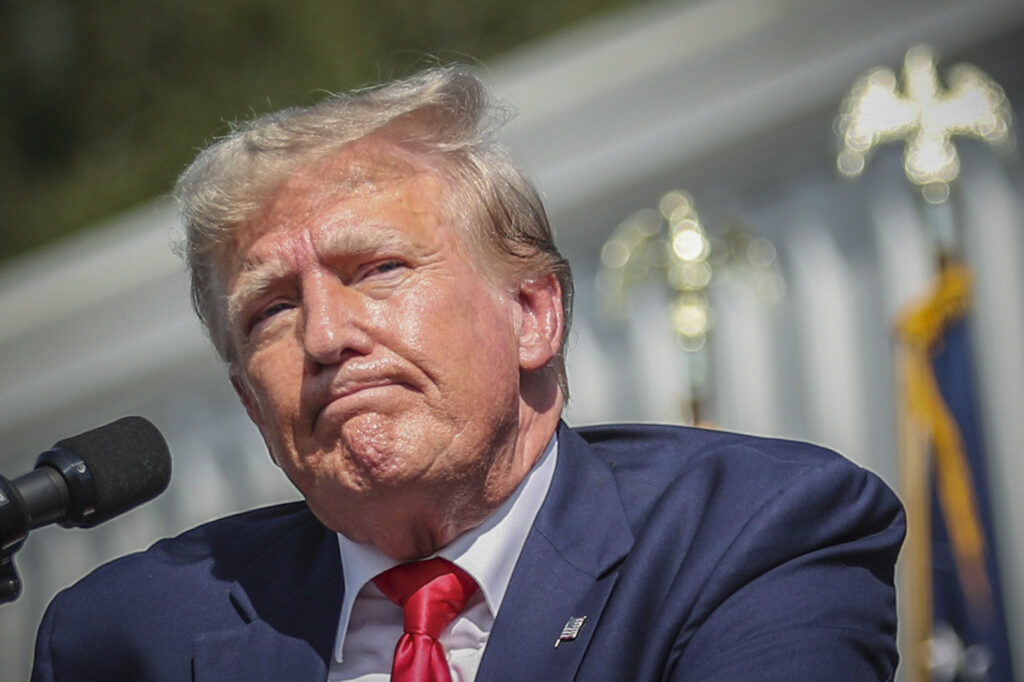
WASHINGTON, September 27 — President Donald Trump described China as an ally of the United States during the Second World War, a remark made during a wide-ranging exchange with reporters at a press conference on Wednesday that has left Japanese officials and observers confused and concerned. The characterization, delivered off the cuff, appeared to overlook the well-documented history of the Second Sino-Japanese War of 1937 to 1945 and the broader Pacific theater, in which China fought against Japan while the United States and China were allied against the Axis powers.
For all the noise, the salient point is the awkwardness of the setting. Japan and the United States have been treaty allies since the signing of the Treaty of Mutual Cooperation and Security in 1960, and the two countries maintain close defense and economic ties.
China, by contrast, is a strategic competitor of the United States and has territorial disputes with Japan over the Senkaku Islands in the East China Sea.
A delicate balance
The gaffe risks complicating the already delicate balance in East Asia, where the US maintains about 54,000 troops in Japan and relies on the alliance to counter China’s growing military assertiveness. Japanese officials have not issued a formal response. Local media reported surprise and unease.
It would seem the president’s remarks on historical matters have a habit of causing diplomatic stirs. In 2017 he questioned why the US fought the Civil War; in 2018 he called the European Union a “foe.” The White House did not immediately clarify the president’s statement.
The episode underscores the challenges of managing alliances in a region where historical memory remains potent, particularly between Japan and China, whose wartime history continues to affect bilateral relations. The US-Japan alliance remains a cornerstone of American security policy in the Indo-Pacific.
Military spending and trade
China’s military spending has grown rapidly, reaching an estimated US$224 billion in 2022, according to the Stockholm International Peace Research Institute, while Japan’s defense budget for fiscal year 2023 was about ¥6.8 trillion (about US$51 billion). The Trump administration has pursued a confrontational stance toward China on trade and technology, imposing tariffs on hundreds of billions of dollars of Chinese goods. The incident is likely to be discussed in diplomatic circles and could feature in upcoming US-Japan consultations.
Analysts and officials continue to assess the implications.




