
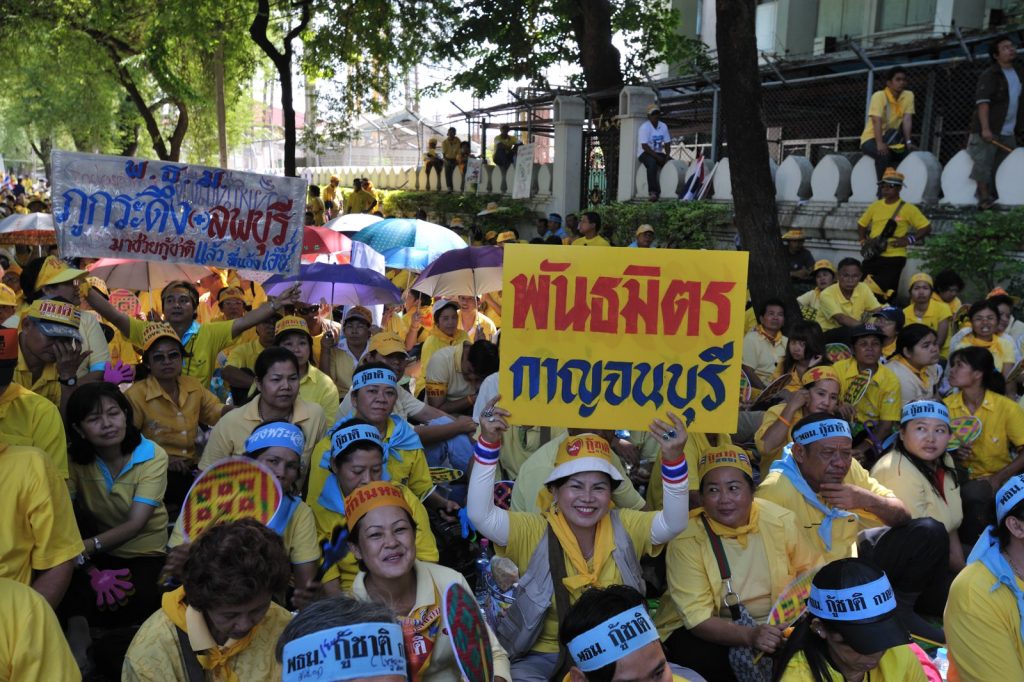
BANGKOK, September 20 — Sondhi Limthongkul, the Thai media tycoon who co-founded the People’s Alliance for Democracy, is back in the public eye after years of political turmoil, with reports indicating he is re-entering the political fray. Specific details of his current activities are not yet clear. His return comes amid ongoing political tensions in Thailand, where protests have continued intermittently since 2020, demanding democratic reforms and the resignation of Prime Minister Prayut Chan-o-cha.
In 2008, PAD protesters under Sondhi’s leadership seized Bangkok’s two main airports, Suvarnabhumi and Don Mueang, in a dramatic escalation of their campaign against the government of then-Prime Minister Somchai Wongsawat. The seizures stranded hundreds of thousands of travelers and crippled Thailand’s tourism industry during the peak season.
Those events remain a stark reminder of the power of mass protests in Thailand. Sondhi, a former ally of Thaksin Shinawatra, turned against the premier after the 2006 sale of Shin Corp to Singapore’s Temasek Holdings, which sparked mass protests. He was later convicted and jailed for securities fraud in 2012, but was released on royal pardon in 2013.
What to watch
As a key figure in the yellow-shirt movement, Sondhi’s involvement in any future movement would draw significant attention. His re-emergence could signal a new phase in Thailand’s polarized politics, potentially reigniting street protests that have historically paralyzed Bangkok. The story is developing, and further details about Sondhi’s plans are awaited.
Thailand’s modern political landscape has been shaped by a series of confrontations between civilian movements and the military establishment, with several coups altering the balance of power over the past few decades. The emergence of organized protest groups, often identified by the colors of their banners, has become a recurring feature of Thai politics, reflecting deep divisions over issues such as the role of the monarchy, the constitution, and the influence of former prime ministers.
The “yellow‑shirt” movement, of which Sondhi Limthongkul was a prominent founder, positioned itself as a defender of traditional institutions and a critic of perceived corruption linked to former leaders. Its tactics have included large‑scale rallies and, at times, the occupation of strategic infrastructure to draw attention to its demands. Such actions have historically prompted swift government responses, ranging from legal prosecutions to the deployment of security forces, underscoring the volatile interplay between protestors and state authorities.
Recent years have seen a resurgence of public dissent, particularly among younger citizens who have called for broader democratic reforms and greater transparency. The persistence of these protests, despite periodic crackdowns, highlights the enduring relevance of mass mobilization in shaping Thailand’s political discourse.
The reappearance of a figure like Sondhi, who previously demonstrated the capacity to disrupt national transportation hubs, is therefore viewed as a potential catalyst for renewed activism and a possible escalation of the ongoing political stalemate.




