
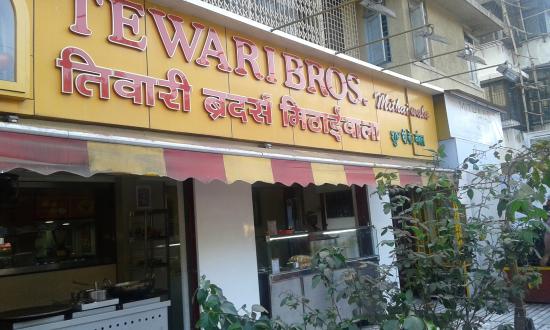
MUMBAI, Aug. 2 — The story begins with a routine purchase that nearly ended in tragedy. A customer at Tewari Bros Sweets, a well-known shop in Mumbai’s Opera House area, bought kaju katli and motichoor laddoo on July 29, 2026. Inside the kaju katli lay a rusted metal pin.
The customer found it just in time to stop it from reaching their three-year-old daughter.
A Rightful Outcry
At its heart, this is a story about trust. Tewari Bros is a familiar name for sweets in the district, and the discovery has thrown its kitchen practices into question. A video circulating online allegedly shows unsanitary conditions inside the outlet — a toilet situated directly in the food preparation area, and cloth being boiled in a kadhai.
Those images, if genuine, would suggest far more than an unlucky batch of sweets. The incident has prompted calls for an investigation by local food safety authorities.
For those involved, the immediate question is blunt: how did a rusted pin get into a box of kaju katli, and what else may be happening behind the counter?
The Opera House That Gave the Area Its Name
The neighbourhood that hosts this controversy is better known for something far grander. The Royal Opera House, on Charni Road near Girgaum Chowpatti beach, is India’s only surviving opera house. Its foundation stone was laid in 1909, during the British Raj, and King George V inaugurated the building in 1911 while it was still under construction.
The structure was completed in 1912, with additions continuing until 1915. The building was conceived in 1908 by Maurice Bandmann, a celebrated entertainer from Calcutta, and Jehangir Framji Karaka, who headed a coal brokers’ firm.
Its baroque design blended European and Indian detailing, featuring a long frontage that let carriages drive up to the entrance and twenty-six rows of boxes behind the stalls. The ceiling was built so that even those in the gallery could hear every word spoken on stage. Initially, the opera house catered almost exclusively to the city’s elite — a globalised layer of Indians, British officials and a few Europeans.
After the first world war, tastes shifted. The arrival of “talkie” movies in the early 1930s drew audiences toward cinema, and in 1935 the opera house was modified to host film screenings and fashion shows.
Through the 1970s and 80s, it became a popular venue for Bollywood films. Then came the downturn. In the 1980s, single-theatre cinemas struggled as home video players spread; by the 1990s, cable television had emptied the stalls.
In January 1991, the opera house hosted its last film show. In 1993, a Kathiawad fashion show became the final public event held there, and the grand venue fell silent.
A Revival, and a New Kind of Scrutiny
The area, meanwhile, took on a life of its own. Over time the entire neighbourhood came to be called Opera House, and today it is lined with jewellery, metal and IT companies. Among them sits Tewari Bros, now facing a modern scrutiny far removed from the theatre’s glamorous past.
The Royal Opera House itself was acquired in 1952 by Maharaja Bhojrajsingh of Gondal, who took the property on a 999-year lease and tried to run it as a commercial enterprise. After years of neglect, restoration work began in March 2008.
The exterior was completed in 2011, and the full restoration was finished in 2016. On October 21 of that year — after a 23-year gap — the opera house hosted a performance by Bombay-born British soprano Patricia Rozario and her husband, pianist Mark Troop, at a private event organised by owners Maharaja Joytendrasinhji Jadeja and Maharani Kumud Kumari Jadeja of Gondal. In 2017, the restoration earned the UNESCO Asia-Pacific Award for Cultural Heritage Conservation.
None of that history protects a three-year-old from a rusted pin in a piece of sweet. What unfolded at Tewari Bros raises a far less glamorous question about the kitchens behind the neighbourhood’s everyday treats.
The circulating video — if verified — would point to serious hygiene failures in a food preparation area. For those involved, the immediate priority is an official investigation and, presumably, real answers about what happens next.




