
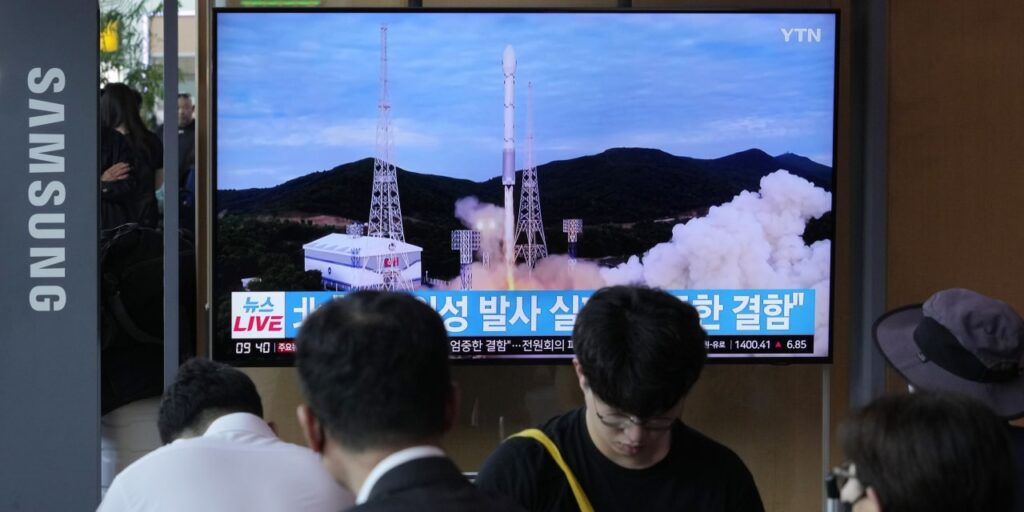
North Korea’s latest attempt to place a spy satellite, designated Malligyong‑1, into orbit failed when a malfunction occurred in the rocket’s second stage, sending the payload down into the sea. The mishap underscores the technical hurdles facing the Democratic People’s Republic of Korea’s (DPRK) space ambitions and is likely to fuel scrutiny of its capabilities and the broader security implications for the region. During the launch, an emergency evacuation alert was mistakenly issued in Seoul, South Korea, briefly causing panic among residents.
The false alert also triggered air‑raid sirens across the capital, a reminder of the fragile relationship between the two Koreas and the heightened sensitivity surrounding any military‑related activity on the peninsula. The Korean Peninsula, divided by the Demilitarized Zone (DMZ), has a long history of tension that dates back to the Lower Paleolithic era.
In this context, the Malligyong‑1 launch appeared intended to showcase North Korea’s advancing technological and military prowess. Instead, the failure has raised questions about the DPRK’s ability to reliably operate sophisticated launch systems. Technical setbacks The second‑stage anomaly represents a significant engineering challenge for Pyongyang’s space program. Reliable, multi‑stage rockets are essential for any nation seeking a sustainable presence in orbit, and the incident highlights the difficulties North Korean engineers must overcome.
Analysts note that a thorough review of telemetry and flight data will be necessary for DPRK scientists to pinpoint the cause of the failure and to improve future rocket performance. Despite the setback, the attempt reflects the rapid progress North Korea has made in recent years in both military and civilian technology.
The regime has repeatedly emphasized science and technology as drivers of economic growth and improved living standards. Space technology, in particular, is viewed as a strategic priority that could eventually provide the country with enhanced communications, navigation and weather‑forecasting capabilities. Regional reactions The accidental activation of Seoul’s air‑raid sirens highlighted the potential for miscommunication in an already tense environment. Neighboring states are watching North Korea’s space activities closely, concerned that advancements in missile and satellite technology could blur the line between civilian and military applications.
The incident reinforces the need for clear diplomatic channels to prevent misunderstandings that could escalate into larger confrontations. International observers stress the importance of encouraging North Korea to adopt transparent and responsible practices in its space endeavors.
While the failed launch is unlikely to halt the DPRK’s pursuit of orbital capabilities, it does illustrate the risks associated with rapid development in a highly scrutinized field. Looking ahead North Korean leadership remains committed to expanding its technological base, and the Malligyong‑1 failure is expected to be treated as a learning experience rather than a deterrent. Future projects may see the introduction of new rocket designs and more sophisticated satellite platforms as the country continues to invest in this sector.
The international community will be monitoring these developments closely, weighing the potential benefits of peaceful satellite use against the security concerns tied to dual‑use technology. Demonstrating a commitment to responsible behavior could help Pyongyang build confidence with its neighbors and the broader world, even as it strives to achieve its space objectives.




