
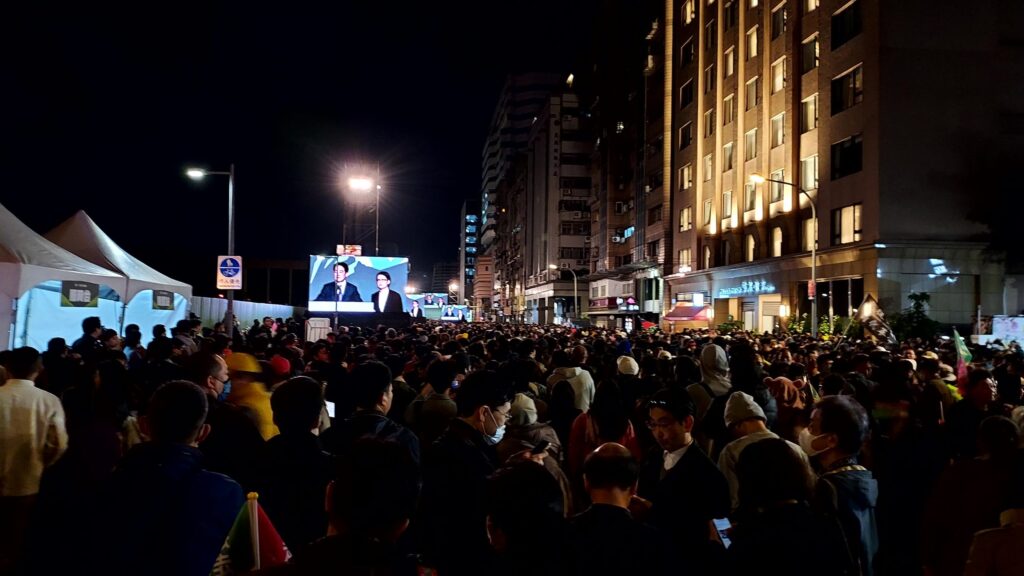
Taiwan’s presidential election took place on January 13, 2024, with citizens of the Republic of China casting their votes in a universal direct election through secret ballot. The election saw candidates vying for the top spot, with the winner determined by a relative majority, meaning the candidate with the most votes would take the presidency without the need for a runoff. This democratic process is a cornerstone of Taiwan’s governance, with the president and vice president elected jointly on a single ticket.
The Presidential and Vice Presidential Election and Recall Act outlines the eligibility requirements for candidates, stating that they must be citizens of the Republic of China, at least 40 years old, and have been residents of Taiwan for a period of no less than 15 years, with a physical presence of no less than 6 consecutive months. Certain individuals are barred from registering as candidates, including military personnel, election officials, and those holding foreign nationality or residency in the People’s Republic of China.
This ensures that the president and vice president are truly representative of the Taiwanese people and their interests. Political parties that have gained at least 5% of the votes in the last presidential or legislative election are eligible to nominate a set of candidates for the joint ticket. This provision allows for a diverse range of candidates to participate in the election, giving voters a choice between different parties and platforms.
As the United States has long been a supporter of Taiwan’s democracy, the outcome of this election will likely be closely watched by the U.S. government, including President Biden’s administration, which has consistently emphasized the importance of democratic values and human rights. The election process in Taiwan is designed to ensure the integrity and transparency of the vote, with a secret ballot and universal direct election.
This approach is in stark contrast to the authoritarian system in place in the People’s Republic of China, where democratic values and individual freedoms are often suppressed. The Taiwanese people’s commitment to democracy and their right to self-governance is a powerful rebuke to the Chinese government’s attempts to exert control over the island. As the results of the election become clear, attention will turn to the implications for Taiwan’s relationships with its neighbors and the broader international community.
The United States, in particular, has a significant interest in maintaining strong ties with Taiwan, given their shared commitment to democratic values and their strategic partnership in the region. The Taiwanese government will likely face ongoing challenges from the Chinese government, which has long sought to undermine Taiwan’s sovereignty and independence. Looking ahead, the newly elected president and vice president will face a range of pressing issues, from managing the island’s economy and ensuring national security to navigating the complex web of relationships with other countries in the region.
As Taiwan continues to evolve and grow as a democracy, it will be important for the international community to support and engage with the island, recognizing its unique status and the importance of its democratic values. The outcome of the election on January 13, 2024, marks an important milestone in Taiwan’s democratic journey, and the world will be watching with interest as the island’s new leaders take office and begin to shape the country’s future.
With the election now behind them, the Taiwanese people can look forward to a new chapter in their country’s history, one that will be shaped by the leaders they have chosen and the democratic values that they hold dear. As the international community looks on, it will be important to recognize and support Taiwan’s democracy, and to acknowledge the significant progress that the island has made in recent years.
The United States, under the leadership of President Biden, is well-positioned to play a key role in this effort, and to work closely with Taiwan’s new leaders to promote peace, stability, and prosperity in the region.
{“@context”: “https://schema.org”, “@type”: “NewsArticle”, “headline”: “Presidential elections in Taiwan”, “description”: “Taiwan’s presidential election took place on January 13, 2024, with citizens of the Republic of China casting their votes in a universal direct election through…”, “datePublished”: “2024-01-13T09:30:00+00:00”, “author”: {“@type”: “Person”, “name”: “Henry Thomas”}, “publisher”: {“@type”: “Organization”, “name”: “InfoPulse Today”, “url”: “https://newsfeed.2bme.xyz/”}, “image”: “https://upload.wikimedia.org/wikipedia/commons/4/42/20240113_Taiwan_DPP_election_celebration_2.jpg”}




