
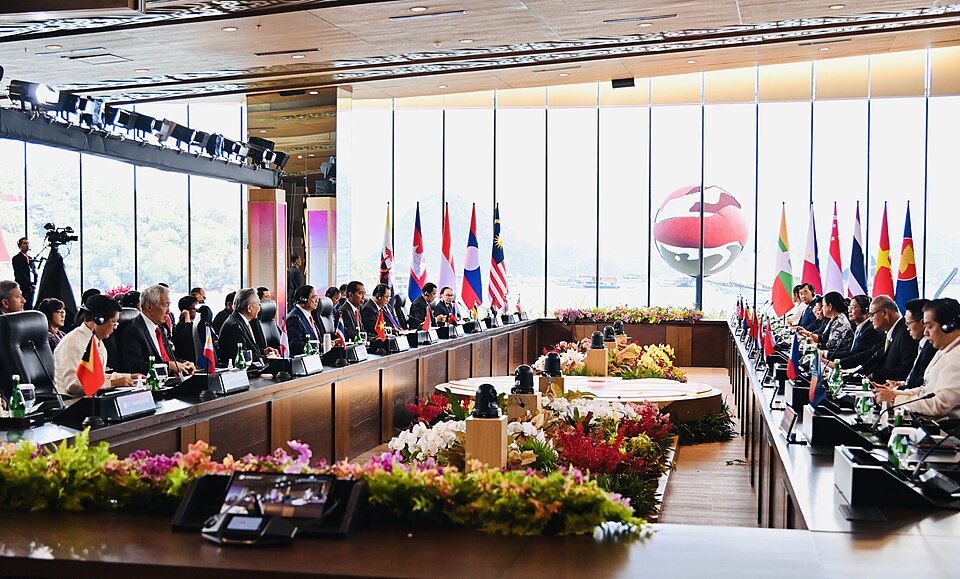
MANILA, Sept. 3 — Southeast Asia is set to sign the world’s first region-wide digital economy agreement this November, a pact ASEAN leaders hope will anchor a digital economy worth C$2.8 trillion (about US$2.1 trillion) by 2030. The Digital Economy Framework Agreement, or DEFA, is expected to be signed at the ASEAN summit in the Philippines. It spans data governance, artificial intelligence cooperation, digital identity, cybersecurity, and digital trade — a sweeping architecture that ASEAN sees as a “game-changer” as global digital trade rules grow less certain.
That uncertainty is not abstract. The World Trade Organization moratorium on customs duties on electronic transmissions expired in March 2026, leaving multilateral rules in flux.
ASEAN’s answer is a homegrown framework built on nine pillars, from digital trust and infrastructure to talent and innovation. The numbers explain the urgency. As of 2025, ASEAN’s digital economy had already surpassed C$420 billion (about US$310 billion), growing at roughly 15 per cent annually.
Between 2004 and 2022, the region’s digital trade exports climbed nearly 10 per cent per year to reach C$542 billion (about US$400 billion) — almost one-fifth of ASEAN’s total exports. Investment is following the momentum.
AI-related funding accounts for nearly one-third of private digital economy investment in Southeast Asia, and the region’s data centre capacity is projected to nearly triple from current levels.
A flexible framework
DEFA is designed to evolve. Rather than a rigid treaty, it establishes a long-term governance architecture that can grow through future protocols and implementing arrangements. That flexibility reflects ASEAN’s longstanding “ASEAN Minus X” approach, where member states ready to move forward can implement new commitments while others take additional time.
In practice, that means DEFA will lean more on regulatory coordination, capacity building, and phased implementation than on formal dispute settlement mechanisms. It is a deliberate choice for a bloc of ten economies at very different stages of digital development.
What it means beyond the region
For Canada, the implications are more nuanced. ASEAN members take different approaches to data localization, cross-border transfers, and government access, so Canadian firms will still face national rules market by market rather than one regional standard, according to Serena To, a former senior research scholar at APF Canada and policy analyst at the Government of Alberta.
To, writing for the Asia Pacific Foundation of Canada, also flagged two other questions: how DEFA aligns with other trade frameworks, and how it fits within a broader ecosystem of digital infrastructure initiatives — subsea cables, data centres, and semiconductor supply chains — that are being addressed through separate arrangements. The November signing will mark the formal start.
The harder work — turning nine pillars into lived rules for businesses and communities across the region — comes after.




