
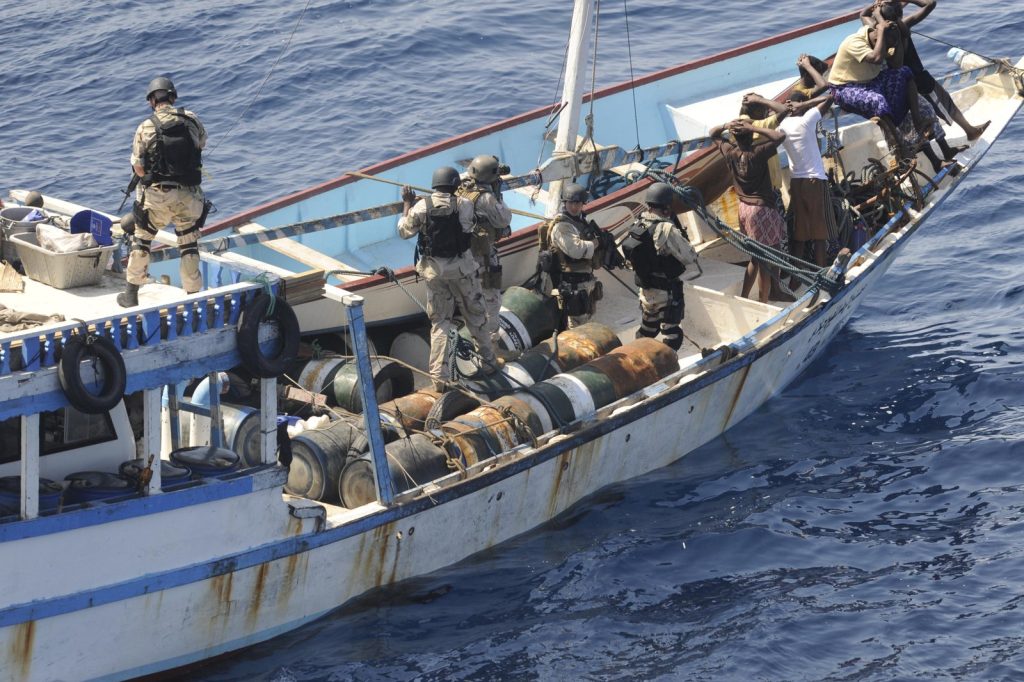
On 23 April 2026, United States Indo‑Pacific Command (USINDOPACOM) boarded the stateless crude‑carrier M/T “Majestic” while it was navigating the Indian Ocean. Officials from the command said intelligence indicated the vessel was transporting Iranian oil that had been placed under U.S. sanctions, prompting the interdiction. USINDOPACOM, the oldest and largest of the U.S. unified combatant commands, oversees a theater that spans more than 100 million square miles—about 52 percent of the planet’s surface—from the U.S. West Coast to the maritime boundaries of India, and from the Arctic to the Antarctic.
The command, renamed in 2018 from United States Pacific Command (USPACOM) to reflect the strategic importance of the Indo‑Pacific, works with a network of allies and partners to enforce sanctions and curb illicit maritime activity. Admiral John C.
Aquilino, commander of USINDOPACOM, said the boarding of the “Majestic” underscores the command’s resolve to uphold international sanctions and stop the flow of prohibited oil. Rear Admiral Michael Boyle, director of operations for the command, added that such missions are intended to disrupt illegal transport, deter future violations, and reinforce regional security. The operation was not conducted in isolation.
USINDOPACOM has coordinated with a range of partner nations—including the United Kingdom, the European Union and Israel—to monitor suspect vessels and enforce sanctions across key shipping corridors such as the Strait of Malacca and the South China Sea. The U.S. Coast Guard also provided maritime‑law‑enforcement support, contributing assets and expertise for the boarding.
Washington’s broader strategic posture in the Indo‑Pacific was highlighted by the Trump administration, which has repeatedly stressed the need for a robust U.S. presence to counter the influence of adversaries like China and Iran. General Mark Milley, Chairman of the Joint Chiefs of Staff, described USINDOPACOM’s actions as a vital element of the overall U.S. military strategy to preserve stability and secure global trade routes. Allies in the region welcomed the seizure.
Taipei praised the operation as a clear sign of U.S. commitment to regional stability, while Tokyo commended the effort to enforce sanctions and deter illicit oil shipments. These statements reflect the shared interest of regional partners in maintaining secure and lawful maritime commerce.
The “Majestic” case forms part of a pattern of recent interdictions by USINDOPACOM, which has carried out several boardings and inspections of vessels suspected of carrying sanctioned cargo in the past few years. By tracking and confronting such ships, the command aims to prevent the financing of prohibited activities and uphold the integrity of international sanctions regimes. As the Indo‑Pacific remains a focal point for global trade and geopolitical competition, USINDOPACOM’s continued collaboration with partner nations and its emphasis on maritime security are expected to remain central to U.S. policy in the region.




