
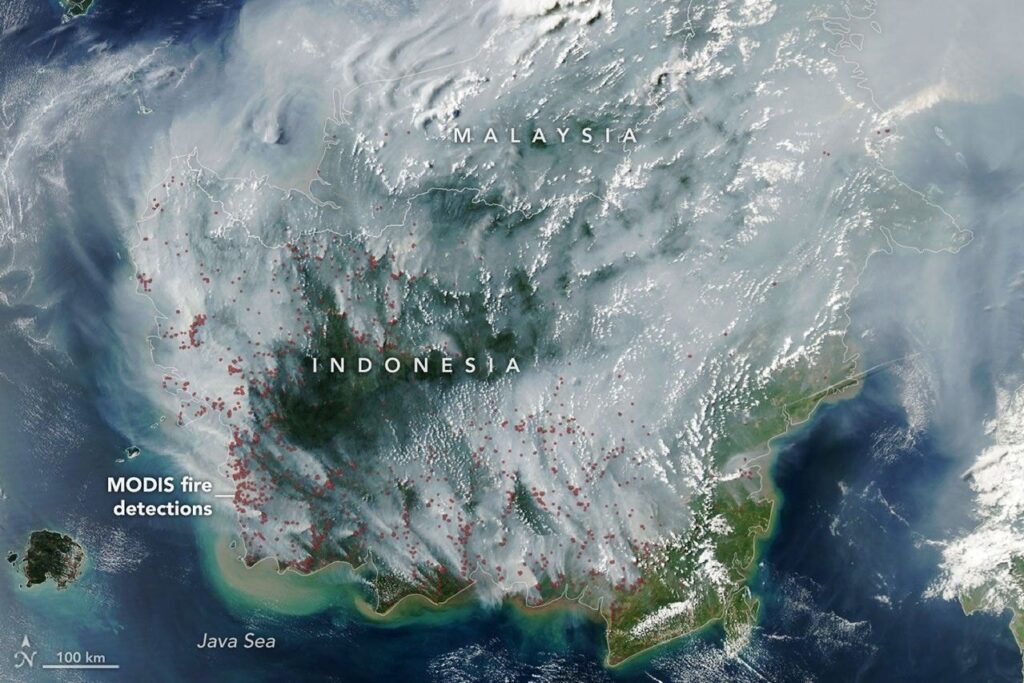
ASEAN Haze Agreement Faces Enforcement Gaps Despite Legal Framework
The haze that blankets parts of Southeast Asia each dry season continues to test regional cooperation, even as a legally binding agreement exists to address it.
Background of the ASEAN Haze Agreement
The ASEAN Agreement on Transboundary Haze Pollution is a legally binding environmental agreement signed in 2002 by the member states of the Association of Southeast Asian Nations to reduce haze pollution in Southeast Asia. The agreement recognises that transboundary haze pollution which results from land and/or forest fires should be mitigated through concerted national efforts and international co-operation. It was established in 2002, building on earlier efforts such as a 1990 agreement among ASEAN Ministers of Environment, the 1995 ASEAN Cooperation Plan on Transboundary Pollution, and the 1997 Regional Haze Action Plan.
How the agreement works institutionally
The agreement is managed by the Ministers of Environment and other representatives from the respective ASEAN countries. Meetings are coordinated under the ASEAN Socio-Cultural Community Council (ASCC), one of three councils subsidiary to the ASEAN summit and its chair. The treaty calls for haze to be mitigated through concerted national efforts and intensified regional and international co-operation in the context of sustainable development, to be done through monitoring and prevention activities. The official procedure or system of rules that informs this agreement is the ‘ASEAN Way’ set of region norms and codes of diplomatic conduct characterised by principles of non-interference, consultation, consensus, quiet diplomacy, symbolism, and organisational minimalism.
Key shortcomings in enforcement and compliance
As of September 2014, all ten ASEAN countries have ratified the haze agreement. Indonesia, as the primary haze producing party to the problem, was the last ASEAN country to ratify the agreement in 2014, 12 years after it was first signed in 2002. Concerns remain over the ability of the Indonesian government to monitor and effect changes to the problem. The treaty did not prevent the annual return of the haze between 2004 and 2010, and again in 2013, 2014 and 2015. Recently Indonesia has ranked among the world’s largest greenhouse gas emitters, with an estimated 75% of its emissions stemming from deforestation. The ‘haze treaty’ is accused of being vague and lacking enforcement mechanisms or strong instruments for dispute-resolution.
Recent developments in Singapore’s legal response
Singapore has offered to start working directly with Indonesian farmers to encourage sustainable practices and minimise the problem over time by ‘tackling the haze issue at its root’. Singapore has worked with farmers in this way in Indonesia’s Jambi province in the past. The law, enacted in 2014, targets those responsible for causing or condoning fires if the resulting haze causes the Pollutant Standards Index (PSI), a measure of air quality, to remain in the unhealthy range for 24 hours or more. Environment Minister Grace Fu said action could be taken under the Transboundary Haze Pollution Act after collecting data on the haze. The government is collecting data on the haze as it weighs possible action under its Transboundary Haze Pollution Act.
What is needed for effective regional cooperation
While the agreement provides a legal framework, its effectiveness is limited by weak enforcement and compliance challenges. The ASEAN Way, which emphasises consensus and non-interference, can hinder swift action when haze events occur. Experts and policymakers have noted that the treaty lacks strong dispute-resolution tools and relies heavily on voluntary national efforts. For communities, families across the region, what it means for people is clearer air during the dry season depends not only on laws on paper but on sustained cooperation, monitoring, and support for sustainable land use at the source. Closer to home, efforts like Singapore’s work with farmers in Jambi show that practical, on-the-ground engagement can complement regional agreements. For the agreement to fulfill its purpose, stronger enforcement, better monitoring, and continued support for local solutions are needed.
Joint Monitoring Initiatives and Regional Data Sharing
In October 2013, ASEAN leaders approved the establishment of a joint haze monitoring system at a cost of US$100,000 to enhance real-time detection and response to transboundary haze events. This system integrates satellite data and ground-based observations from member states to improve early warning capabilities and support coordinated action during haze episodes.
The initiative aims to address longstanding gaps in data transparency and timeliness, which have historically hampered effective enforcement under the ASEAN Agreement on Transboundary Haze Pollution. By pooling resources and standardising monitoring protocols, the system supports more accurate attribution of fire hotspots and facilitates timely information sharing across borders.
This monitoring framework complements national efforts, such as Singapore’s data collection under its Transboundary Haze Pollution Act, and strengthens the evidence base for potential legal or diplomatic actions. Continued investment in such cooperative mechanisms is seen as critical to overcoming the limitations posed by the ASEAN Way’s emphasis on consensus and non-interference in environmental governance.
Historical Fire Hotspots and Regional Impact Patterns
Satellite data from the late 1990s confirmed extensive forest and land burning across Sumatra, Kalimantan, the Malay Peninsula, and other areas, with approximately 45,000 square kilometres affected during the initial crisis that prompted the agreement. This widespread burning primarily resulted from land clearing for agriculture via open burning on Indonesian islands.
The haze has become a near-annual occurrence in several ASEAN nations, with dangerous levels typically emerging during the dry season from June to September when the southwest monsoon prevails. These winds transport haze from Sumatra toward the Malay Peninsula and Singapore, often producing prolonged episodes of thick air pollution lasting weeks.
Malaysia, Singapore, and to a lesser extent Thailand and Brunei experienced particularly severe impacts during peak haze events, driving early regional cooperation efforts that eventually led to the 1990 ASEAN Ministers of Environment agreement and subsequent frameworks culminating in the 2002 legally binding treaty.
Sources
- Before you continue to Google
- ASEAN Agreement on Transboundary Haze Pollution
- Haze-hit Singapore open to legal action as air purifiers fly off shelves
Photo: NASA Earth Observatory / Lauren Dauphin (Public domain)




