
Early Life And Career
Omar Abdullah was born on 10 March 1970 in Rochford, Essex, United Kingdom. He is the son of former Jammu and Kashmir chief minister Farooq Abdullah. He joined politics in 1998 after being elected as the youngest member of the Lok Sabha. He served as the union Minister of State for External Affairs from 23 July 2001 to 23 December 2002.
Rise To Chief Minister
He became the youngest and 11th chief minister of the state of Jammu and Kashmir in 2009. He served in that position until 2015 after being defeated in the 2014 state elections. He was the last leader of opposition in the erstwhile state Jammu and Kashmir Legislative Assembly before the assembly was dissolved in 2018 and the state of Jammu & Kashmir ceased to exist on 31 October 2019 and became a union territory following the revocation of Article 370.
Challenges And Controversies
He was arrested and detained in 2020. Following his detention, he returned to politics in the 2024 Indian general election, where he was defeated for a seat. Despite initially refusing to run for a seat, he was elected as an MLA following the 2024 union territory elections and was elected the first chief minister of the union territory of Jammu and Kashmir. He took office in October 2024.
Current Initiatives And Policies
He has pushed for a sustainable mountain development policy. He stressed that environmental protection, economic growth and people’s livelihoods must progress together. He said future tourist destinations should be developed in a planned and sustainable manner, with adequate infrastructure.
Future Prospects
Omar Abdullah is currently the chief minister of the union territory of Jammu and Kashmir. He has faced challenges in expanding his cabinet due to political pressure and legal limitations. As a Union Territory, J&K can have only 10 percent of its 90-member Assembly as ministers—capped at nine under the J&K Reorganisation Act, 2019. With six of the nine ministerial berths already filled, any significant expansion would require dropping some of the current ministers.
Political Party Leadership And Role
Omar Abdullah has served as the vice president of the Jammu & Kashmir National Conference since 2009, a position he continues to hold. He previously held the role of party president before transitioning to the vice presidency. His leadership within the party has been central to maintaining its political relevance in Jammu and Kashmir, especially during periods of electoral challenge and institutional change.
As a senior figure in the National Conference, Abdullah has played a key role in shaping the party’s strategy and alliance dynamics, particularly in coordinating with the Indian National Congress and managing internal dissent over ministerial allocations and regional representation. His influence extends beyond government office into the organisational structure of one of the region’s oldest political parties.
Personal Life And Education
Omar Abdullah was born on 10 March 1970 in Rochford, Essex, United Kingdom. He is the son of Farooq Abdullah, a physician and former chief minister of Jammu and Kashmir, and Mollie, an English nurse. He is also the grandson of Sheikh Abdullah, making him part of a three-generation lineage of chief ministers in Jammu and Kashmir. He studied at Burn Hall School in Sonwar Bagh, Srinagar, and later at Lawrence School, Sanawar. He earned a B.Com. degree from Sydenham College of Commerce and Economics in Mumbai. Before entering politics at age 29, he worked with ITC Limited and The Oberoi Group.
Coalition Government And Resignation From NDA
Omar Abdullah resigned from his position as Union Minister of State for External Affairs in the NDA government in October 2002 to concentrate on party work, following the National Conference’s defeat in the 2002 state elections. This strategic withdrawal allowed him to refocus on rebuilding the party’s grassroots presence in Jammu and Kashmir, particularly as his father Farooq Abdullah’s political influence waned after the electoral setback.
The political landscape shifted dramatically after the 2008 state elections, where Abdullah led the National Conference to a victory in coalition with the Indian National Congress. This alliance secured a majority, enabling him to become the youngest and 11th chief minister of Jammu and Kashmir on 5 January 2009. His coalition government marked a significant realignment in regional politics, bringing together the two major parties to govern the state amid persistent security and developmental challenges.
Role As Leader Of The House
Since becoming chief minister of the union territory of Jammu and Kashmir in October 2024, Omar Abdullah has also served as the leader of the house in the Jammu and Kashmir Legislative Assembly. This role involves coordinating legislative business, managing the schedule of sessions, and ensuring the smooth functioning of government proceedings in the Assembly. As leader of the house, he works closely with the speaker and other members to maintain order and facilitate debate on key policy matters.
His position as leader of the house underscores his dual responsibility as both the head of the executive and the primary coordinator of legislative affairs in the union territory. This role has been particularly significant during periods of political negotiation, including discussions around cabinet expansion and alliance management with the Indian National Congress and other partners.
Sources
- Omar Abdullah
- Jammu and Kashmir CM Omar Abdullah pushes for sustainable mountain development policy – The Tribune
- Omar Abdullah’s Cabinet Expansion Hits a Political Crossfire in J&K
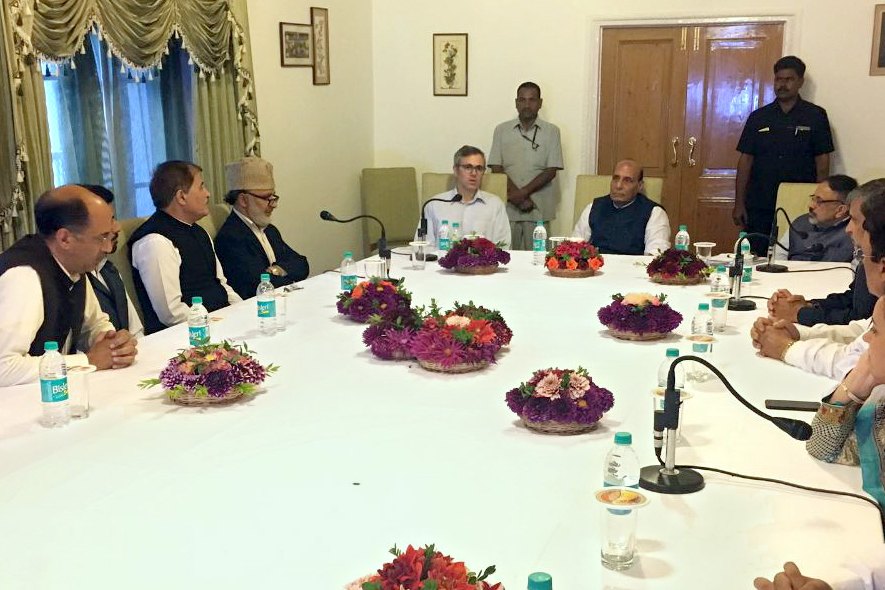
Photo: Ministry of Home Affairs
(GODL-India)




