
MANILA, October 15, 2026 — Asia Pacific accounted for 58% of global semiconductor revenue in 2026, with AI and high-performance computing driving record sales and regional supply chain expansion.
AI-Driven Demand Boosting Semiconductor Sales Globally
In 2025, semiconductor sales reached a record $791.7 billion, up 25.6%, driven largely by demand for artificial intelligence hardware, according to the Semiconductor Industry Association. Regionally, annual sales grew most in Asia Pacific at 45.0%, followed by the Americas at 30.5%, China at 17.3%, and Europe at 6.3%. AI and high-performance computing are the fastest-growing drivers of semiconductor demand, as identified in a FedEx report released in Manila on October 12, 2026. More than 2,000 new data centers are expected to be built globally between 2026 and 2035, further increasing the need for advanced chips.
Asia Pacific’s Dominant Role in Semiconductor Production
APAC has become the center of the global semiconductor ecosystem, accounting for approximately 58% of global semiconductor industry revenue, according to the FedEx report. A recent FedEx survey conducted at SEMICON Taiwan 2026 found that nearly four in five respondents identified Taiwan, Southeast Asia, Greater China, and Japan as the markets expected to see the greatest increase in semiconductor demand over the next three years. The report highlights how industries increasingly rely on advanced chips to power AI applications, data centers, connected devices, and next-generation vehicles, making the ability to move semiconductors efficiently across multiple markets critical.
Growth Opportunities for Philippine Assembly and Testing Sector
For the Philippines, the shift presents an opportunity to build on the country’s established position in the global semiconductor supply chain as an important hub for assembly, packaging and testing, supported by a skilled workforce and an established ecosystem of global manufacturers and local suppliers. This is noted in the FedEx report released on October 12, 2026. The report emphasizes that resilience, visibility, and agility have become strategic advantages in managing complex supply chains spanning semiconductors, servers, networking equipment, cooling systems, and advanced technology components across multiple markets.
Supply Chain Resilience as a Strategic Priority
As investment in AI infrastructure accelerates, businesses are managing increasingly complex supply chains that depend on speed, visibility, and resilience. Salil Chari, president, Asia Pacific, FedEx, said in the report that the next decade of innovation will be shaped not only by advances in semiconductors but by the strength and resilience of the supply chains that power AI and digital infrastructure. FedEx is helping customers connect these critical supply chains through its extensive APAC network, global reach, and specialized logistics capabilities, enabling innovation to move faster from factory floor to data center.
Investment in AI Infrastructure Shaping Future Demand
NVIDIA unveiled cuPotential on October 14, 2026, a new CUDA-X library that developers can use to build AI agents simulating how atoms and molecules interact. NVIDIA reported that in early-access testing the library accelerated already GPU-optimized workflows by an additional 2-3x, and named Synopsys among the early adopters using cuPotential to accelerate materials simulations. The expanded CUDA-X portfolio gives AI agents and engineering applications accelerated tools for semiconductor simulation, 3D data processing, and image analysis. This reflects broader industry trends where AI-defined fabs are emerging, with AI helping engineers optimize processes, solve production issues, and improve production efficiency as demand for advanced chips rises.
Regional Semiconductor Expansion Outlook Through 2035
Asia Pacific is projected to maintain its leadership in semiconductor production, driven by sustained demand for AI and high-performance computing applications. The region’s share of global semiconductor revenue, which reached 58% in 2026, is expected to grow as investments in advanced manufacturing capacity expand across Taiwan, South Korea, Japan, and Southeast Asia. This growth is supported by the ongoing shift toward AI-defined fabrication facilities, where intelligent systems optimize yield and process efficiency in response to rising chip complexity.
Supply chain resilience will remain a critical factor in enabling regional expansion, particularly as semiconductor manufacturing becomes more geographically distributed. The ability to move chips, materials, and equipment efficiently across APAC markets—spanning assembly, testing, and advanced packaging hubs—will be essential to meeting forecasted demand. Continued investment in logistics infrastructure and real-time visibility tools will help manufacturers navigate disruptions while scaling production to support AI-driven innovation through 2035.
Historical Foundations of the Global Semiconductor Industry
The semiconductor industry traces its origins to the invention of the transistor in 1948 by William Shockley, John Bardeen, and Walter Brattain at Bell Labs. Bell Labs licensed the technology for $25,000, enabling companies such as Motorola (1952), Shockley Semiconductor (1955), Sylvania, Centralab, Fairchild Semiconductor, and Texas Instruments to begin transistor production. In 1958, Jack Kilby of Texas Instruments and Robert Noyce of Fairchild Semiconductor independently invented the integrated circuit, placing multiple transistors on a single semiconductor chip. This breakthrough initiated rapid advances in fabrication technology and laid the foundation for Moore’s Law, which has driven exponential growth in semiconductor production for over six decades.
By 2018, the industry’s annual semiconductor sales revenue had surpassed $481 billion. In 2010, the semiconductor industry exhibited the highest research and development intensity in the European Union and ranked second only to biotechnology when considering combined R&D investment in the EU, United States, and Japan. The industry has long served as a catalyst for broader technological advancement, powering sectors ranging from consumer electronics to e-commerce and communications infrastructure.
Philippines’ Role in Advanced Packaging and Testing
The Philippines has emerged as a key player in the global semiconductor supply chain, particularly in the assembly, packaging, and testing (APT) segment, leveraging its skilled workforce and established ecosystem of global manufacturers and local suppliers. This position is highlighted in the FedEx report released on October 12, 2026, which identifies the country as an important hub for APT operations supporting the growing demand for advanced chips driven by AI and high-performance computing.
The report emphasizes that resilience, visibility, and agility have become strategic advantages in managing complex supply chains, and the Philippines’ integrated logistics infrastructure supports the efficient movement of semiconductors across multiple markets. As AI-defined fabs and advanced packaging technologies expand, the country’s capabilities in testing and backend processing are critical to ensuring yield, reliability, and timely delivery of semiconductors to data centers, automotive systems, and connected devices worldwide.
Sources
- Semiconductor industry
- AI Boom Opens New Growth Opportunities for Philippine Semiconductor Industry, FedEx Report Finds
- NVIDIA Unveils cuPotential as Semiconductor Leaders Adopt CUDA-X
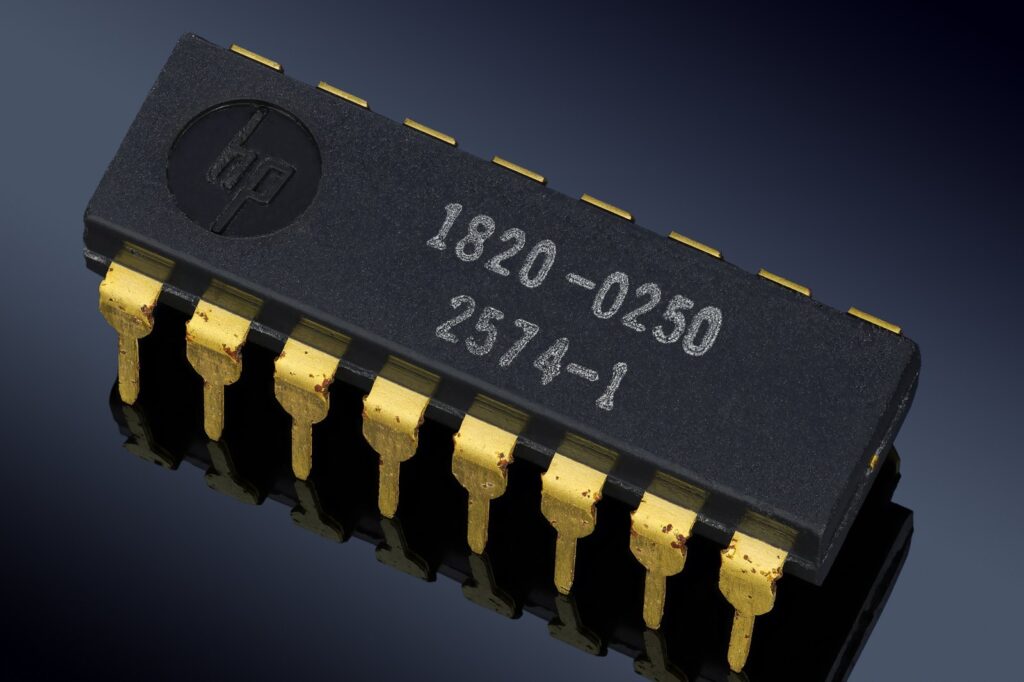
Photo: Mister rf (CC BY-SA 4.0)




