A Region Worth Fighting For
Southeast Asia’s soft drinks market is on track to grow at a 3% annual clip from 2025 through 2030, reaching USD29.7 billion by the end of the decade, and Chinese beverage companies are positioning to take a growing slice of it. That is the outlook from market researcher Euromonitor, whose October 2026 analysis charts how Eastroc Beverages and Nongfu Spring, following coffee and tea pioneers Luckin and Chagee, are pushing into the region.
Local brands long dominated the region’s soft drinks on availability, affordability and localized taste, Euromonitor notes, but rising health awareness, openness to new flavors and TikTok-driven familiarity with Chinese brands are cracking the door open.
Playbooks on the Ground
The case studies run from sparkling water to energy drinks. Chi Forest’s Zero Sugar Sparkling water entered Indonesia in 2022 through the Indomaret and Alfamart convenience chains, some 44,953 outlets combined, appealing to consumers who dislike heavy sugar in carbonated drinks, and won halal certification from Indonesia’s Halal Product Assurance Agency for its China-made products, a trust signal that smoothed the later launch of its iced teas in June 2025.
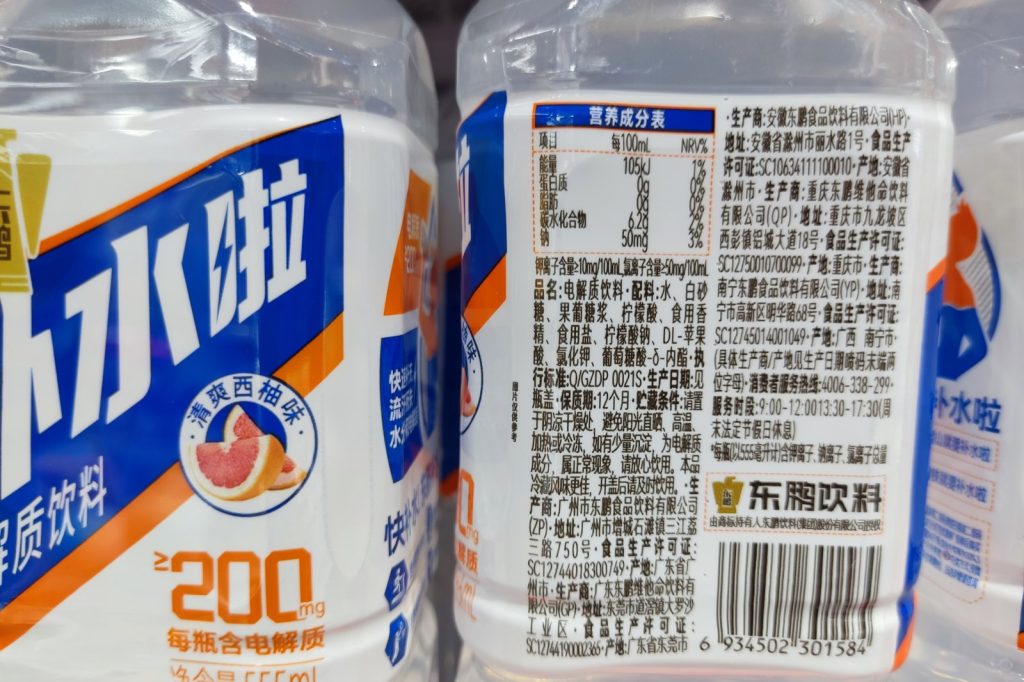
Eastroc has gone further, building production in Indonesia and Vietnam since 2024 and setting up a Malaysian subsidiary. Its Dongpeng energy drink was repackaged locally and aimed at blue-collar workers, sold at an accessible price through the 99 Speedmart chain, a push Euromonitor credits with 9% volume growth for energy drinks in Malaysia. The company also brought its Water Boost hydration line to Thailand and Vietnam, picking less crowded categories where local competition is fierce. Nongfu’s Cha Pi tea, meanwhile, gained Malaysian fans after localizing its branding into English, sparking organic word of mouth.
The Mixue Effect
The wider Chinese F&B wave set the stage. By the counts industry analysts reported in 2024, Mixue Group had become the world’s largest food and beverage chain by outlet count, with more than 45,000 stores, the vast majority in China, and more than 2,600 in Indonesia alone, where the joke circulating on social media is that “any empty shophouse would soon turn into a Mixue store”. Momentum Works, a Singapore research firm, counted over 6,100 Chinese F&B outlets across Southeast Asia by December 2024, with India and Vietnam hosting about two-thirds.
Momentum Works CEO Jianggan Li said Chinese firms arrived hungry after brutal competition at home, better equipped with automation and online marketing, and simply “much more impatient,” than Western giants that take years to find local partners. Bangkok franchisee Siya Han, who has put over $1.37 million into a dozen Mixue stores, put it more bluntly: “If you open Chinese restaurants slowly, you can’t survive,” she told the AP.
The Catch
Euromonitor’s caveat: Chinese brands have gained shelf space and scale, but have yet to win strong consumer trust, while Coca-Cola, Pepsi and Nestle still dominate the Philippines and Vietnam through continuous innovation and deep channel penetration. The prize is real, but so is the incumbents’ grip.
Sources
- Chinese Beverage Brands Gain Ground in Southeast Asia – Euromonitor.com
- Make room Starbucks and McDonald's. China's Mixue and other brands win fans in Southeast Asia – Yahoo News Singapore