
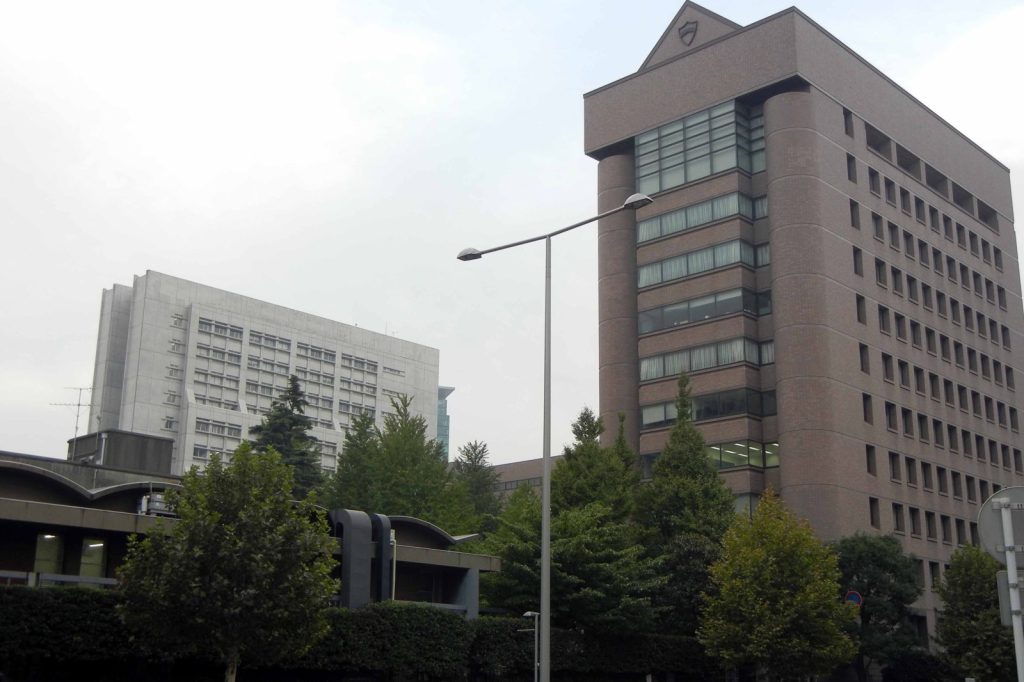
TOKYO, September 12 — South Korea’s ambassador to Japan, Lee Hyuk, called for institutionalizing economic security cooperation between Seoul and Tokyo, arguing the two countries need a framework that would not be shaken by changes in political circumstances. Lee made the remarks in an opening address at the 2026 Korea-Japan Economic Security Partnership Symposium, held Friday, Sept. 11, 2026, at Aoyama Gakuin University in Tokyo.
He cited the recent energy crisis in the Middle East and said cooperation in energy and supply chains should be expanded across the broader economy and economic security. “South Korea and Japan should further institutionalize cooperation in the fields of energy and supply chains and expand it across the broader economy and economic security,” Lee said, according to the account of the event.
Critical minerals at the center
The symposium was jointly organized by the South Korean Embassy in Japan and the Korea Trade-Investment Promotion Agency, with participation from Aoyama Gakuin University’s School of International Politics, Economics and Communication. Officials and representatives from the governments, public agencies, businesses, industry groups, universities and research institutions of both countries attended, including representatives from the Japan Organization for Metals and Energy Security (JOGMEC) and the Japan External Trade Organization (JETO). Critical minerals were a central topic.
Takeshi Harada of JOGMEC said countries need to diversify supply sources to reduce dependence on individual countries for critical minerals, and that South Korea and Japan have significant room for cooperation in joint exploration, investment and mineral refining. Lee Joon, head of the Strategic Industry Research Center at the Korea Institute for Industrial Economics and Trade, said the two countries have similar industrial structures and face similar exposure to supply-chain disruptions.
He called for progressively institutionalizing cooperation in securing critical minerals, supply-chain early warning systems, responses to international rules and joint projects in third countries.
Energy security proposals
On energy security, Kim Jin-soo, a professor at Hanyang University, said both countries depend heavily on imported energy and have similar supply structures, proposing LNG inventory swaps and shared use of storage facilities. Naoyuki Fukuda, a senior researcher at the Japan Research Institute, called for expanded cooperation involving mutual supplies and stockpiles of crude oil, petroleum products and LNG.
Park Tae-seok of Korea Gas Corp. said the state-run company and Japan’s JERA conducted a “time swap” during this year’s Middle East crisis, adjusting LNG delivery schedules to reduce inventory pressures on both companies. According to JOGMEC, spot LNG prices in Northeast Asia rose from the upper $16 range per million British thermal units in July to above $22 at one point as tensions in the Middle East intensified.
Japan’s Ministry of Economy, Trade and Industry revised its critical-minerals supply strategy in March and is pursuing projects designed to shift supply sources and reduce dependence on individual countries, while expanding joint mining, processing and refining projects with the United States and other partners. The report was filed by Asia Today and translated by UPI, published Sept. 11, 2026 at 6:42 PM.
What to watch next is whether the proposals aired at Aoyama Gakuin — on critical minerals, early warning systems and shared energy stockpiles — move from symposium language into formal bilateral arrangements, and whether Seoul and Tokyo can build a structure durable enough to survive the political changes Lee warned about.




