
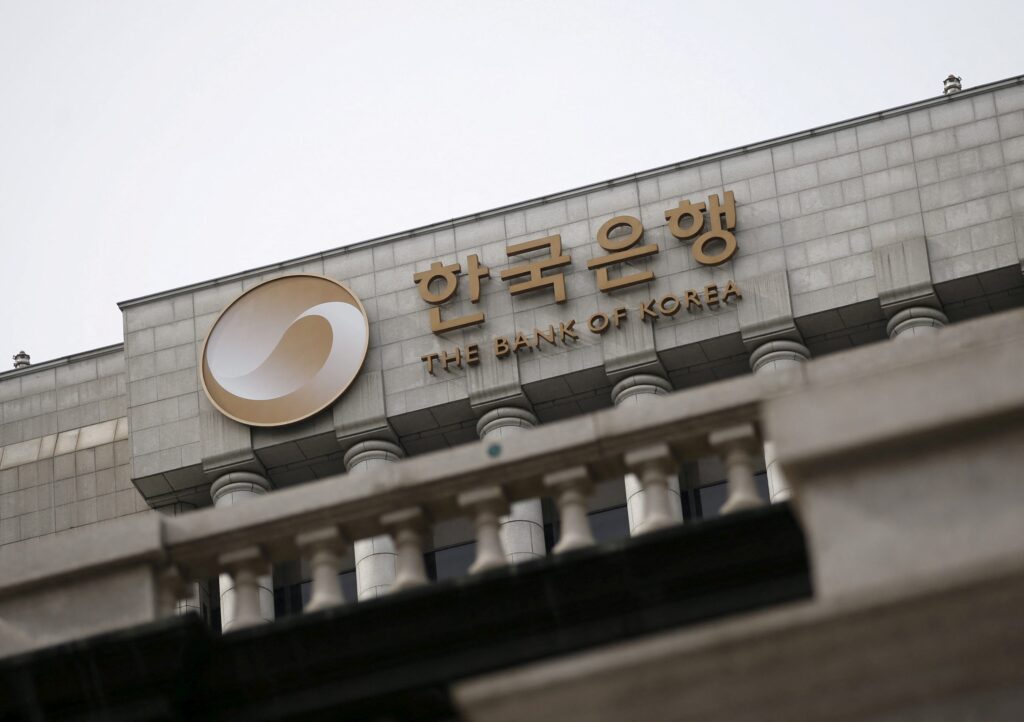
SEOUL, July 18 — The Bank of Korea’s crisis-fighting toolkit was forged in the crucible of war and political upheaval. Historical records show that the central bank, established on June 12, 1950 under the Bank of Korea Act of May 5 that year, took over assets from the simultaneously liquidated Bank of Chōsen. Just 13 days later, the Korean War began, forcing the head office to relocate from Seoul to Daejon, then Daegu, and finally Busan before returning after the Incheon landings.
War and Liquidity Crisis
During the war, North Korean forces flooded circulation with older Bank of Chōsen notes, triggering a liquidity crisis. The Bank of Korea responded by instituting a weekly withdrawal limit of 10,000 won per household and a monthly limit of 30,000 won. In January 1951 it introduced the Maximum Loan Ceiling System, setting quarterly caps on increases in general loans and requiring prior approval for any loan exceeding 50 million won.
By 1952, the BOK began repaying $470 million in aid from the UN Korean Reconstruction Agency and the Economic Cooperation Administration. After the war, inflation surged.
Data shows wholesale prices in Seoul rose 48% annually from 1954 to 1956. The Korea Development Bank was created on April 1, 1954, and the Bank of Korea underwrote 5 billion hwan of Industrial Rehabilitation Bonds to finance it. To control inflation, the BOK used credit ceilings, a loan priority system, and reserve requirements that ranged from 10% to 30%.
Reserve requirements were dropped to 15% in January 1954, then raised to 25%, and further reduced to 10% by April 1957.
Stabilization and Banking Reform
The Korea-US Joint Economic Committee implemented the Fiscal and Monetary Stabilization Plan in 1957, restricting defense spending and loans. Later in the late 1950s, the General Banking Act of 1950 took effect, privatizing the banking sector and creating regional banks such as Seoul Bank and Hungop Bank. After the Democratic Party came to power in 1960 following the April 19 Revolution, the Bank of Korea eliminated the preferential financing system and abolished its rediscount ceiling, but reimposed quarterly credit ceilings.
The government centralized foreign exchange rates, depreciating the hwan from 500-600 per dollar to 1,300 per dollar between January and February 1960, and required citizens to sell foreign currency through the BOK.
Emergency Measures After the Coup
Following the May 16 coup in 1961, bank runs occurred. The government revised the budget three times that year in an expansionary direction. By the third quarter, money demand dropped and commercial banks held large reserves.
On November 1, the government added M— (the source record is incomplete on this point). These emergency measures illustrate the Bank of Korea’s early role in market stabilization during crises — a role that remains relevant for emerging economies today as they navigate volatile capital flows and political shocks.
Sources
{“@context”: “https://schema.org”, “@type”: “NewsArticle”, “headline”: “**Bank of Korea’s Crisis Measures Stabilized Post-War Economy**”, “description”: “SEOUL, July 18 — The Bank of Korea’s crisis-fighting toolkit was forged in the crucible of war and political upheaval. Historical records show that the…”, “datePublished”: “2026-07-18T09:30:00+00:00”, “author”: {“@type”: “Person”, “name”: “Aibek Nurlan”}, “publisher”: {“@type”: “Organization”, “name”: “InfoPulse Today”, “url”: “https://newsfeed.infopulsetoday.com/”}, “citation”: [{“@type”: “CreativeWork”, “url”: “https://en.wikipedia.org/wiki/Bank_of_Korea”}]}




