
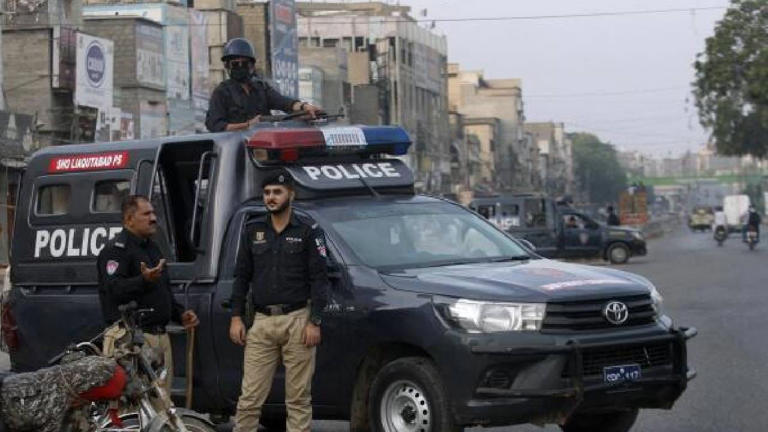
GWADAR, Pakistan — Fourteen police officers lost their jobs this week, but the weapons they failed to protect are still missing. The inquiry into the June 7 raid on Gwadar’s main police station ended with dismissals for gross negligence, but the stolen arsenal remains unaccounted for. Superintendent of Police (Security) Abdul Waheed said the 14 officials — including sub-inspectors — were sacked for corruption, violation of security protocols, and irresponsible conduct.
They were on duty the night unidentified armed men walked in, overpowered the personnel, and looted official weapons, ammunition, and government equipment. No resistance was offered.
The station is the main police post in Gwadar, the port city that anchors the China-Pakistan Economic Corridor. That makes the failure strategic. Separatist groups have hit this city repeatedly — suicide bombings, coordinated assaults, attacks on Chinese nationals and security forces.
The Balochistan Liberation Army and the Baloch Liberation Front have waged a decades-long insurgency across Balochistan, Pakistan’s largest and least developed province. What happens next is the question.
The attackers got away with a significant quantity of arms. Those weapons are now in militant hands, likely to be used in future attacks. The dismissals remove 14 officers from the payroll, but they do not recover the stolen hardware or fix the security posture at the station.
Gwadar’s police force now faces a credibility gap. If the main station cannot hold its own armory, what can it protect? Chinese workers, CPEC infrastructure, and local residents all depend on a security apparatus that just proved it could be rolled without a fight.
The inquiry committee found gross negligence and corruption — not a shortage of men or guns, but a failure to use what they had. The dismissals send a message, but it is a narrow one.
Fourteen officers are gone. The system that allowed them to remain on duty despite known violations is still in place. The protocols they broke are still the same protocols.
No changes to training, oversight, or accountability were announced. Balochistan has seen this pattern before.
Police stations get hit. Officers get fired. The insurgency continues.
The BLA and BLF have shown they can coordinate complex attacks in Gwadar. They have targeted Chinese interests directly. They now have more firepower.
The port city is not just another district. It is the showcase of CPEC, the multi-billion-dollar corridor linking China’s Xinjiang to the Arabian Sea.
Every security lapse in Gwadar resonates beyond Pakistan. Investors, diplomats, and Chinese officials watch these incidents closely. Waheed’s inquiry was thorough enough to identify 14 officers for dismissal.
It did not identify the attackers. It did not explain how unidentified men entered a police station and left with government weapons without a single shot being fired.
Those questions remain open. The provincial government has not announced any additional security measures. No curfews, no checkpoints, no reinforcements have been publicly ordered.
The dismissals appear to be the end of the official response, not the beginning of a broader fix. Militant groups in Balochistan have a long history of exploiting police weakness. They hit soft targets, seize equipment, and melt away.
The June 7 raid followed that playbook exactly. The dismissals followed a different playbook — administrative punishment, not operational reform.
Gwadar’s police now have fewer officers and the same vulnerabilities. The stolen weapons are out there. The groups that took them are still active.
The next attack may not wait for another inquiry.




