
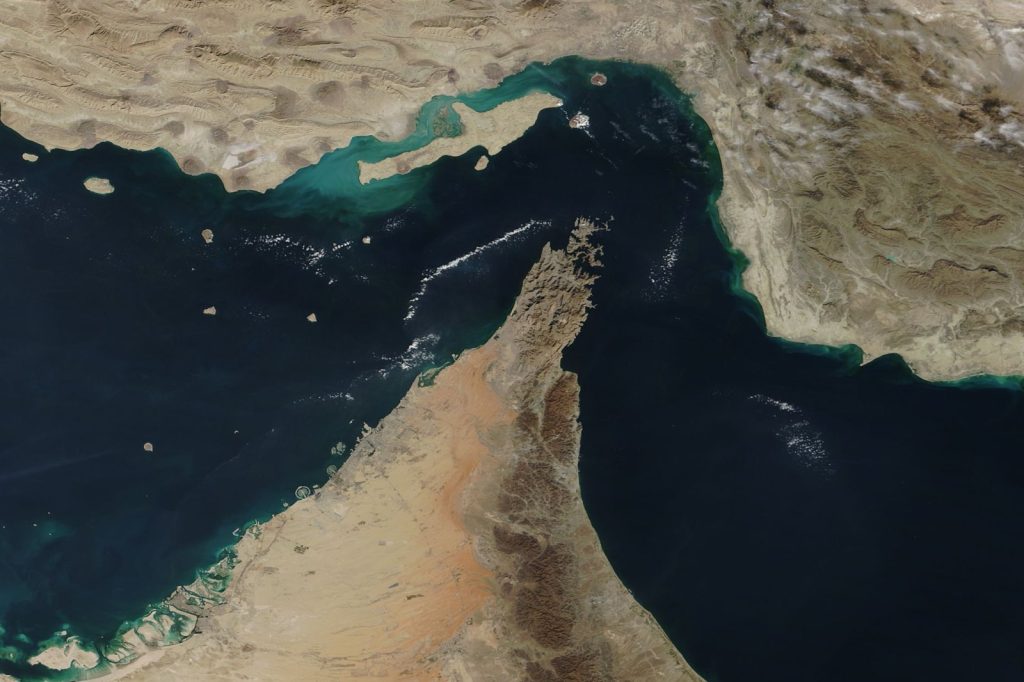
Filipino families bracing for another round of price hikes now face a grim reality: the Strait of Hormuz, a narrow waterway that carries much of Asia’s oil, has become a battlefield. The collapse of the U.S.-Iran agreement, celebrated just weeks ago, has already triggered two cycles of attacks and retaliatory airstrikes. For millions in the Philippines, this is not an abstract geopolitical contest.
It is a direct line to higher costs at the pump, in the market, and on the electricity bill. The trouble began last week.
Iranian forces struck a commercial vessel moving through the strait on a route Tehran did not authorize. The U.S. responded with bombing runs against Iranian military targets. Then on Saturday, it happened again.
A second commercial ship, this one a Panama-flagged tanker, was hit by an Iranian drone. The U.S. hit back, this time with a larger wave of strikes targeting surveillance, communications, air defense, and drone storage facilities.
U.S. Central Command confirmed the operation, saying in a statement: “Iran was given a chance to honour the ceasefire agreement but elected not to.” The strikes, Central Command added, were “in direct response to continued Iranian aggression against commercial shipping.” For the Philippines, the math is simple. The Strait of Hormuz is a bottleneck. Roughly a fifth of the world’s oil passes through it.
Any disruption there sends shockwaves through global energy markets. Asian economies, heavily dependent on imported oil, absorb the blow quickly. Filipino consumers already reeling from inflation will feel the pinch.
Overseas Filipino workers in the Middle East, who send billions of dollars home each year, now face a volatile security situation. The report notes that for “Filipino families already feeling the pinch of higher prices, further instability in this corridor could mean more economic pressure.” That is the nub of it.
The collapse of the memorandum of understanding is a bitter turn. Just weeks ago, there was hope. The deal had been signed.
Families across the Middle East and Asia, including here, had reason to think the region might see a lasting peace. That hope is gone.
Now it is open military exchanges in a crowded shipping lane. The U.S. says it acted because Iran kept attacking vessels. Iran says the ships were using unauthorized routes.
Whatever the legal arguments, the result is the same: a strategic waterway has become a shooting gallery. Saturday’s strikes were larger than the first round. That escalation is what worries analysts.
Each cycle of attack and reprisal raises the odds of a wider conflict. The strait is not just an oil route; it is a chokepoint for liquefied natural gas and container ships carrying manufactured goods to Asian ports.
If the fighting spreads, shipping insurance rates will spike. Some vessels may avoid the strait altogether, lengthening voyages and pushing up freight costs. All of that lands on the consumer.
The Philippine government has not issued a formal statement on the latest strikes. But the implications are clear.
The country imports nearly all its oil. The peso is already under pressure. A sustained disruption in the strait would force the central bank to make hard choices about interest rates.
For ordinary people, it means stretching budgets that are already tight. There is no sign of de-escalation. The U.S. has made clear it will keep striking if Iran keeps attacking ships.
Iran has shown no willingness to back down. The brief window of diplomacy has closed.
What remains is a cycle of violence that threatens to pull in more players. For the Philippines, the Strait of Hormuz is not a faraway trouble. It is a direct line to the family budget, and that line is on fire.




