
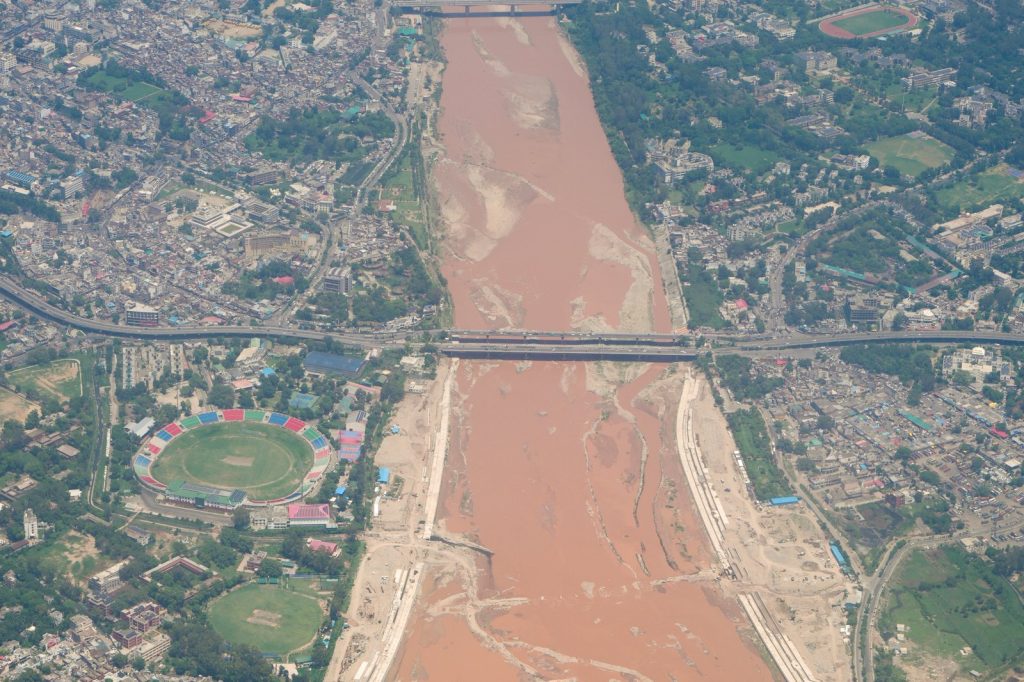
Three people lost their lives and two others sustained injuries when a bridge collapsed in Jammu on May 1. The incident has prompted an official inquiry, but it has also drawn attention to the broader pressures facing the city’s aging public works.
Jammu, a city spanning 240 square kilometers, is the winter capital of the union territory of Jammu and Kashmir. Situated between the Himalayan range and the northern plains, it is the second-most populous city in the region. Known as the “City of Temples,” its ancient Hindu shrines attract millions of pilgrims and tourists each year.
That influx of visitors places significant demand on the city’s infrastructure, including bridges, roads, drainage systems, and the power grid. The city’s location along the banks of the river Tawi has historically made it a strategic center for trade and commerce, but it also confines the city to a narrow geographic corridor for expansion.
In the wake of the collapse, the administration announced a standard inquiry. Investigators are expected to examine design, construction, and maintenance records, as well as any external factors that may have contributed to the failure. Local residents have called for a thorough investigation, with grief and concern fueling demands for accountability. However, the collapse raises questions that extend beyond the immediate cause.
Infrastructure in Jammu does not fail due to a lack of inspection alone, but because inspection cannot resolve issues of overuse, underfunding, and age. The bridge that collapsed was part of a network serving multiple functions: carrying pilgrims to temples, commuters to work, goods to markets, and emergency vehicles.
It bore the weight of a city that has grown faster than its maintenance budget can accommodate. Jammu and Kashmir is experiencing growth, which brings new construction and new bridges. But it also creates a temptation to build quickly while inspecting slowly.
The May 1 collapse is one data point in that pattern. Three dead, two injured, a bridge down, and an inquiry promised.
The human toll is clear. The structural reality is that a bridge rarely fails because of a single bad beam or a single missed crack. It fails because the system designed to catch those problems has been running on a deficit for years.
The inquiry will likely confirm that pattern. What it cannot confirm is whether the next bridge will hold.
A single investigation can assign blame for one collapse, but it cannot rebuild the maintenance schedule for an entire territory or reduce the number of people who need to cross a river every day.




