
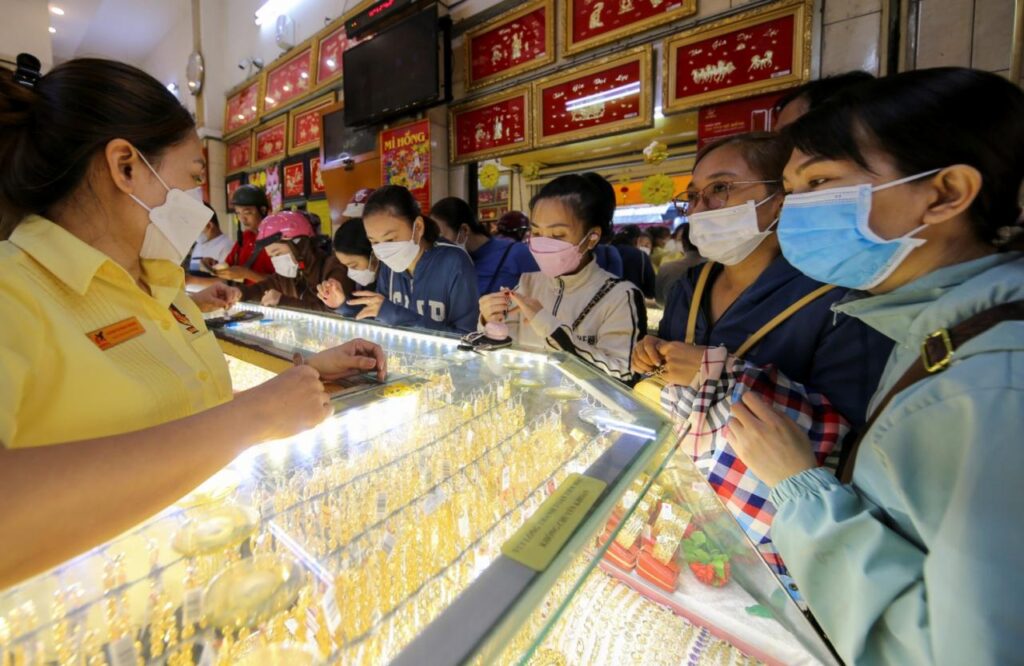
Amidst a shifting landscape in Vietnam’s precious metal sector, domestic gold market prices underwent a substantial correction during the week of March 14, 2020. This correction was primarily influenced by a decline in local demand and broader global market instability.
In response, major manufacturers such as Saigon Jewelry Company Limited, the country’s largest gold and jewelry producer, decreased their selling prices to stimulate sales, as economic uncertainties prevailed. This adjustment in pricing strategy by leading manufacturers aimed to attract buyers during this period of financial turmoil. Saigon Jewelry Company Limited set its gold price at approximately 47.3 million Vietnamese Dong per tael, equivalent to around 2,039 US dollars.
Competitors Bo Tin Minh Chau and Doji followed suit, setting their rates at 47.08 million and 47.05 million Dong respectively. These deliberate price reductions were designed to make gold, a sought-after safe-haven asset, more accessible to retail investors.
Industry insiders suggested that the lower prices served as an immediate incentive for cautious buyers during volatile times. The strategy recognized that gold had become a focus of investment discussions following the initial outbreak of the coronavirus pandemic. Maintaining competitive pricing was essential for sustaining market share, as consumer confidence wavered.
Analysts observed that despite the metal’s traditional role as a store of value and stable foreign exchange rates, Vietnamese investors showed reduced enthusiasm for gold purchases. This shift occurred even though the economy remained credible through prudent fiscal management.
The domestic market, which previously demonstrated resilience, was affected by changing global conditions that altered local perceptions. Investors became more cautious about allocating funds to physical assets without clear upward momentum. Market observers noted that the stability of the currency reduced the immediate need for gold as a hedge against inflation or devaluation, leading to softened demand as households prioritized other financial instruments or savings vehicles. International developments, such as the declaration of COVID-19 as a pandemic by the World Health Organization, played a significant role in shaping the domestic landscape.
Global gold prices surged, but these increases did not immediately translate into stronger domestic demand in Vietnam. Local manufacturers had to navigate the disconnect between rising international prices and sluggish local interest.
Some companies posted advisory content on their websites encouraging investors to view the current moment as an opportunity to acquire gold at favorable rates. Long-term investment goals face short-term headwinds in Vietnam, the second-largest global holder of gold reserves, consuming approximately 20 tons annually. The nation has consistently promoted the metal as a reliable long-term investment vehicle for its citizens.
Despite these efforts, short-term economic pressures from the pandemic created immediate challenges for retailers and manufacturers alike. The industry adapted by offering flexible payment terms and promotional pricing to maintain customer engagement.
Officials emphasized that building a robust domestic gold market required patience and sustained effort beyond simple price cuts, focusing on transparent reporting and reliable product quality. As the situation evolved, stakeholders remained committed to positioning Vietnam as a key player in the global precious metals landscape while addressing local needs.
Related Stories
Vietnam Gold Prices Drop 400,000 Dong Per Tael Indonesia Hikes Fuel Prices by 30%, Cuts Energy Subsidies Vietnam FDI Pledges Drop 38% as Demand Weakens #Vietnam #Finance #News




