
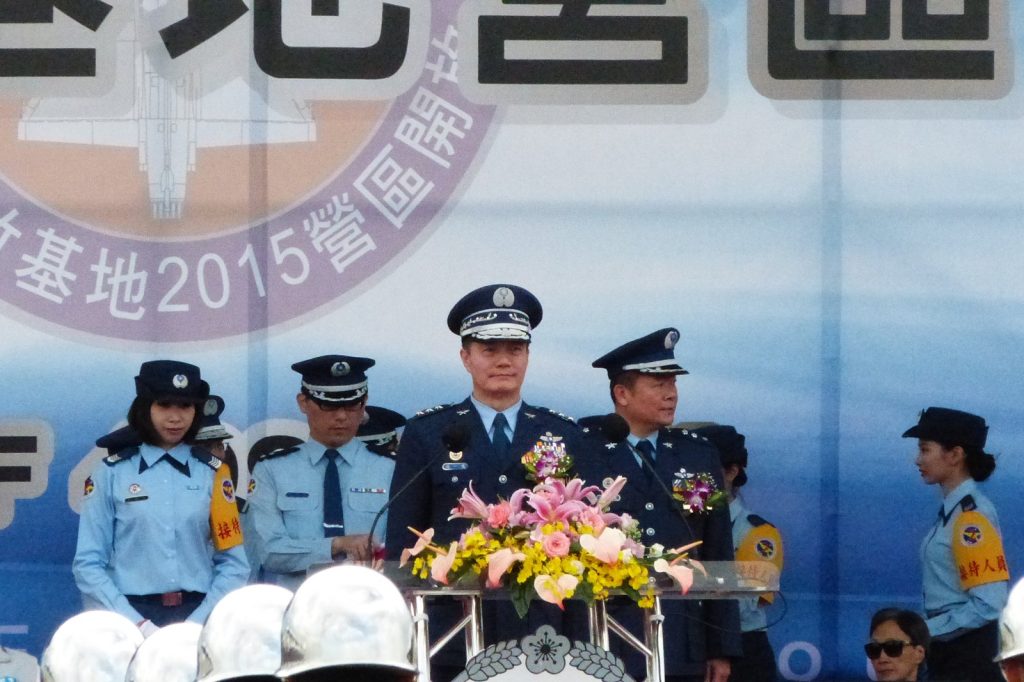
Taiwan’s Air Force General Shen Yi-ming and seven other defense officials were confirmed dead after their helicopter crashed in a mountainous part of Taipei due to poor weather. The Ministry of National Defense (MND) first broke the news Thursday morning with an initial report that Shen was among eight people missing after a UH-60M Black Hawk helicopter made an emergency landing. Few hours later, during an afternoon news conference on the same day, MND confirmed the death of Shen and seven officials.
They have also announced that five people were able to survive. Military chief Shen, 62, took oath of office just last year.
Prior to this, he became the 22nd Air Force commander of the Air Force and Deputy Minister of Defense. In a Facebook post, Taiwan’s President Tsai Ing-wen expressed her sadness about the death of the military officials, including Shen, whom he regarded as an “outstanding general.” “I would like to extend my deepest condolences to the families of the victims,” the president wrote.
MND said that the aircraft was off to Yilan for a routine mission ahead of the Chinese New Year but it was forced to land after losing connection with the aviation authorities. The cause of the plane crash remains unclear as of writing.
The incident has significant implications for Taiwan’s military leadership, as the loss of high-ranking officials can impact the country’s defense strategy and operations. The Taiwanese military plays a crucial role in maintaining national security, particularly in the face of regional tensions. The Air Force, in particular, is responsible for defending Taiwan’s airspace and supporting other branches of the military in their operations.
The UH-60M Black Hawk helicopter involved in the crash is a commonly used aircraft in military operations worldwide, known for its reliability and versatility. However, like any complex machine, it is not immune to accidents, and investigations into such incidents are essential to determine the cause and prevent similar tragedies in the future. The Taiwanese military has a robust safety record, but this incident highlights the risks inherent in military operations, even during routine missions.
The Chinese New Year is a significant holiday in Taiwan, and the military’s routine mission ahead of the celebrations was likely aimed at ensuring national security and stability during this period. The fact that the helicopter was on a routine mission when it crashed underscores the risks that military personnel face even in non-combat situations.
The investigation into the cause of the crash will be closely watched, as it may have implications for the safety of military personnel and the operation of similar aircraft in the future. The response of Taiwan’s President, Tsai Ing-wen, reflects the gravity of the situation and the respect with which the military officials are held.
The expression of condolences to the families of the victims is a customary gesture in such situations, but it also underscores the human cost of military service and the sacrifices made by those who serve in the armed forces. The incident will likely have a profound impact on the families of the victims and the wider military community, and it may also prompt a review of safety procedures and protocols to minimize the risk of similar incidents in the future.




