Japan is considering a five-year defence programme worth as much as 80 trillion yen (US$508 billion), close to twice the roughly 43 trillion yen allocated under the existing programme. The figure is still being negotiated. Tokyo intends to revise its three main national security documents by the end of 2026, so nothing is settled merely because the number has appeared in Japanese media reports.
Drones, artificial intelligence for battlefield management, and warfare across cyber and space domains are expected to feature prominently. Observers say the result could be a military better able to deter or answer People’s Liberation Army operations around Taiwan and the East China Sea. They also point to a force that could absorb attacks and keep fighting for longer.
The shortage behind the spending
Money cannot recruit sailors or soldiers. The Defence Ministry counted 217,701 personnel at the end of March, against an authorized strength of 247,154. That leaves the Self-Defense Forces at 88.1 percent of establishment. If present trends continue, the ministry expects about 180,000 personnel by fiscal 2035 and about 130,000 by 2045.
A senior Ground Self-Defense Force officer warned that the shortfall “increases the burden on each service member and could weaken the organization.” It is a refreshingly blunt assessment. Tokyo’s response includes revised pay, better support after service, and wider use of uncrewed aircraft so fewer people can perform more work.
Defense Minister Shinjiro Koizumi also wants a new government body in fiscal 2027 to assist former personnel and their families, including with employment. Chief Cabinet Secretary Minoru Kihara said serving members needed better conditions, while veterans and their families should be able to take pride in their lives.
A narrow legal foundation
The Self-Defense Forces were created in 1954 during the Cold War. Article 9 of Japan’s postwar constitution renounces war and bars the maintenance of war potential, yet successive governments have interpreted it as permitting self-defence. Legislation passed in 2015 went further, allowing Japan to aid an ally facing an “existential crisis situation”.
Washington remains central to this planning. Koizumi and US Defense Secretary Pete Hegseth agreed earlier this week on more advanced joint exercises, including additional live-fire training. Such drills could involve weapons previously kept out of view because of local opposition and the likelihood of a sharp response from Beijing.
Personnel policy may prove just as consequential. A parliamentary group led by former Defense Minister Itsunori Onodera is preparing proposals that include raising the retirement age. At present, many personnel leave in their mid-50s under rules designed to keep units young and ready for combat.
Sources
- What’s the message for China as Japan weighs US$500 billion defence boost?
- Japan Self-Defense Forces
- With China in mind, Japan eyes more realistic joint military exercises
- Tokyo Writes the SDF's Manpower Problem into Its New Security Documents – Second Line of Defense
- Can Japan’s Self-Defense Forces legally open fire on a zombie horde?
- Japan marks 72nd anniversary of JSDF
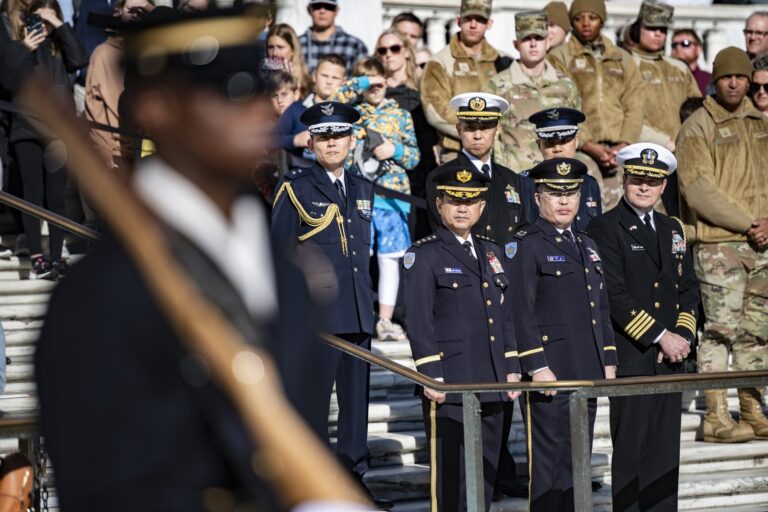
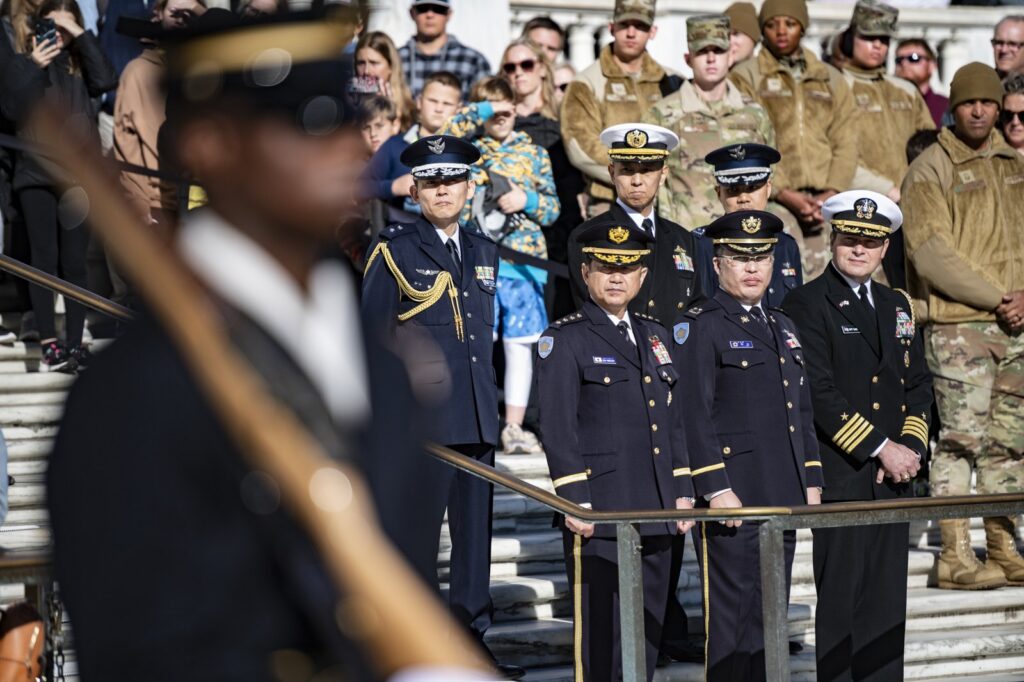
Photo: Arlington National Cemetery (Public domain)