BEIJING, October 26, 2026 — The fifth plenum of the Chinese Communist Party opened on Monday with a focus on “major issues on advancing the party’s full and rigorous self-governance,” a gathering that analysts say serves as a permanent mechanism of political control ahead of next year’s 21st Party Congress.
The scope of the crackdown
According to Chinese state media, disciplinary authorities opened investigations into more than 1 million people last year, including over 100 officials at or above ministerial or provincial level. The fifth plenum brings together more than 300 members of the CCP’s Central Committee. This meeting is likely to be the last substantive gathering before the 21st Party Congress in 2027, where Xi Jinping is expected to be anointed for a fourth term as the head of the party.
Loyalty and the definition of graft
Since coming to power in 2012, Xi has made anti-corruption the defining feature of his rule. Kerry Brown, director of the Lau China Institute at King’s College London, has noted that in Xi’s worldview, the distinction between corruption and political disloyalty is blurred. “If you’re corrupt, you’re not politically loyal. If you’re politically loyal, you’re not corrupt,” Brown said. He added that in the CCP system, “corruption is not just material things,” but also “spiritual corruption,” which includes political disloyalty.
Neil Thomas, a senior fellow at the Asia Society thinktank, has said that while Xi has made the party less corrupt and strengthened his control, tougher punishment cannot fully resolve the problem of officials putting their own interests ahead of the party’s. “Xi’s answer is to keep tightening discipline, making anti-corruption a permanent method of governing with no obvious point at which he can declare the job done,” Thomas said.
Anti-corruption as governance
Some analysts argue that the endurance of the anti-graft drive is due to the fact that corruption is a feature rather than a bug of an authoritarian, top-down political system governing 1.4 billion people. The campaign has become entrenched as a method of political control, with investigations nearly always resulting in conviction, raising questions about whether targets are truly guilty of corruption or are simply rivals to those in charge.
The Fifth Plenum’s Structural Role
The fifth plenum functions as a critical institutional checkpoint within the Chinese Communist Party’s five-year cycle, serving as the penultimate gathering before the 21st Party Congress. This meeting convenes more than 300 members of the CCP’s Central Committee and is “likely to be the last substantive meeting before next year’s 21st Party Congress, where a new Central Committee will be chosen, and where Xi is expected to be anointed for a fourth term as the head of the CCP.” This structural positioning underscores the plenum’s role not merely as a policy forum, but as a mechanism for consolidating authority ahead of a leadership transition.
Unlike ordinary party meetings, the fifth plenum carries the weight of a “permanent mechanism of political control,” as analysts describe it, particularly given the context of the ongoing anti-corruption campaign. The source material notes that the plenum’s focus on “major issues on advancing the party’s full and rigorous self-governance” translates in party-speak to a concentrated effort on discipline and loyalty. With investigations into more than 1 million people—including over 100 officials at or above ministerial or provincial level—occurring annually, the plenum serves as a high-level review and reinforcement of these disciplinary priorities, ensuring the campaign’s continuation as a central tenet of party governance.
Sources
- Xi Jinping’s corruption crackdown in the spotlight as China prepares for meeting of top leaders
- Xi Jinping
- Xi Jinping’s corruption crackdown in the spotlight as China prepares for meeting of top leaders
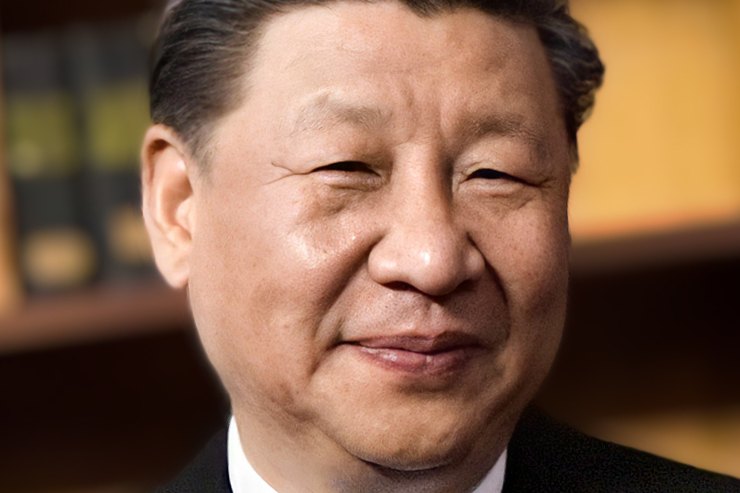
Photo: Press Service of the President of the Russian Federation / Roman Kubanskiy (Wiki (CC BY 4.0)