
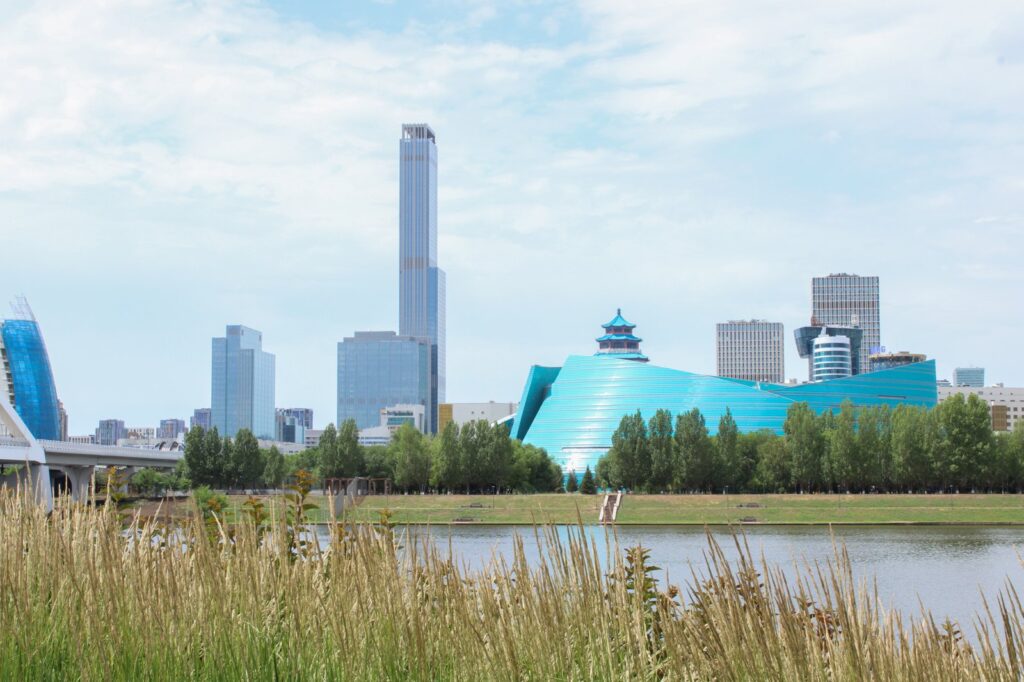
ASTANA, October 18, 2026 — China’s growing presence in Kazakhstan’s capital is evident in new infrastructure and rising demand for its goods, even as the United States seeks to deepen its own engagement across Central Asia.
Infrastructure Shapes the Capital’s New Look
Astana’s skyline reflects a blend of Soviet-era blocks and modern architectural landmarks that resemble those found in northern Chinese cities, according to reporting from the South China Morning Post. A newly opened Chinese-built light rail train runs along the city’s central axis, forming part of Beijing’s broader footprint in the capital. Kabdygali, a local resident cited in the same report, notes increasing demand for Chinese electric vehicles among locals and Russian customers due to competitive pricing and quality. His grandfather has placed an order for a BYD Han and plans to collect it at the China border before driving it home.
US Seeks to Expand Role Amid Regional Shifts
US Secretary of State Marco Rubio traveled to Uzbekistan for talks with five Central Asian countries under the C5+1 format, as reported by Radio Free Europe/Radio Liberty. The visit, held from October 17 to 20 in Samarkand, aimed to strengthen commercial ties and expand Washington’s strategic presence in the region. Rubio led a commercial delegation of more than 200 business leaders and held bilateral meetings with senior officials from Kazakhstan, Kyrgyzstan, Tajikistan, Turkmenistan, and Uzbekistan. According to Ariel Cohen of the Atlantic Council, the Trump administration remains focused on global competition with China and views Central Asia as a arena where no single power should dominate.
Trade and Transport Routes Gain Strategic Value
Central Asian governments are seeking to diversify partnerships and reduce dependence on traditional powers like Russia and China, as noted in the RFE/RL report. The Middle Corridor, which connects Central Asia across the Caspian Sea and the South Caucasus toward Europe, is gaining importance as an alternative to routes passing through Russia. Washington sees value in securing supply chains and accessing critical minerals, energy resources, and transport corridors in the region. Ken Moriyasu of the Hudson Institute observed that regional capitals are uncomfortable replacing Russian dominance with Chinese dominance, which explains their outreach to Washington and European partners.
Local Demand for Chinese Goods Continues to Rise
Beyond infrastructure, there is growing demand for Chinese commercial goods in Central Asia, particularly electric vehicles, due to their price and quality. The South China Morning Post report highlights that this trend is visible not only in Astana but among regional customers. While the article does not specify volume or market share, it underscores that Chinese exports are meeting a need for affordable, reliable products in a region where consumers are increasingly open to alternatives to traditional suppliers. No claims are made about future adoption or long-term trends beyond what is stated in the source material.
US Pushes for Trade Liberalization and Mineral Access
Republican Senator Steve Daines emphasized the need to remove outdated, Soviet-era Jackson-Vanik trade restrictions to deepen relationships with Central Asian nations. This legislation currently denies normal trade relations status to certain nonmarket economies unless they adhere to specific freedom-of-emigration requirements. Daines stated that the US has already made tremendous progress in furthering these relationships and must continue expanding partnerships by eliminating these barriers.
While critical minerals are a key component of US strategy, the region’s strategic value also stems from its geographic location between China, Russia, South Asia, and Europe. Analysts note that a stronger US corporate presence along transport routes could help establish lasting American economic interests. The planned delegation of more than 200 business leaders underscores the administration’s emphasis on commercial diplomacy, with the hope that closer engagement will translate into investment and business agreements across various sectors.
Sources
- In Focus | Beyond EVs and perception, how China is gaining ground in Central Asia
- Why China is producing more meat and dairy than it can eat – Where is the surplus heading? | Today News
- Rubio Heads To Central Asia As US Seeks Bigger Role In Region Dominated By Russia, China
Photo: Dauren Nabijan (CC0)




