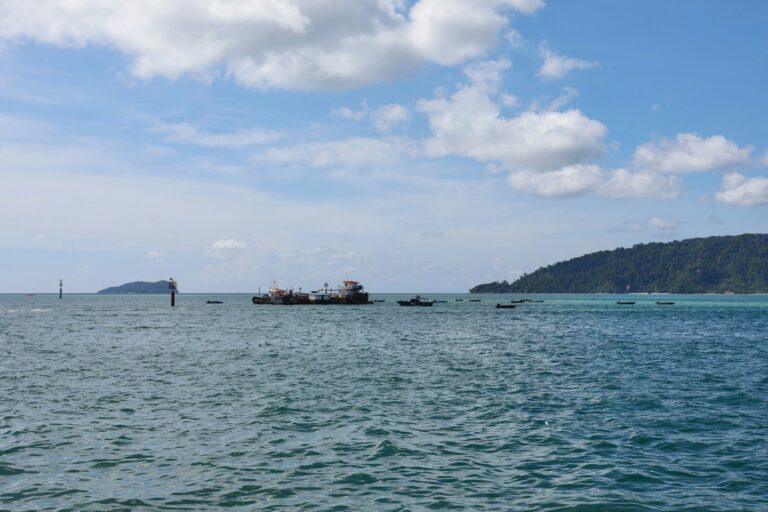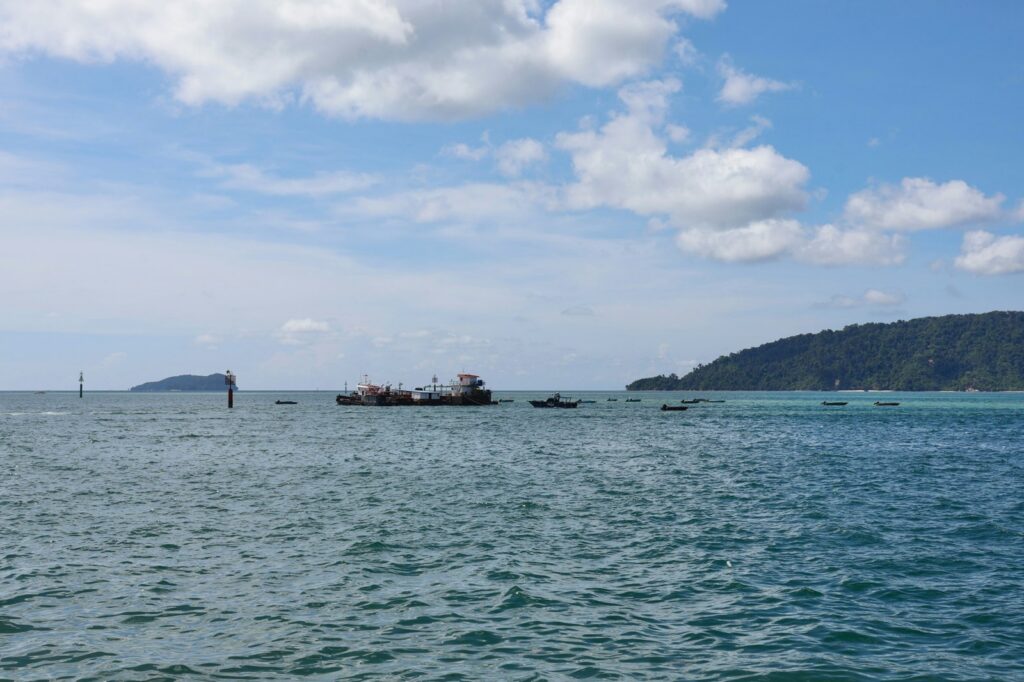
MALAYSIA, November 2, 2026 — A small Iranian tanker sat anchored in the Malaysian Eastern Outer Port Limits (EOPL) in September, its hull heavy with 500,000 barrels of liquefied petroleum gas, while investigators from United Against Nuclear Iran (UANI) filmed it receiving fuel and maintenance services. The vessel, identified as the SOGL, had slipped past the U.S. naval blockade three weeks earlier, marking one of only nine successful breaches by small tankers since Washington reinstated the maritime embargo in July.
The scene, captured by UANI analysts who chartered a supply vessel to transit 100 nautical miles into the anchorage, reveals a persistent loophole in the American enforcement network. While the blockade has effectively halted the export of Iranian crude oil, smaller vessels carrying flammable LPG continue to exploit gaps in the security perimeter. These ships, often part of a “ghost fleet,” use the offshore hub to transfer cargo and evade detection before continuing their journey to China.
The Shadow Hub Offshore
The EOPL lies approximately 70 kilometers from the Malaysian coastline, a vast expanse of water that has become a critical staging ground for sanctioned energy trade. On September 16, UANI senior analyst Jemima Shelley’s team arrived at the anchorage, where they observed the SOGL alongside other Iran-flagged cargo ships. The area allows vessels to wait offshore, receive supplies, and conduct ship-to-ship transfers, providing a logistical lifeline for Iranian exports as U.S. forces patrol waters closer to the Strait of Hormuz.
Shelley described the SOGL as a “Handymax small tanker,” a classification that refers to its modest size relative to the massive supertankers that typically carry bulk crude. By September 16, the vessel had already completed its initial leg of the journey. It had loaded its cargo at Assaluyeh Port in late August and breached the blockade line on September 1. The footage shared with investigators shows the tanker engaged in routine maritime activities, a stark contrast to the high-stakes enforcement operations occurring hundreds of miles to the west.
UANI noted that the SOGL was not alone in its maneuvering. The organization has tracked at least 53 tankers laden with Iranian oil operating along the Iranian coastline. However, the specific use of Malaysian waters for intermediate servicing highlights a shift in the ghost fleet’s operational strategy. By moving cargo and services to a neutral or semi-neutral zone, the vessels reduce the immediate risk of interception by U.S. naval assets, which are primarily focused on the Gulf of Oman and the Strait of Hormuz.
Exploiting the LPG Gap
The U.S. maritime blockade, first imposed on April 13 and reinstated on July 14 after diplomatic negotiations collapsed, has proven highly effective against the bulk of Iran’s oil exports. According to UANI, no tanker laden with Iranian crude oil has successfully departed the Gulf of Oman since July 12. The U.S. prioritizes the interception of very large tankers, which often carry two million barrels of crude, and the blockade has deprived Tehran of a major source of revenue.
However, the smaller vessels carrying LPG have found a way through. LPG, a flammable mixture of propane and butane used for heating, cooking, and industrial production, presents unique enforcement challenges. Shelley explained that the primary technique for enforcing the blockade is to turn vessels around, but this requires close proximity and can be dangerous with volatile cargo. “LPG carries a lot of risks,” Shelley said. “Sometimes they do have to use military force and this would be incredibly high risk on far more volatile cargo such as LPG.”
This risk calculus allows opportunistic small tankers to exploit the blockade. The SOGL carried approximately 500,000 barrels of LPG, a volume significant enough to impact regional markets but small enough to be maneuvered with greater agility than a supertanker. These vessels often use tactics associated with the ghost fleet, including turning off their Automatic Identification System (AIS) transponders and flying false flags to appear as stateless vessels.
The process involves a high-risk ship-to-ship transfer in the Gulf of Oman. A larger vessel loads the LPG at an Iranian port, transits the Strait of Hormuz, and then transfers the cargo to a smaller tanker in the Gulf of Oman. This smaller vessel then attempts to breach the blockade line. The SOGL’s journey from Assaluyeh to the Malaysian anchorage demonstrates the completion of this complex, multi-stage operation.
Ghost Fleet Tactics and Sanctions
The SOGL, identified by IMO number 9208227, was added to the U.S. Treasury Department’s Office of Foreign Assets Control sanctions list on October 8. The listing cites its alleged involvement in transporting Iranian petroleum products since 2025. The vessel has operated under multiple flags, including the Comoros and Zimbabwe, a common practice among ghost fleet operators seeking to obscure ownership and evade sanctions enforcement.
UANI’s monitoring reveals a broader pattern of activity in Southeast Asian waters. At least 22 tankers listed on UANI’s Ghost Armada were anchored or loitering north of the EOPL anchorage with their AIS signals active. Many of these vessels likely departed the area due to recent enforcement actions by Malaysian maritime authorities. Nevertheless, about 20 other Ghost Armada tankers remain loitering in the EOPL, indicating that the network continues to operate with a degree of impunity across Southeast Asia’s sea lanes.
The use of false flags and AIS shutdowns makes tracking these vessels difficult for international authorities. When a tanker turns off its AIS transponder, it becomes a “dark” ship, invisible to standard maritime tracking systems. This allows the vessel to transit sensitive waters without alerting nearby naval forces. The SOGL’s presence in Malaysian waters, filmed by UANI, provides rare visual evidence of these illicit activities, grounding the abstract concept of a “ghost fleet” in the tangible reality of a specific ship in a specific location.
Enforcement and Economic Pressure
The U.S. blockade has exerted significant economic pressure on the Iranian regime. By preventing the export of crude oil, Washington has cut off a major revenue stream for Tehran. Shelley described the blockade as an “overwhelming success” in this regard, noting that the inability to export crude is a “huge economic pressure” for the Iranian government. However, the continued flow of LPG through small tankers represents a persistent leak in the sanctions regime.
The enforcement strategy relies on a combination of deterrence and direct action. U.S. forces patrol the Gulf of Oman, ready to intercept and turn back vessels that attempt to breach the blockade line. The risk of military engagement with LPG-laden tankers is high, as a collision or forced stop could lead to a catastrophic explosion. This danger creates a de facto safe corridor for smaller vessels that can navigate the gaps in the patrol network.
UANI’s investigation highlights the complexity of maritime sanctions enforcement. While the blockade has achieved its primary goal of stopping bulk crude exports, it has not eliminated all sanctioned trade. The ability of small tankers to smuggle LPG to China via Malaysian waters underscores the adaptability of the Iranian shipping network. As the geopolitical tensions in the region continue, the race between enforcement agencies and ghost fleet operators remains a critical front in the broader conflict over Iran’s energy exports.
The SOGL’s journey to China, where it discharged its cargo, marks the end of one successful smuggling run. But with at least 52 Iranian oil and petrochemical loadings tracked since July 14, the flow of sanctioned products continues. The Malaysian anchorage remains a key node in this network, a place where the shadowy operations of the ghost fleet intersect with the open waters of the Indo-Pacific.
Sources
- Iranian ‘ghost fleet’ filmed evading US blockade en route to China, UANI says
- Iran Shipping Update – October 29, 2026
- Iranian Ghost Fleet Smuggles LPG to China Despite US Blockade
Photo: You Le / Unsplash (Unsplash License)