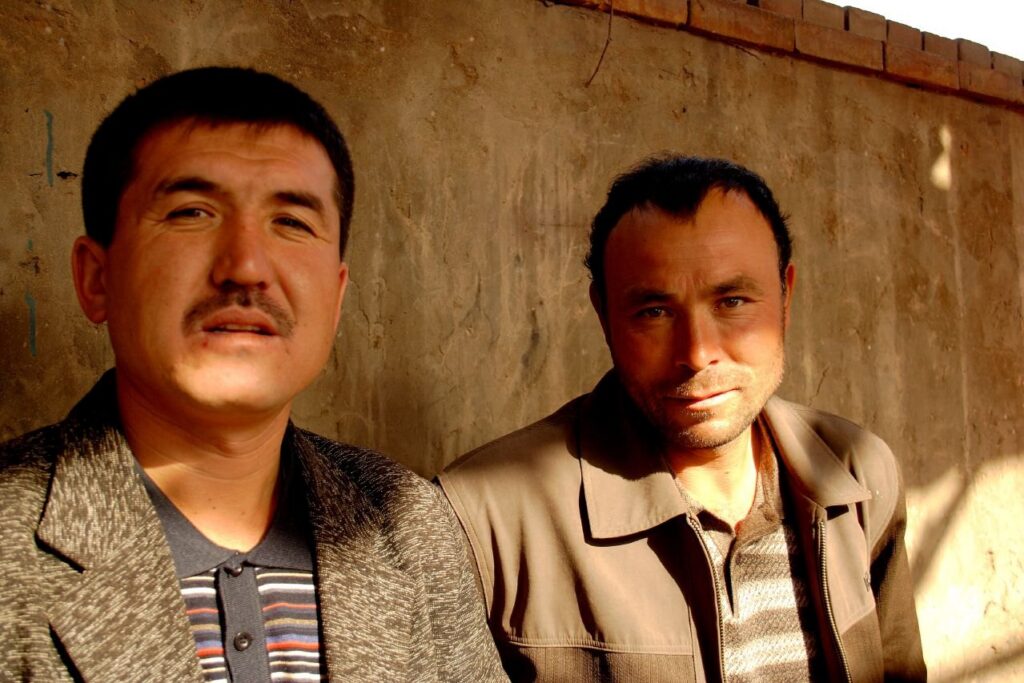
Thailand will allow five Uyghur men to challenge a Chinese extradition request in court before approving their deportation, a Thai government spokesman said, with human rights groups warning they face the risk of torture if sent back. The decision offers a narrow legal opening for a group that has spent more than a decade caught between Beijing’s demands and Bangkok’s obligations under international law.
Flight, Detention and a Decade in Limbo
The five men are the last remaining in Thailand from a group of over 300 Uyghurs apprehended without charge by Thai authorities on March 13, 2014, after they fled persecution in China’s Xinjiang Uyghur Autonomous Region, according to Amnesty International. They were part of a wider exodus that year, when hundreds, possibly thousands, fled unrest following a wave of violent attacks that prompted a massive crackdown by Chinese authorities. Thailand detained the group for illegal entry. In July 2015, about 170 women and children were released to Turkey, but Thai authorities forcibly transferred over 100 men to China a week later, drawing widespread condemnation.
Two of the five men now contesting extradition were transferred from Bangkok Central Prison to the Suan Phlu Immigration Detention Centre on October 21, 2026, under a royal pardon after serving most of a seven-year sentence for an escape attempt in January 2020. One of them was only 14 years old when first detained in 2014, Human Rights Watch noted. The other three men must spend another year in Thai jail for the same escape attempt, General Chaiyapruek Duangprapat, secretary-general of the National Security Council, told reporters.
The Legal Mechanism: Court Challenge Under Treaty
Thailand and China signed an extradition treaty in 1993 that entered into force in 1999. Requests under the pact must go through Thai courts. Government spokesperson Ekkapob Pianpises told Reuters that the Thai government has granted the five men the right to contest the case, that the two recently moved to Suan Phlu have been appointed a lawyer, and that the courts will decide their challenge. National Security Council chairman Chaipruak Duongprapat said his agency would not make the deportation decision; if the court supports the men’s position, they may be sent to a third country for resettlement, but if the ruling is not in their favor, they will be extradited under the treaty.

Non-Refoulement and the Risk of Return
The principle of non-refoulement bars the forcible return of anyone to a place where they face a genuine risk of torture, persecution or other serious harm. It is enshrined in the UN Convention Against Torture, to which Thailand is a party, and in Thailand’s own Prevention and Suppression of Torture and Enforced Disappearance Act. Human Rights Watch and Amnesty International say the two men at Suan Phlu face a real risk of torture, arbitrary detention and enforced disappearance if returned to China. Rights groups and the UN have accused Beijing of abuses against the Uyghur minority, including the mass use of forced labour in internment camps, allegations Beijing denies. Chinese Foreign Ministry spokesperson Mao Ning said cooperation on cross-border crimes such as human smuggling was in line with both countries’ laws and international practice.
Recent Precedent: The February 2025 Deportation
The current case unfolds in the shadow of Thailand’s deportation of 40 Uyghur men to China in February 2025, despite calls from Thai lawmakers and UN officials not to carry it out. A document obtained by Amnesty International shows the Chinese embassy requested the “repatriation” of 45 Uyghur men in January 2025; five remained in a Thai prison to serve sentences related to the escape attempt. Following the February deportations, Thai authorities made two visits to Xinjiang at China’s invitation to seek diplomatic assurances. NGOs monitoring the case reported that Thai authorities were able to meet fewer than 10 deportees and that no subsequent independent monitoring was permitted.
What It Means for Families Across the Region
For communities watching from across Asia, the court challenge is a test of whether legal safeguards can withstand diplomatic pressure. The two men at Suan Phlu submitted letters last week asking not to be sent to China; one wrote that they fear returning and are not terrorists, according to The Hindu. Opposition People’s Party representative Sasinan Thamnithinan said Thailand is obliged under domestic and international law not to return people to a country where they may face torture or inhuman treatment. Elaine Pearson, Asia director at Human Rights Watch, urged Prime Minister Anutin Charnvirakul to end forced returns to China and allow the men to travel to a safe third country.
Next Steps
The court has not yet set a date for the extradition hearings. The two men at Suan Phlu have been denied access to their lawyers and blocked from visits by civil society organizations and the National Human Rights Commission of Thailand since their transfer in October, Amnesty International reported. Three other Uyghur men remain in prison serving sentences for the 2020 escape attempt. China continues to insist on the return of the group detained in 2014, calling them terrorists.
Sources
- China seeks extradition of five Uyghurs from Thailand – AOL
- Uyghurs
- Thailand: Halt imminent forcible return of two Uyghur men to China
- Thailand: Two Uyghurs at Risk of Return to China
- China Seeks Extradition of Five Uyghurs From Thailand
- Thailand requires China extradition request for two Uyghurs
Photo: https://www.flickr.com/photos/40713859@N00/ (CC BY 2.0)