
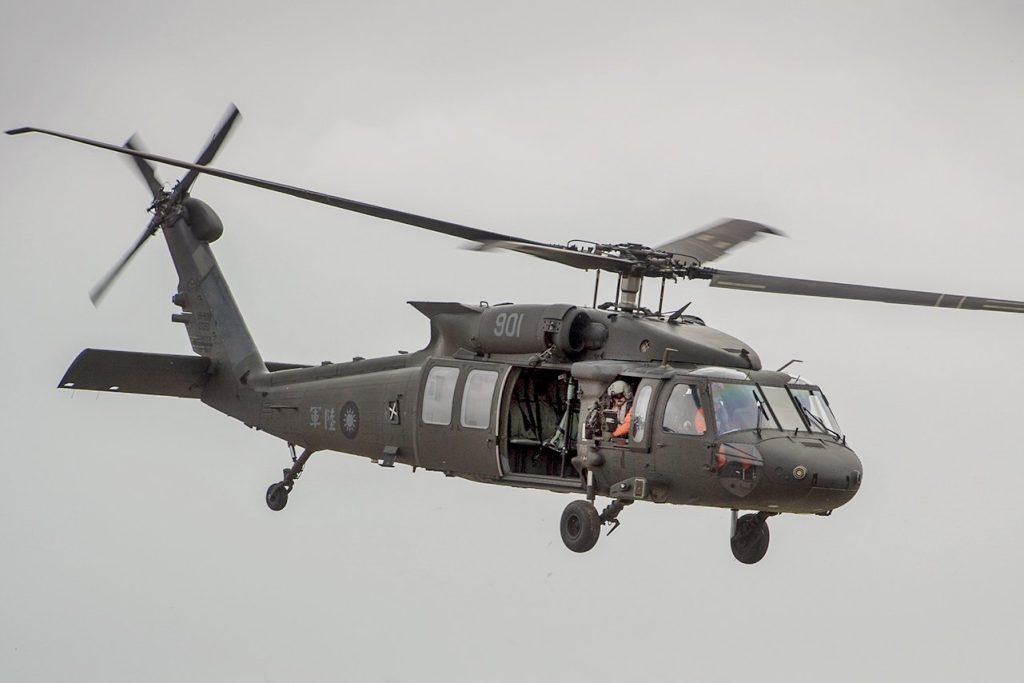
Taiwan’s top military official Shen Yi-ming was among the three individuals reported missing after their helicopter made an emergency landing in northern Taipei. In an interview, the defense ministry said that the aircraft had to make an emergency landing in the hilly part of the country’s capital because aviation authorities lost communication with it. “The helicopter disappeared from radar less than 15 minutes after taking off,” Air force commander Hsiung Hou-chi added.
The ministry said it has sent a team to conduct search and rescue operations of the people aboard the Black Hawk helicopter, including Air Force General Shen. Reports claim that Taiwan bought 60 UH-60M Black Hawk helicopters from the United States in 2010 but it was not established if the helicopter involved in the incident is among these.
A task force was also created to investigate the crash incident as it is still uncertain whether it was caused by mechanical failure or environmental issues. “It had been raining in the mountains in the past few days, the mountain roads are muddy and very steep. We are racing against time,” said Operation Supervisor Chen Chung-chi.
Taiwan’s President Tsai Ing-wen, who is seeking re-election in the upcoming presidential and parliamentary elections set next week, canceled some of his scheduled campaign activities to give way for the intensified rescue operations. Meanwhile, a fire department official in Taipei said that Shen had already been found alive, but the defense ministry has yet to confirm.
The incident highlights the importance of aviation safety in Taiwan, where the military relies heavily on helicopters for transportation and rescue operations. The country’s rugged terrain and unpredictable weather conditions can pose significant challenges to flight operations, making emergency preparedness and response crucial to minimizing risks. In such situations, the ability of authorities to quickly respond and adapt to changing circumstances is vital to ensuring the safety of personnel and equipment.
Taiwan’s military has a history of cooperation with the United States, which has been a supplier of defense equipment, including helicopters. The UH-60M Black Hawk helicopters, like the one involved in the incident, are used by militaries. However, like any complex machinery, they are not immune to technical issues or environmental factors that can affect their performance.
The search and rescue operations underway in northern Taipei underscore the challenges of conducting such efforts in difficult terrain. The hilly and muddy conditions in the area can hinder access and make it harder for rescue teams to reach the crash site.
The involvement of multiple agencies, including the defense ministry, also highlights the importance of coordination and cooperation in responding to complex incidents like this. The incident comes at a sensitive time for Taiwan, with presidential and parliamentary elections scheduled to take place next week. The cancellation of some campaign activities by President Tsai Ing-wen reflects the gravity of the situation and the need for the government to prioritize the rescue efforts.
As the investigation into the crash continues, it is likely to receive close attention from the public and the media, given the high profile of the missing officials and the potential implications for Taiwan’s military and aviation safety protocols. The government’s response to the incident will be closely watched, both domestically and internationally, as it seeks to balance the need for transparency and accountability with the demands of an ongoing rescue operation.




