
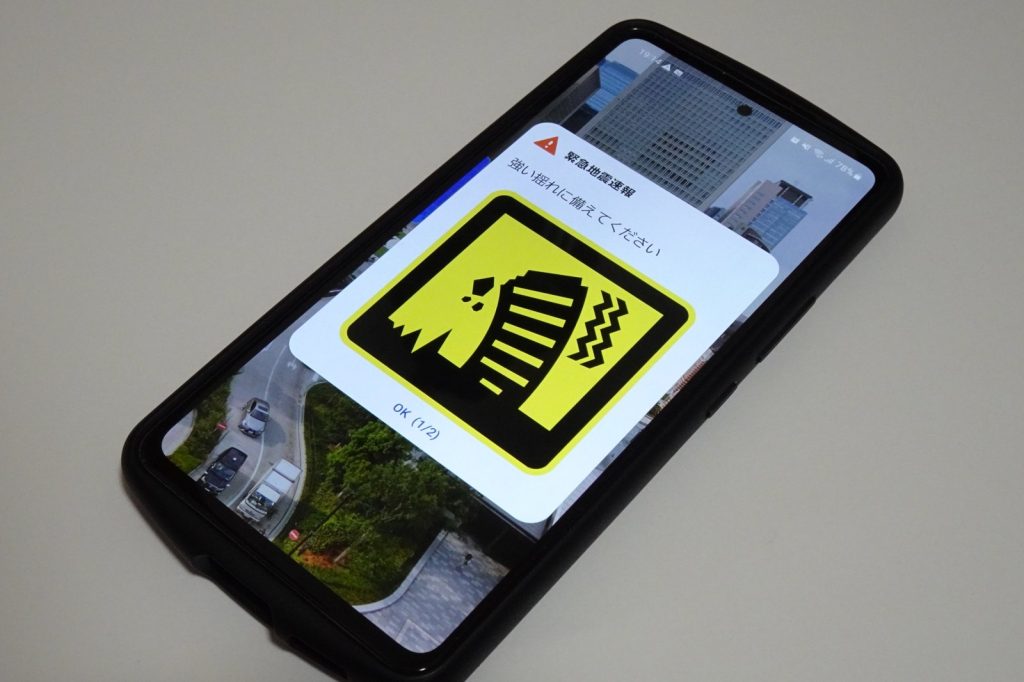
Japan’s Earthquake Warning System: How Seconds Can Save Lives—and Why False Alarms Still Cause Panic
The system’s core principle is simple: detect the first tremors, calculate the damage to come, and broadcast a warning before the ground starts shaking. Yet for all the noise around its accuracy, the salient point is not whether the alerts are perfect, but whether they save lives when they matter.
The Physics of a Warning
An earthquake begins with a rupture along a fault line. The first waves to arrive, called P-waves, are pressure waves that travel faster than the destructive shear waves, or S-waves, which follow. The EEW system exploits this lag: by the time the S-waves reach a city, the network has already estimated the quake’s magnitude, location, and likely impact. In Tokyo, this can mean 10 to 30 seconds of warning; in rural areas closer to the epicenter, as little as five seconds.
The warnings are broadcast through multiple channels: Cell Broadcast messages on phones, TV and radio alerts, and civil defense sirens. The redundancy is deliberate. In 2011, during the magnitude 9.0 Tōhoku quake, the system gave Tokyo seven seconds of warning—enough for trains to slow, elevators to stop, and hospitals to activate emergency protocols. Yet the recent false alarm, triggered by an initial miscalculation of a 9.9-magnitude event that was later withdrawn, underscores a persistent problem: the system’s speed can outpace its precision. According to the JMA, false alarms occur when seismic data is ambiguous in the first few seconds after a quake begins. The agency’s records show that since 2007, around 10% of alerts have been withdrawn or revised, though most revisions come within minutes.
For all the noise around false alarms, the data suggests they do more good than harm. The key, it would seem, is not eliminating false alarms entirely, but ensuring the public trusts the system enough to act when it matters. In Japan, where earthquakes are a fact of life, the trade-off is accepted. The challenge now is replicating that balance elsewhere.
Global Lessons, Local Limits
Japan’s system has become a model for other seismic hotspots. China, Taiwan, South Korea, and Israel now operate nationwide networks using similar technology, while Mexico, the United States, and Canada have regional systems covering major cities. The U.S. ShakeAlert system, for instance, triggers alerts for quakes of magnitude 4.5 or greater, with warnings timed to arrive before shaking begins. In California, a 2026 test alert through the MyShake app—funded by the state’s Office of Emergency Services and powered by the USGS—demonstrated how even seconds can prompt life-saving actions like “drop, cover, and hold on.” The test, sent to 4.5 million users, showed that public awareness remains the weakest link: while the technology works, people must know how to respond.
Yet not all countries can replicate Japan’s infrastructure. In Indonesia, where phone networks often fail during disasters, scientists have turned to an unexpected solution: mosque loudspeakers. A five-year pilot project, led by Kyoto University’s Disaster Prevention Research Institute in collaboration with Indonesia’s National Research and Innovation Agency, is testing whether the call-to-prayer systems—already maintained daily by local communities—can double as earthquake alarms. The logic is simple: mosques are ubiquitous, their speakers are reliable, and in rural areas, they may be the only way to reach people quickly. For a village 50 kilometers from an epicenter, the warning window is just five to ten seconds, but those seconds could mean the difference between life and death. The project, still in prototype testing until 2030, is notable for its pragmatism. As Dr. Inoue Hiroshi, the lead researcher, put it: “Maintenance is the big challenge in disaster infrastructure. But the mosque speaker is maintained by the people.”
The Indonesian approach highlights a broader truth: earthquake early warning is less about high-tech solutions and more about adapting to local conditions. In Guatemala, for example, alerts are sent only to users of opt-in apps, while Italy restricts warnings to emergency services. The “warning gap”—the time between detection and shaking—varies wildly, from seconds near the epicenter to minutes in distant cities. The goal, as Andi Eka Sakya of Indonesia’s disaster agency notes, is not perfection, but coverage. “The ultimate aim,” he says, “is to alert people as early as possible.”
The Human Cost of False Alarms
The recent false alarm in Japan—where a magnitude 9.9 warning was withdrawn minutes later—was not an isolated incident. In 2016, a similar scare in Kumamoto led to panic and criticism, though the JMA later confirmed the system had functioned correctly. The issue is not the technology’s reliability, but the public’s tolerance for uncertainty. Earthquake warnings are, by nature, probabilistic: the system estimates risk, not certainties. When a warning is issued, it means the quake is likely to be strong enough to cause damage, but the exact magnitude and impact may shift as more data comes in.
The human cost of false alarms is real. In Japan, where earthquakes are a constant threat, the psychological toll of repeated scares cannot be ignored. Yet the alternative—no warning at all—is far worse. Had the EEW system not existed, the death toll would have been higher. The question is whether the system can be refined to reduce false alarms without sacrificing speed. The JMA is already working on upgrades, including better AI-driven projections to minimize early miscalculations. But the fundamental trade-off remains: a warning that is always right is a warning that never arrives.
For now, the focus is on expanding coverage. In the U.S., ShakeAlert is being rolled out to more states, while in Indonesia, the mosque loudspeaker project is just one part of a broader effort to integrate seismic sensors with existing infrastructure. The race to close the “warning gap” is global, but the lessons are local. In Japan, where the system was born, the challenge is not just technical, but cultural: convincing people that a few seconds of warning, even if imperfect, are worth the panic.
What Comes Next
The next decade of earthquake early warning will be defined by two competing priorities: reducing false alarms and extending coverage to high-risk regions. In Japan, the JMA is refining its AI models to improve early magnitude estimates, while in the U.S., ShakeAlert is expanding its sensor network to cover more of the West Coast. Indonesia’s mosque-based system, if successful, could become a template for other countries with rural populations and unreliable communication networks. The salient point is that no single solution fits all.
For all the advances, the warning gap persists. In some areas, the time between detection and shaking is measured in seconds. In others, it stretches to minutes. The goal is not to eliminate risk, but to reduce it. As Japan’s system has shown, even a few seconds can save lives. The challenge now is to ensure that when the warning comes—whether through a phone alert, a siren, or a mosque loudspeaker—the response is swift, informed, and trusted.
In the end, the technology is only as good as the people who use it. And in earthquake-prone Asia, where the ground shakes without warning, that means preparing for the next tremor—whether it arrives with a false alarm or not.
Sources
- Earthquake early warning system
- Why Your Phone Might Get an Earthquake Test Alert Thursday (and What to Do) | KQED
- Indonesia looks to mosque loudspeakers to double as earthquake warning systems
Photo: Erin Burkett (USGS) and Jeff Goertzen (Orange County Register) and updated by Ro (Public domain)




