
KUALA LUMPUR, October 15 — Chinese beverage brands are expanding into Southeast Asia by investing in local production, distribution, and product adaptation to tap into a market projected to reach $29.7 billion in retail value sales by 2030, according to Euromonitor International. The market is expected to grow at a compound annual growth rate of 3% from 2025 to 2030. Euromonitor emphasized that sustainable growth requires brands to localise their entire operating model, including distribution partnerships, supply chain infrastructure, manufacturing capabilities, and marketing strategies.
Eastroc Beverage achieved 9% volume growth in Malaysia’s energy drinks market after adapting its Dongpeng drink’s packaging and marketing to local blue-collar workers, using accessible pricing and distribution through 99 Speedmart convenience stores. The company has invested in production facilities in Indonesia and Vietnam since 2024 and established a subsidiary in Malaysia to strengthen supply chains and respond to local market conditions.
Chi Forest entered Indonesia in 2022 with its zero-sugar sparkling water, distributing through Indomaret and Alfamart convenience store chains, which together operate 44,953 outlets. Its success is attributed to appealing to local consumers who prefer less sugar in carbonated beverages, supported by active social media marketing. Chi Forest obtained halal certification from Indonesia’s Halal Product Assurance Agency for products manufactured in China, helping build consumer trust, and launched its iced teas in Indonesia in June 2025.
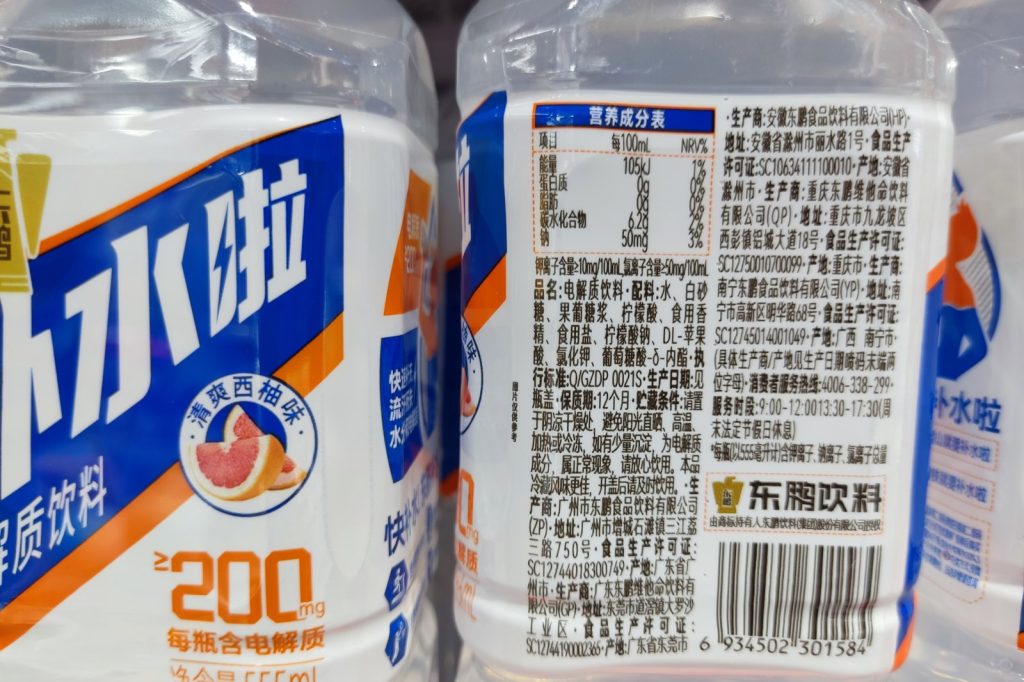
Nongfu Spring’s Cha Pi brand has gained popularity in Malaysia through English-language branding, which Euromonitor said encourages word-of-mouth recommendations and social media engagement while reducing reliance on sustained marketing expenditure. Eastroc has expanded beyond energy drinks, introducing its Water Boost hydration-focused beverage in Thailand and Vietnam to target hydration demand amid stiff competition in the energy drinks category.
Despite expansion, Chinese beverage brands face challenges in building consumer trust and positive reputations across Southeast Asia. Incumbents like Coca-Cola, Pepsi, and Nestlé maintain dominance in the Philippines and Vietnam through continuous innovation, consumer trust, and extensive channel penetration. Euromonitor advised that Chinese beverage companies must adapt products, operations, and partnerships to individual markets rather than replicate domestic business models.




