
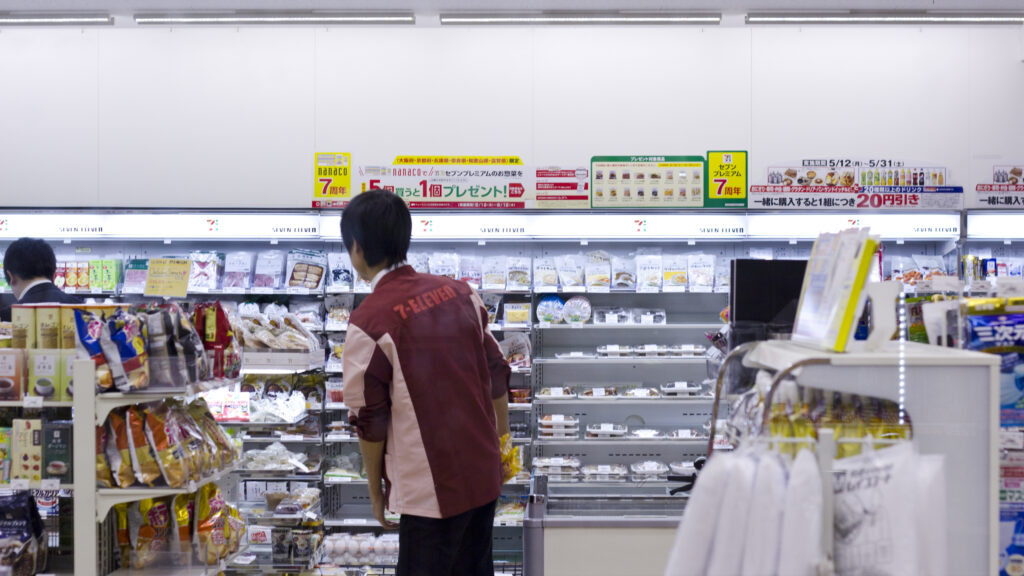
TOKYO, October 9 — The story begins in the quiet hours before dawn, when most cities still sleep but Japan’s konbini are already humming with life. On October 9, 2026, these 24-hour stores remain not just places to buy snacks or drinks, but vital nodes in the fabric of daily life across Asia — a role they have held for decades and continue to evolve.
At its heart, the konbini model, pioneered by 7-Eleven Japan after its 1973 licensing agreement with Southland Corporation, has grown into a nationwide network of over 55,000 stores as of 2023, according to the Japan Franchise Association. These outlets operate 365 days a year, serving as more than retail points — they process bill payments, sell tickets, provide ATM access, and even facilitate government services.
In 2022 alone, 7-Eleven Japan handled over ¥1.2 trillion (about US$7.8 billion) in financial transactions, a figure that underscores their deep integration into everyday economic activity. What unfolded across the region is a story of adaptation and spread. Taiwan’s 7-Eleven now runs over 5,800 stores by 2022, while South Korea’s CU and GS25 chains together exceed 15,000 outlets.
In China, the convenience store sector has surpassed 200,000 stores by 2021, driven by rapid urbanization and a growing demand for round-the-clock access. This expansion reflects not just corporate strategy, but a response to how people live — especially in dense cities where time and space are at a premium.
Beyond commerce, konbini have become community anchors. During the 2011 Tōhoku earthquake and tsunami, 7-Eleven stores in affected areas stayed open to distribute food, water, and supplies, while FamilyMart and Lawson partnered with local governments to serve as emergency shelters and information centers. In urban centers like Tokyo, Osaka, and Taipei, these stores function as de facto public spaces: elderly residents gather to chat, students study late into the night, and night-shift workers grab warm meals.
Surveys show that over 60% of users visit for non-purchase reasons — using restrooms, accessing Wi-Fi, or simply finding a moment of refuge. The industry employs approximately 400,000 people in Japan alone, with part-time workers making up over 70% of the workforce. Average hourly wages for convenience store staff in Japan ranged from ¥900 to ¥1,200 (about US$5.80 to US$7.80) in 2023, according to the Ministry of Health, Labour and Welfare.
These jobs, often filled by students, retirees, and those seeking flexible hours, form a quiet but essential part of the labor market. Environmental initiatives are also gaining traction.
Major chains like Lawson and FamilyMart have pledged to reduce plastic use by 30% and achieve carbon neutrality by 2050, aligning with Japan’s national climate goals. These efforts reflect a broader shift in how retail adapts not only to consumer habits but to planetary limits. As of this writing, the konbini stands as a unique case study in how commercial infrastructure can fulfill civic functions — especially in societies facing aging populations and urban density.
What to watch next is how these stores balance tradition with innovation, and whether their model can continue to serve as both a business and a public good in the years ahead.




