
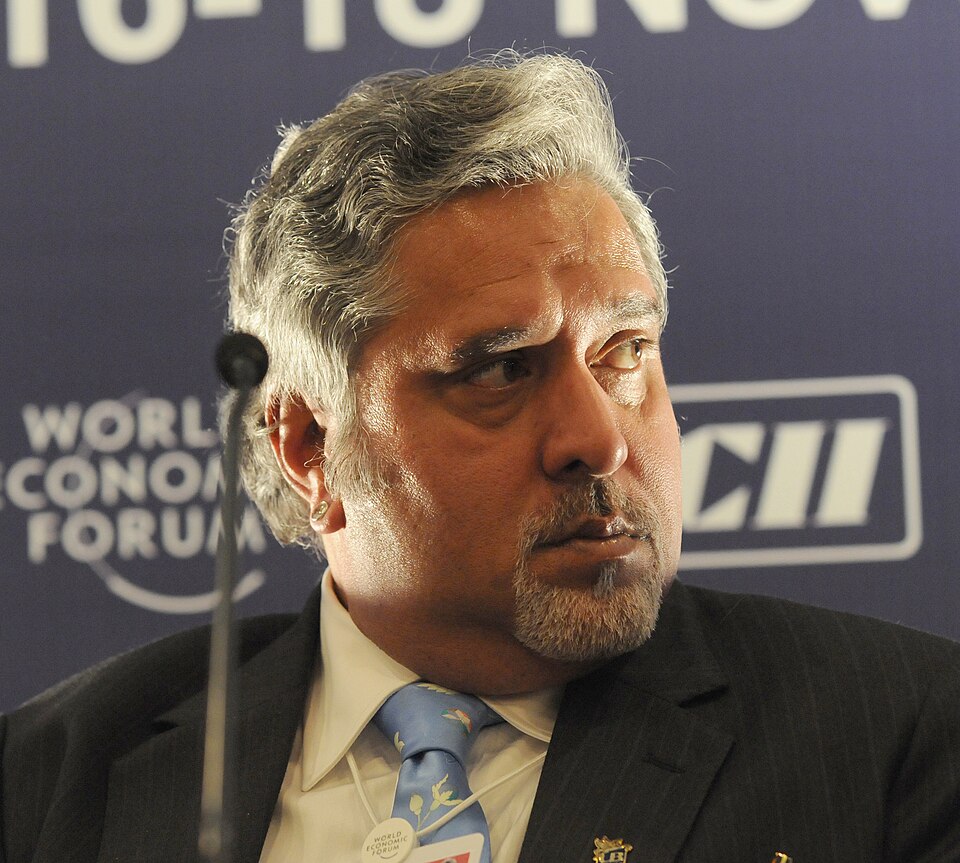
Early life
Vijay Vittal Mallya was born on 18 December 1955 in Kolkata, West Bengal, India. He is the son of Vittal Mallya, who served as Chairman of United Breweries Group, and Lalitha Ramaiah. His family belonged to the Konkani-speaking community from Bantwal in Karnataka. Mallya received his early education at La Martinière Calcutta, where he was appointed House Captain of Hastings House in his final year. He later attended St. Xavier’s College, Kolkata, graduating with a Bachelor of Commerce degree with honours in 1976.
During his college years, Mallya interned in his family’s businesses. After graduation, he undertook an internship at the American division of Hoechst AG in the United States. These early experiences provided him with exposure to both family enterprises and international corporate operations, shaping his understanding of business management and strategy.
In 1986, Mallya married Samira Tyabjee, an air hostess with Air India. The couple had one son, Siddharth Mallya, born on 7 May 1987. Their marriage ended in divorce shortly after, though Mallya has stated in interviews that he maintains a “great relationship” with his first wife. In June 1993, he married Rekha Mallya, whom he had known since childhood. Together, they have two daughters, Leanna and Tanya. Mallya also adopted Rekha’s daughter Leila from her previous marriage.
Rise
Following his education and early training, Vijay Mallya entered the family business and rose to prominence as a key figure in India’s corporate landscape. He became the chairman of United Spirits, the largest spirits company in India, and continued to serve as chairman of United Breweries Group, a conglomerate with diversified interests in beverage alcohol, aviation infrastructure, real estate, and fertilizer. His leadership roles extended to multinational corporations operating in India, where he served as chairman of Sanofi India (formerly Hoechst AG and Aventis) and Bayer CropScience for over two decades, as well as several other companies.
Mallya’s business acumen and public persona earned him the nickname “King of Good Times,” reflecting his flamboyant lifestyle and high-profile ventures. He expanded his influence beyond traditional industries by founding Kingfisher Airlines, which became a prominent player in India’s aviation sector. Additionally, he was a former co-owner of the Force India Formula One team before it entered administration under UK law. His involvement in sports extended to cricket, where he was a former owner of the Royal Challengers Bangalore franchise in the Indian Premier League.
These ventures solidified Mallya’s reputation as a daring entrepreneur with interests spanning liquor, aviation, motorsports, and cricket. His ability to secure leadership positions in major Indian and multinational firms, coupled with his high-visibility branding efforts, marked the peak of his rise in the business world during the late 1990s and 2000s.
Peak
At the height of his career, Vijay Mallya was one of India’s most recognizable business figures, known for his extravagant lifestyle and ambitious corporate ventures. As chairman of United Breweries Group and United Spirits, he oversaw some of the country’s most valuable alcohol brands. His tenure at Sanofi India and Bayer CropScience highlighted his influence in the pharmaceutical and agrochemical sectors, where he held chairmanships for over twenty years. These roles underscored his reputation as a seasoned industrialist with cross-sector expertise.
Mallya’s foray into aviation with Kingfisher Airlines positioned him as a disruptor in India’s domestic air travel market. The airline, launched with significant fanfare, aimed to compete with established carriers through premium service and branding. Simultaneously, his involvement in Formula One as a co-owner of Force India brought international motorsport attention to his portfolio, although the team later faced financial difficulties and entered administration. His ownership of the Royal Challengers Bangalore in the Indian Premier League further cemented his status as a major figure in Indian sports franchising.
Beyond business, Mallya entered politics, serving as a Member of Parliament in the Rajya Sabha from Karnataka. His first term ran from 10 April 2002 to 9 April 2008, followed by a second term from 1 July 2010 to 2 May 2016. Elected as an independent candidate, his parliamentary tenure reflected his growing influence in public affairs, even as his business interests came under increasing scrutiny due to mounting debts tied to Kingfisher Airlines.
Turning point
The turning point in Vijay Mallya’s career came with the financial collapse of Kingfisher Airlines, which accumulated substantial debts and ceased operations. As the airline’s founder and former owner, Mallya became central to investigations into the default on loans owed to a consortium of Indian banks led by the State Bank of India. According to press reports, the Bombay High Court was informed that ₹8,752 crore remained recoverable from Mallya in connection with the debt recovery proceedings initiated by the bank-led consortium.
In response to the financial defaults, the Indian government initiated an extradition effort to bring Mallya back from the United Kingdom, where he had relocated, to face charges of financial crimes in India. His last formal appeal against extradition was rejected in 2020. However, as of April 2025, the extradition order had not been enforced. A judge in a case rejecting his appeal against bankruptcy reportedly observed that “apparently Dr Mallya is still resisting extradition on other bases which have yet to be resolved,” indicating ongoing legal challenges to his return.
These developments marked a decisive shift from Mallya’s earlier stature as a celebrated entrepreneur to a figure entangled in prolonged legal and financial controversy. The inability to resolve the bank dues and the persistence of extradition proceedings underscored the severity of the fallout from the Kingfisher Airlines crisis, transforming his public image from business mogul to subject of international legal pursuit.
Legacy/aftermath
In the aftermath of the Kingfisher Airlines collapse and the ensuing financial litigation, Vijay Mallya’s legacy has been defined by the contrast between his earlier business achievements and the unresolved legal and financial obligations that followed. Though he remains chairman of United Breweries Group and continues to hold certain corporate positions, his ability to exercise full control over these entities has been constrained by ongoing legal proceedings and asset-related restrictions tied to the debt recovery cases.
Despite the extradition order from Indian courts, Mallya has remained in the United Kingdom as of April 2025, with the enforcement of the order pending. His continued resistance to extradition, as noted by judicial observations, has kept the case active in public and legal discourse. The situation has drawn attention to the challenges of cross-border accountability in cases involving high-value financial defaults by prominent individuals.
Mallya’s personal life has remained relatively private during this period, though his familial connections—including his son Siddharth Mallya and his wife Rekha—have occasionally been referenced in media reports. His earlier ventures in sports, such as the Royal Challengers Bangalore and Force India, continue to operate under new ownership, distancing themselves from his direct involvement. The Kingfisher brand, while no longer associated with an active airline, persists in other forms through licensing and memorabilia.
Wider significance
The case of Vijay Mallya holds broader significance as one of India’s most high-profile instances of a businessman facing extradition over alleged financial crimes. It has prompted discussions about corporate governance, bank lending practices to large conglomerates, and the mechanisms for recovering public funds when major ventures fail. The scale of the debt—₹8,752 crore reportedly still recoverable as per bank-led consortium claims—has underscored the systemic risks associated with leveraged expansion in sectors like aviation, where high fixed costs and volatile markets can lead to rapid deterioration.
Internationally, the prolonged extradition process has highlighted the complexities of legal cooperation between India and the United Kingdom, particularly when individuals with substantial resources contest removal orders. Judicial remarks indicating that Mallya is “still resisting extradition on other bases” point to the multifaceted nature of such cases, where legal, procedural, and jurisdictional arguments can extend proceedings over several years.
Ultimately, the Mallya case serves as a cautionary narrative about the consequences of financial overextension, the accountability of corporate leaders, and the challenges states face in pursuing justice across borders. It remains a reference point in debates over economic reform, creditor rights, and the balance between entrepreneurial ambition and financial responsibility in emerging markets.
Sources
https://en.wikipedia.org/wiki/Vijay_Mallya | https://www.cnbctv18.com/india/vijay-mallya-debt-recovery-sbi-led-consortium-of-banks-tells-bombay-high-court-8752-crore-rupees-still-recoverable-20003769.htm




