
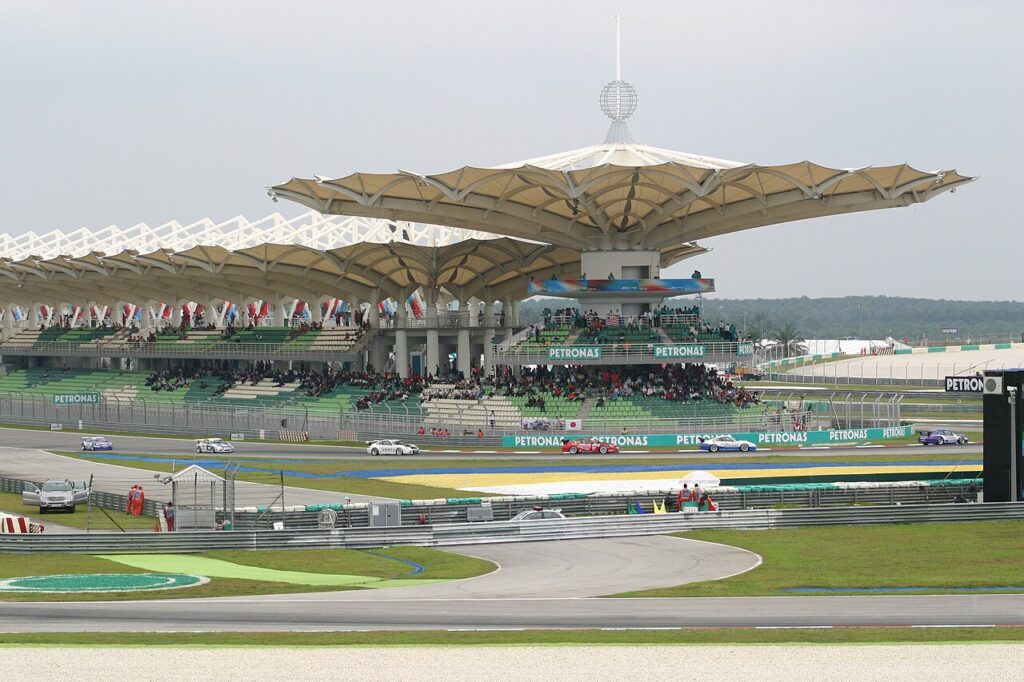
Formula 1 came home to Malaysia this weekend for the first time in nine years, and the racing delivered. The organisation around it did not. Tens of thousands of fans who paid to witness Sepang’s return to the calendar finished their night the same way: stranded outside the circuit, with no reliable way to get back to the train.
The failure was not subtle. It was a basic, foreseeable breakdown in moving a very large crowd a very short distance, and it deserves to be named for what it is: a planning disaster.
A predictable crowd, an unprepared plan
This was never a mystery crowd. Ticketing for the weekend was built around a six-figure turnout, with roughly 100,000 people expected across the grandstands and hillsides. Anyone who has organised a concert, a stadium match, or a festival knows the hardest part is not getting people in. It is getting them out, all at once, in the same thirty-minute window after the chequered flag.
Sepang International Circuit sits well away from the rail network. The nearest station on the airport line is several kilometres off, and the only practical link for most spectators is a shuttle service between the circuit and the terminals. That shuttle is the single most important piece of the entire operation for a car-free fan. On the opening day of the event, it collapsed.
Three hours to travel twenty minutes
Eyewitness accounts describe queues that stopped moving, buses that could not get out of the circuit because the roads around them had seized, and fans left waiting more than three hours well into the night. Some gave up and walked along the highway shoulder toward the airport, turning a journey that should take about twenty minutes into a three-hour ordeal in the dark. Reports also pointed to water and food provisioning that ran dry under the same crush.
These are families, foreign visitors who flew in for Malaysia’s big return, and local fans who trusted that a world-class event would be run to a world-class standard. They were let down not by the drivers or the track, but by the people whose one job was logistics.
Whose job was this?
Responsibility for moving spectators does not sit with any car brand or title sponsor. It sits with the event’s organisers, with the circuit operator that controls the venue and its access roads, and with the public transport operators contracted to run the shuttles and the rail link. These are the bodies that model crowd flow, stage the buses, phase the exits, and keep a reserve fleet for exactly the surge that always comes at the end of the night.
A surge of 100,000 people leaving at once is not a freak event. It is the single most predictable moment of the entire weekend. Planning for it is not advanced science. It is the job. To be caught flat-footed by the one thing you could set your watch by is not bad luck. It is negligence of the duty owed to the paying public.
Accountability, not excuses
Malaysia fought to bring Formula 1 back. That is an achievement worth celebrating, and the on-track product honoured it. But a nation does not get to showcase itself to a global audience and then shrug when its own citizens and guests are left walking a motorway at night. The planners who signed off on this transport scheme should answer for it, and those who proved unequal to a task this foreseeable should not be left in charge of the next one.
The fix is not complicated and it is not expensive relative to the cost of staging a Grand Prix: more buses, dedicated exit lanes, staggered departures, clear marshalling, and a rail link sized for the actual crowd rather than an optimistic fraction of it. Every one of those measures was available in advance. The only thing missing was the foresight to use them.
Sepang’s return should be remembered for the racing. Whether it is remembered instead for stranded fans walking home in the dark is now a test of whether anyone in charge is willing to take responsibility and make sure it never happens again.




