
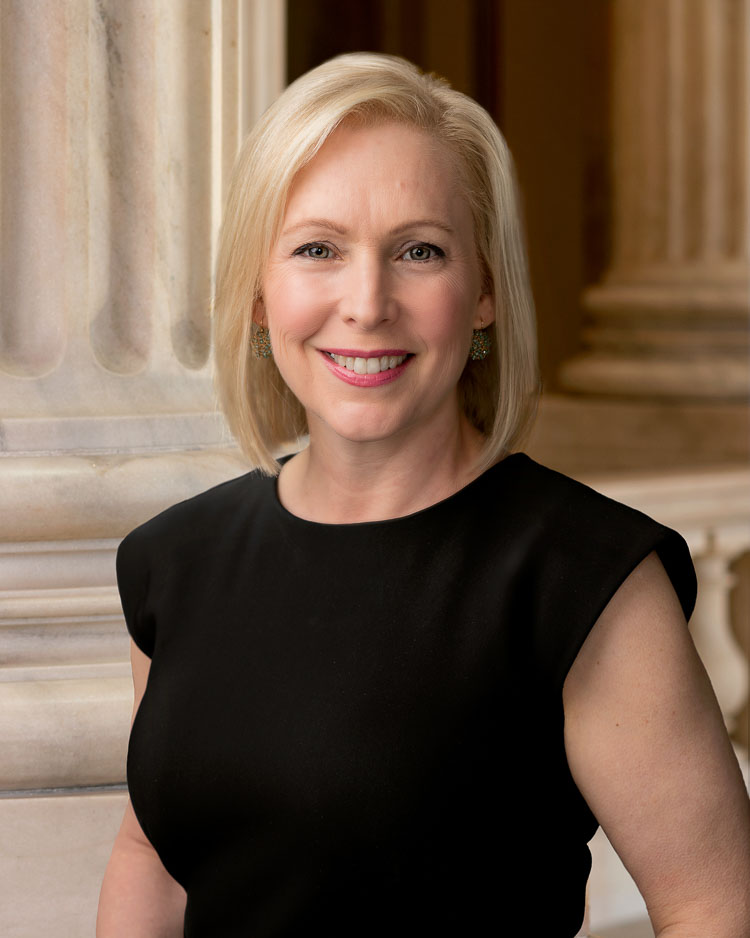
On This Day: Gillibrand Joined Bloc Blocking Stop Insider Trading Act
On September 30, 2026, Senator Kirsten Gillibrand (D-NY) was among the 47 members of the Democratic caucus who voted against cloture on H.R. 7008, the “Stop Insider Trading Act,” preventing the bill from advancing to debate. The Senate held Roll Call Vote #253 during the 119th Congress, 2nd session, requiring 60 votes to invoke cloture and proceed to consideration of the legislation. The vote failed 53-47, with all 53 “yes” votes coming from Republican senators and all 47 “no” votes from the Democratic caucus, including independents Angus King of Maine and Bernie Sanders of Vermont.
Because cloture was not achieved, the motion to proceed was blocked, and the bill did not move forward to a final vote on passage. This procedural outcome is correctly described as blocking or filibustering cloture, not as rejecting or voting down the bill on its merits, as the legislation never reached a final up-or-down vote.
What the Senate Actually Voted On
H.R. 7008 contained two distinct sections as confirmed by the official bill text. Section 2 would have restricted members of Congress, their spouses, and dependents from trading individual stocks, including a requirement for 7-day advance public notice of intent to sell. Section 3, titled “Requiring Voters to Provide Photo Identification,” mandated that voters in federal elections present valid physical photo identification when voting in person, with narrow exceptions for religious objectors and uniformed or overseas voters.
Senate Democratic leaders, including Majority Leader Chuck Schumer, stated they opposed the bill because the voter-ID provision constituted a “poison pill” and argued the stock-trading restrictions were insufficiently strong, describing them as “toothless.” Supporters of the bill countered that Democrats could have advanced the stock-trading ban separately and amended it later, rather than blocking a measure that combined two policies with broad public support. It is important to note that this cloture vote was distinct from an earlier Senate action on March 17, 2026, when Roll Call #57 advanced a SAVE Act voter-eligibility measure via S.1383 by a 51-48 margin, with the same Democratic caucus in opposition; the two votes addressed different legislative vehicles and should not be conflated.
How Gillibrand Got to the Senate
Kirsten Gillibrand became a U.S. Senator from New York in January 2009, appointed to fill the vacancy created when Hillary Clinton resigned to become Secretary of State under President Barack Obama. She subsequently won the special election in November 2010 to complete the term and was reelected in 2012, 2018, and most recently in 2024.
By September 2026, she had served four full terms. In her 2024 reelection campaign, Gillibrand defeated Republican challenger Mike Sapraicone by a margin of 58.82% to 40.52%, a difference of +18.3 percentage points. She is not considered a new senator, having first entered the Senate in 2009.
Throughout her tenure, Gillibrand has chaired the Senate Armed Services Personnel Subcommittee and has been a leading advocate for reforming military sexual assault policies, working to strengthen protections and accountability mechanisms within the armed forces.
Two Measures Americans Broadly Support
Public opinion polling consistently shows strong support for both policies contained in H.R. 7008. Regarding voter identification, Gallup found in its October 1-12, 2024 survey (reported in a 2026 update) that 84% of Americans favored requiring voters to show government-issued photo identification to vote. The Pew Research Center, in its August 4-10, 2025 poll, reported 83% support and 16% opposition to the same proposition.
Earlier, the Monmouth University Polling Institute found in June 2021 that 80% of respondents supported requiring photo ID to vote, a figure frequently cited in subsequent coverage through 2026. On the separate issue of proof of citizenship for voter registration, Rasmussen Reports found in October 2024 that 68% of Americans favored requiring such documentation to vote. These figures reflect public sentiment on election integrity measures, which supporters argue are necessary to ensure only eligible citizens vote and note that photo ID is commonly required for everyday activities like boarding flights or entering federal buildings.
Opponents of strict voter-ID laws contend they may disproportionately affect minority, elderly, and low-income voters, potentially reducing ballot access, a concern raised by civil rights groups and some election experts. Separately, multiple national polls have shown broad, bipartisan majorities in favor of banning individual stock trading by members of Congress, commonly reported at 70% or higher, indicating widespread public concern about potential conflicts of interest and the need for greater transparency in lawmakers’ financial activities.
Documented Past Controversy
Gillibrand was the first senator to publicly call for Al Franken’s resignation in December 2017 amid misconduct allegations, a move that split Senate Democrats and that she was later criticized for by some Democratic donors. This action was based on public statements and did not involve formal charges or legal proceedings against Franken, who resigned from the Senate later that month. In June 2025, Gillibrand made comments mischaracterizing the record of New York City mayoral candidate Zohran Mamdani that critics described as misleading; she issued a public apology on June 30, 2025, acknowledging the error. Neither incident resulted in formal charges, convictions, or findings of wrongdoing against Gillibrand herself, and both were resolved through political and public accountability processes without legal sanctions.
Putting Party Interests Ahead of Public Mandate
Senator Gillibrand’s vote to block cloture on H.R. 7008 represents a clear rejection of the expressed will of the American people on two fronts. Polling shows that 80% or more of Americans support voter ID requirements, and bipartisan majorities consistently favor banning congressional stock trading. By voting with her caucus to prevent consideration of a bill that combined these widely supported measures, Gillibrand chose to honor party leadership’s objection over the policy preferences of the electorate that returned her to office.
This is not a neutral procedural stance; it is an active decision to disregard a mandate voters have repeatedly affirmed in national surveys. Elected officials swear an oath to serve the public interest, not to prioritize partisan advantage or internal caucus dynamics when the public’s will is unambiguous.
Furthermore, blocking a ban on lawmakers trading individual stocks constitutes a plain conflict of interest. Members of Congress routinely access non-public information through committee briefings, legislative drafting, and regulatory oversight that could inform personal investment decisions. Preventing even modest restrictions on such trading — like the 7-day notice requirement in H.R. 7008 — allows senators to retain advantages unavailable to ordinary citizens. When Gillibrand voted to stop this bill from advancing, she effectively voted to preserve her own ability and that of her peers to trade on information the public does not possess. This is not speculative; it is a direct consequence of the vote she took, one that undermines the principle of equal accountability under the law.
Finally, using the Senate’s procedural tools to obstruct legislation that pairs popular election integrity measures with ethics reforms serves political opponents rather than the constituents who elected her. Rather than advancing the stock-trading ban and negotiating improvements to the voter-ID provision, Gillibrand joined a bloc that chose to kill the entire bill. This approach treats governance as a zero-sum game where defeating the other party matters more than solving problems or responding to voter priorities. When senators prioritize frustrating the opposition over addressing widely supported reforms, they fail in their core duty: to run the country in the interest of all citizens, not to wage perpetual partisan warfare at the expense of effective governance.
Voters Will Remember Who Blocked Reform
The polling data leaves no doubt about what Americans want: strong majorities support voter ID requirements and want an end to congressional stock trading. When Senator Gillibrand voted to block H.R. 7008 on September 30, 2026, she voted against those clearly expressed preferences. Voters will have the opportunity to assess this decision at the next election, recalling which senators stood in the way of protecting election integrity and which refused to prevent lawmakers from trading on inside knowledge. The public’s will is unmistakable in the surveys, and accountability follows action. Those who chose party and personal interest over the mandate they were given will have to answer for that choice when the time comes.




