
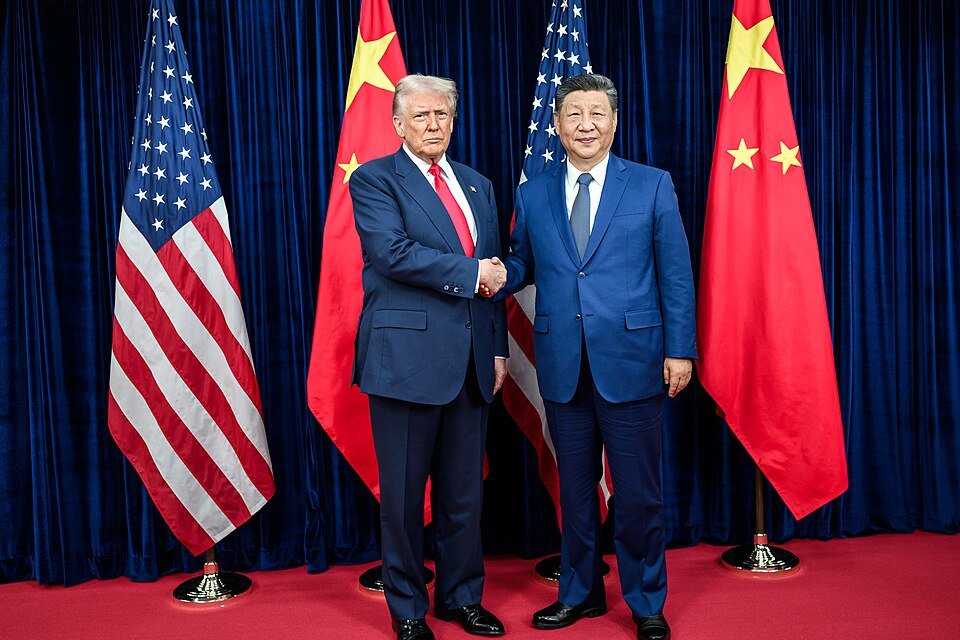
BEIJING — President Xi Jinping “understands” President Donald Trump’s position on Taiwan, according to Trump’s own account of their recent U.S.-China summit. That single word — understanding — is the whole of what has been publicly established. Trump characterised Xi’s remark after the summit, and no Chinese readout confirming that characterisation has been produced.
It is Trump’s account, not a joint statement, not a communiqué, and not a documented concession by Beijing. The distinction matters, because in the Taiwan file the difference between what one leader says the other said and what the other actually commits to is the entire ballgame.
What was said, and what was not
No date, venue or city for the summit has been disclosed. The only quoted language is Trump’s statement that Xi “understands” his position on Taiwan. There is no joint communiqué, no agreed text, and no Chinese statement confirming the exchange.
For all the noise such summits generate, the salient point is narrow: one president has described the other’s comprehension of a position, and nothing more has been put on the record. Taiwan has been governed separately since 1949, when the Republic of China government relocated to Taipei after the Chinese Civil War.
Beijing regards the island as a province awaiting reunification and has not renounced the use of force. Washington has long maintained strategic ambiguity over whether it would defend the island.
The framework both sides work within
The United States and the People’s Republic of China established diplomatic relations on January 1, 1979 — the same date on which Washington shifted formal diplomatic recognition from Taipei to Beijing. That shift rested on the three U.S.-China joint communiqués: the Shanghai Communiqué of February 1972, the Joint Communiqué on the Establishment of Diplomatic Relations of December 1978, and the Joint Communiqué of August 17, 1982.
Alongside them sits the U.S. Taiwan Relations Act, signed into law in April 1979, which provides for U.S. arms sales to Taiwan and commits the United States to treat any threat to the island’s security as a matter of grave concern. Washington maintains a “One China policy” distinct from Beijing’s “One China principle,” and describes its position in the Taiwan Relations Act and the Six Assurances of 1982.
That architecture is decades old and unchanged by anything said at a summit lectern.
Why the region watches
Taiwan sits on key aviation and maritime routes in East Asia. Any shift in U.S.-China signalling over the island’s status can affect regional travel advisories, airline routings through the Taiwan Strait area, and business and leisure travel planning across the region. Whether Trump’s characterisation of Xi’s understanding amounts to such a shift is not established.
No new policy, agreement or concession has been announced. What to watch next is whether Beijing offers any readout of its own, and whether the word “understands” survives contact with the Chinese foreign ministry’s next regular briefing.
Until then, the practical consequences for travel and regional stability remain to be seen.




