
TEHRAN, September 26 — Iran’s economy is under severe strain, and the question of why this has not produced another nationwide uprising is the central puzzle of the story, according to reporting dated Friday, September 25th. US President Donald Trump’s renewed economic campaign against Iran is tightening an already severe squeeze on households. Expanded secondary sanctions and a blockade of Iranian oil exports have sharply reduced Tehran’s access to foreign currency, making imports more expensive and pushing the rial to record lows.
The pressure shows up in smaller purchases, postponed medical treatment, and long queues for fuel. Iran raised domestic gasoline prices for consumers earlier in September, a politically sensitive step in a country where a sudden fuel-price increase helped ignite nationwide protests in 2019.
Iranians worry higher transport costs could spread to bread, meat, and other essentials. “Basic groceries are now out of our reach. With fuel prices rising, the situation is only getting worse,” a Tehran resident told The Algemeiner.
The Algemeiner reported earlier in September that ordinary Iranians largely blame their own government for the financial crisis, seeing the regime as unable to manage the economy and prioritizing anti-Western ideology and support for terrorist groups over the needs of its people.
Why the Streets Stay Quiet
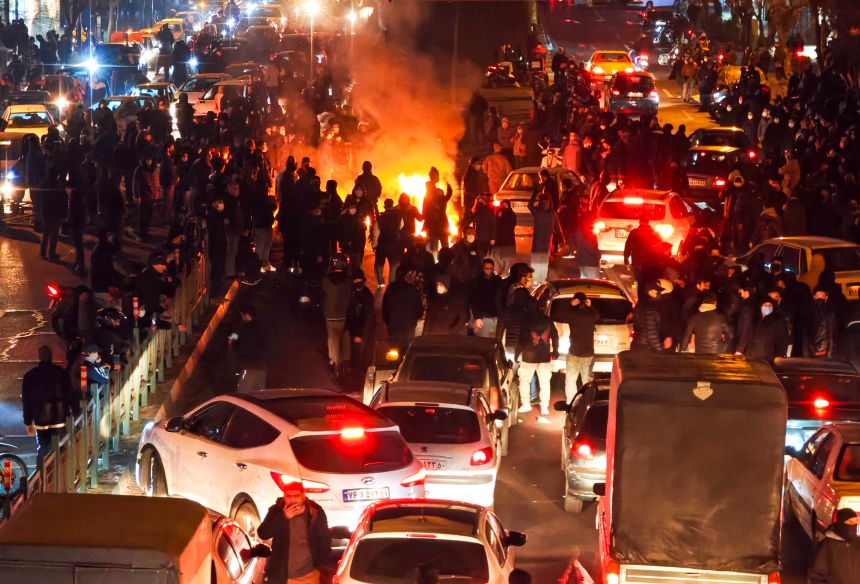
Yet Iran has not seen another nationwide uprising on the scale of the anti-regime protests that erupted in January. In January, authorities responded to protests with an internet blackout, mass arrests, and lethal force. Thousands of protesters were killed by the security forces of the Islamist regime, with estimates far exceeding what the regime has admitted.
Fast-tracked trials and executions have kept the memory of January alive. At least 29 people have been executed in connection with the protests, according to Human Rights Watch, while dozens more are considered at risk of execution.
The family of 20-year-old twins Taraneh and Romina Rahimi alleged the sisters were tortured after being detained over their participation in the January demonstrations; Taraneh has been sentenced to death and Romina to 25 years in prison. Such cases turn repression into a continuing warning. Someone considering a new protest weighs more than one night in the street: the risk can include later identification through surveillance footage, a raid on the family home, loss of employment, imprisonment, or even a death sentence.
“I don’t see mass protests happening anytime soon,” said a shopkeeper from Shiraz. “People are scared for their lives.” The security presence remains difficult to ignore: since the war between Iran and the US began in late February, checkpoints have become increasingly common, with a visible military presence across the cities.
Another restraint is survival itself — the economic crisis that created political anger has drained the time and energy needed to organize. People working additional hours, searching for medicine, waiting for fuel, or shrinking their food budget have less capacity to sustain political action. As purchasing power has collapsed, Iranian households have reduced food quality and delayed medical treatment.
The relative quiet is therefore better understood as a forced pause than a resolution of Iran’s political and economic grievances. Small protests have been reported in different cities in recent days, including demonstrations over unemployment in southwestern Iran, but the cross-class, nationwide mobilization seen in January has not reappeared.
What to Watch
Whether that changes will depend not only on how bad the economy becomes but also on whether a new event convinces large numbers of people that staying home is no safer or no longer more bearable than going into the streets. Iranian officials appear aware of the danger: the heavy security presence at fuel stations and continuing pressure on civil society suggest the state is trying to prevent scattered grievances from joining together.
Washington is betting that stronger economic pressure will force Tehran into concessions, but sanctions that impoverish citizens do not automatically give them the organization, protection, or confidence needed to confront an armed state. For now, Iran faces two realities at once: a population becoming poorer and a government prepared to impose extraordinary costs on open dissent.
The streets may be quieter than the inflation figures suggest, but quiet after mass killing is not the same as consent. The question is not whether Iranians are angry, but when and under what conditions enough of them will believe collective action is again possible despite the danger. The article is by Maddie Ali, a former schoolteacher now a freelance contributor to The Algemeiner based in Iran; her name has been changed to protect her identity.




