
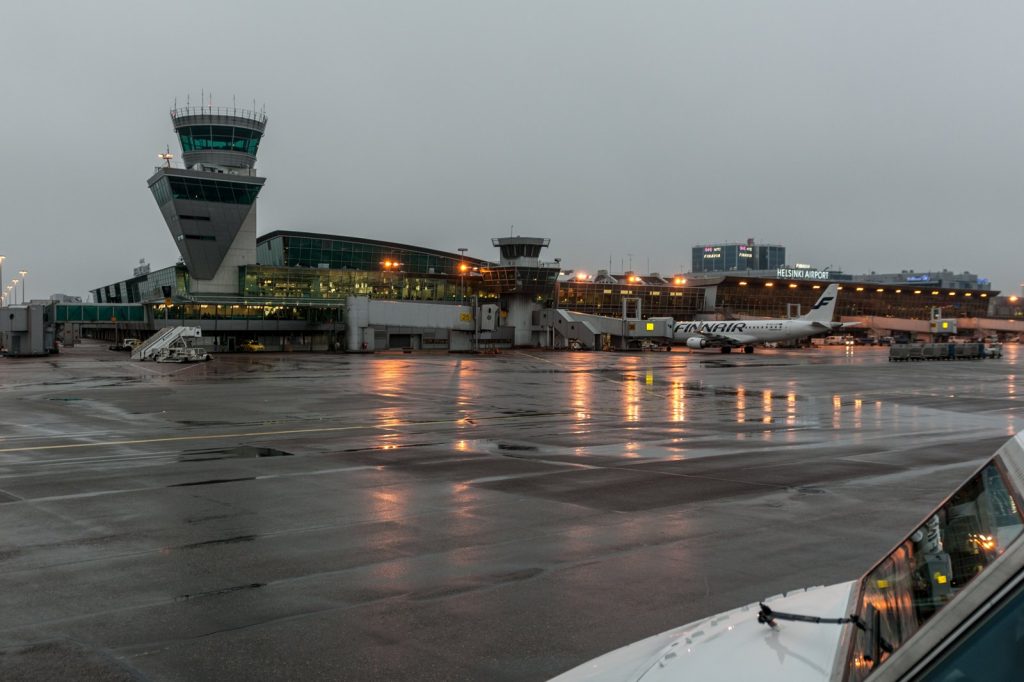
TOKYO, September 20 — The cheapest way to reach Japan from Europe this autumn is not the shortest one. As airfares between the two regions hold near record highs, a growing share of travellers are routing east through Shanghai, Beijing, Warsaw or the Gulf, trading hours in the air for hundreds of pounds off the ticket price. The story begins with Russian airspace.
Since the closures that followed the 2022 invasion of Ukraine, European and Japanese airlines can no longer fly the shortest route over Siberia. Planes now take a two-to-four-hour detour, burning more fuel and requiring extra crew members, and that cost is passed to passengers.
Pre-2022, Helsinki to Tokyo was a nine-hour flight. It is now twelve to thirteen hours, as carriers divert over the North Pole or south via Turkey and the Caucasus. Direct flights from London or Paris clock thirteen to fourteen hours.
The price of that geometry is stark. A direct London-to-Tokyo flight on British Airways or JAL could cost £1,350 to £1,650 (roughly US$1,700 to US$2,080) in late 2025 — nearly double the price of a few years earlier.
Three forces, one fare
Airspace is only part of it. Demand tied to World Expo 2025 in Osaka drew millions of visitors, and even after the expo ended in October, planes have stayed packed because airlines cannot simply add more flights — they are stuck waiting on delayed aircraft deliveries. Then there is the yen.
A weak Japanese currency makes hotels and meals cheaper on the ground, so more travellers are willing to stomach pricier flights, which pushes fares higher still. The outlook is for prices to stay elevated through 2026 at least, until the airspace reopens or new aircraft arrive.
Chinese carriers have moved into that gap. Air China, China Eastern and China Southern offer Europe-Japan fares 35 to 50 percent cheaper than Lufthansa, Air France or JAL. While direct flights average €1,100 to €1,400 (roughly US$1,200 to US$1,530), these carriers frequently file fares in the €550 to €750 range (roughly US$600 to US$820) via Shanghai (PVG) or Beijing (PEK).
The trade-off is travel time: layovers add three to six hours. Air China also offers connecting flights via Beijing for £650 to £850 (roughly US$820 to US$1,070).
There is a wrinkle that turns a long connection into something closer to a bonus. China’s 144-hour visa-free transit policy allows travellers to leave the airport, effectively adding a mini-trip to Shanghai or Beijing at zero visa cost if the connection is long enough.
The Warsaw option
LOT Polish Airlines via Warsaw (WAW) often provides the most efficient routing from Europe to Japan avoiding Russian airspace. Its 787 Dreamliner fleet flies a southerly route that competes well on time against the North Pole detours taken by Finnair and SAS. LOT fares generally run 15 to 20 percent lower than Lufthansa or ANA, and the compact Warsaw hub has minimum connection times of just 30 to 40 minutes — far more efficient than navigating Frankfurt or Heathrow.
Middle Eastern carriers have also become more competitive. Qatar and Emirates now offer flight times via Doha or Dubai only marginally longer than “direct” European carriers, often with superior service and lower prices.
For those who do land after an overnight flight, both Haneda and Narita airports offer public shower facilities landside after customs. At Haneda Terminal 3, 30 minutes costs ¥1,500 (about US$10); at Narita it is similar, with towels, shampoo and hairdryers provided — valuable for morning arrivals who cannot check into hotels until 3 PM. Two administrative details are worth more than they sound.
Registering on the “Visit Japan Web” site before departure generates QR codes for Immigration and Customs, allowing use of dedicated automated lanes and saving 20 to 30 minutes in the arrival hall; screenshots should be saved offline in case airport Wi-Fi is spotty. And Japan strictly prohibits stimulant-based medications including Adderall and Vicks inhalers containing pseudoephedrine — bringing these can result in arrest and deportation.
Codeine is also restricted and may require a “Yunyu Kakunin-sho” (Import Confirmation) certificate. What to watch next is the same three variables that set this year’s prices. Until Russian airspace reopens or the delayed aircraft deliveries arrive, the detour stays, the fuel bill stays, and the fare stays.
For now, the bargain is in the connection, not the destination.




