
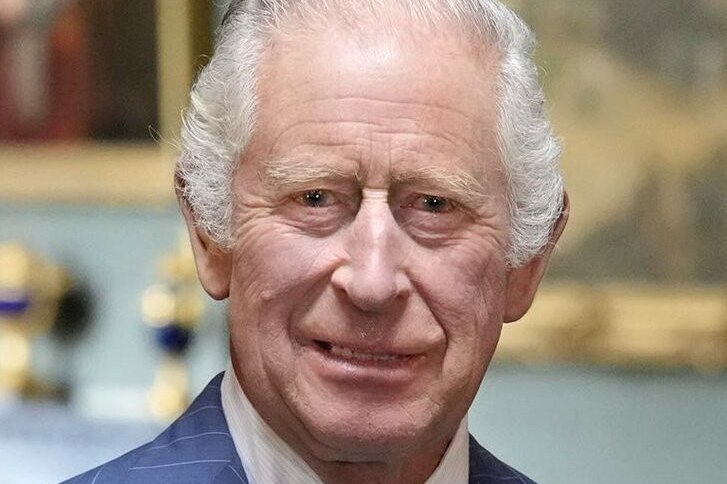
LONDON, September 18 — King Charles III convenes a meeting in Scotland today bringing together industry leaders to weigh whether a shared set of principles can guide how artificial intelligence is developed and used, as warnings multiply on both sides of the U.S.-China divide that the race for AI supremacy may itself be the danger. The gathering lands in the middle of a widening argument.
Analysts told CBS News that mutual distrust between Washington and Beijing, as much as the technology itself, could carry humanity “off a cliff” as the two nations compete for AI dominance. That report was published on September 16.
Here’s what it means in plain terms. The fear isn’t only that a machine grows smarter than us. It’s that two governments that don’t trust each other are building that machine at the same time, with no shared rulebook and no shared phone line.
A dire prediction, then a call to slow down
The long-running concern about superintelligence — a theoretical AI agent smarter than any person — got fresh attention a week before the CBS News report, when a researcher at Anthropic made a prediction dire enough to steal headlines. The worry among safety researchers is that such an agent could eventually see humans as rivals for essential resources, endangering human survival.
Now the bosses of OpenAI and Anthropic, two of the largest U.S. AI firms, have called for slowing development and urged policymakers to “pace the frontier.” China, the other major hub pushing that frontier alongside Silicon Valley, has produced its own warnings.
Yi Zeng, dean of the Beijing Institute of AI Safety and Governance, wrote in a research paper shared with CBS News that “the catastrophic risks posed by AI, and the hidden danger of human extinction, are growing by the day.” Many Chinese firms agree that AI must be regulated, according to Leia Wang, a non-resident scholar at the Carnegie Endowment for Peace, who pointed to the Artificial Intelligence Laboratory in Shanghai as an example of a “highly reputable body” working on AI safety.
Where the two sides already collide
A team of U.S. researchers last week used AI to expose a flaw in WeChat, China’s “app for everything,” which is used by more than 800 million people in the country. Think of it like finding a loose brick in a wall that hundreds of millions of people walk past every day — the discovery is a security finding, but it also lands squarely in a relationship already short on trust.
Nvidia CEO Jensen Huang, whose firm is among those attending the Scotland conference, said in April that it was essential that U.S. and Chinese researchers “are actually talking.” That kind of bilateral coordination by industry leaders is “glaringly missing because of our current attitude about China as an adversary,” he said. In Washington, the debate is running hot.
Republican Senator Ted Cruz said last week that “if there are gonna be killer robots, I’d rather they be American killer robots than Chinese killer robots.” On Monday, President Trump dismissed warnings of an AI threat. House Speaker Mike Johnson said Sunday that rushing regulations into law would mean the U.S. “will lose the race to China, and that is a threat to every single American.” The practical upshot is a split screen.
Industry leaders are meeting in Scotland to talk about shared principles, while the political leadership in Washington frames the same technology as a contest to be won rather than a risk to be managed. All of it unfolds as AI capabilities advance rapidly and governments worldwide weigh how to regulate a technology that underpins both economic and national security.
What to watch next: whether the Scotland meeting produces anything more concrete than a conversation, and whether Huang’s call for U.S. and Chinese researchers to keep talking finds any takers in either capital.




