
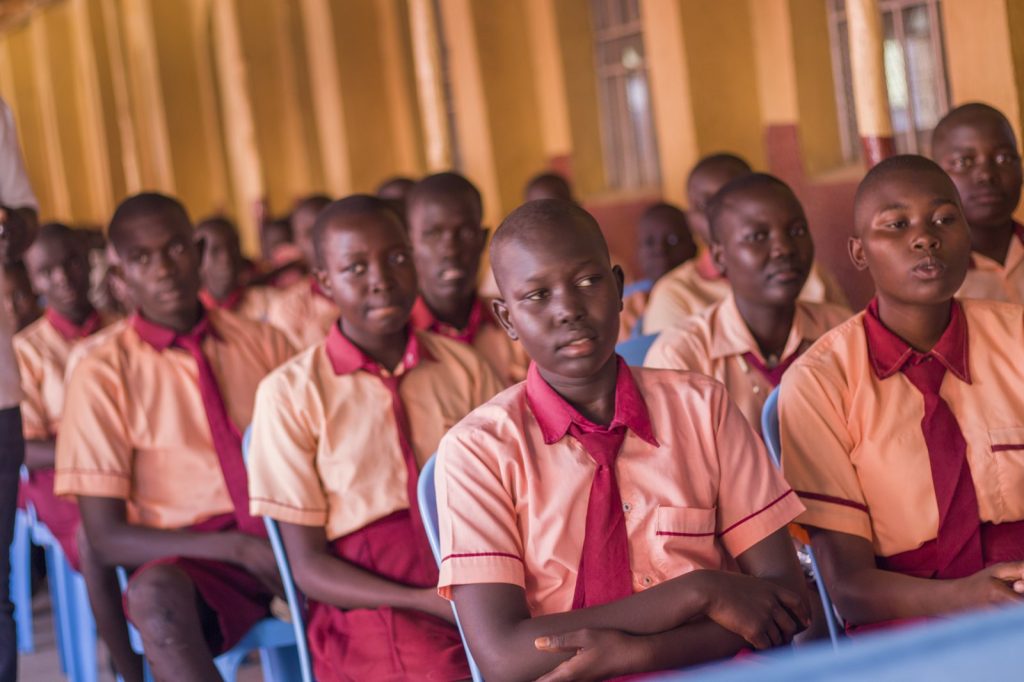
They will sit at home, not in classrooms. For two weeks, starting now, every school in South Sudan is locked. The reason is simple: heat.
The government announced the closure on February 21, 2025, because temperatures are expected to hit 108 degrees Fahrenheit. That is hot enough to kill.
The Republic of South Sudan is a landlocked country in East Africa. Its landscape runs from plains to tropical savannahs to forested mountains. The Nile River system cuts through the center, south to north.
That geography can trap heat. It can magnify it.
Now, it has produced a heat wave the government decided it could not ignore. Dr. Matthew Tut, a health expert in Juba, made the stakes plain. “Heat-related illnesses can be devastating, especially for children,” he said.
“It is our duty to protect them from these risks.” He did not mince words. Heat exhaustion and heat stroke are the real dangers. For young people, those conditions can turn fatal fast.
A child dehydrated in a classroom with no air conditioning, under a tin roof, in 108-degree heat — that is a medical emergency waiting to happen. The government is calling this a proactive measure.
That is a careful way to put it. They are closing schools before children collapse, not after. The two-week window gives officials time to assess the situation.
It also gives them time to figure out what comes next. Because the heat wave is not over.
It is arriving. South Sudan has an estimated population of over 12.7 million people, as of 2024. A large chunk of that population is young.
School-age children are everywhere. Closing every school in the country is not a small decision. It disrupts learning.
It disrupts routines. It disrupts the lives of parents who now have to figure out childcare.
But the alternative — sending kids into buildings that turn into ovens — is worse. The capital, Juba, is expected to be hit hard. The city sits on the White Nile.
It is low-lying. It traps heat.
When the temperature climbs to 108, the streets empty. The shade offers little relief. The government is betting that empty classrooms are better than full hospital wards.
This is not the first time South Sudan has faced extreme weather. The country is used to dramatic temperature swings. But a nationwide school closure is a different response.
It signals that this heat wave is not routine. It is a threat.
And the government is treating it as one. Dr. Tut said the health and safety of children is of utmost importance. That is the official line.
But the subtext is grimmer: the heat wave is dangerous enough that the government felt it had no other choice. They did not issue warnings.
They did not recommend precautions. They shut the schools. The closure lasts two weeks.
That is time. Time for the heat to break. Time for the government to plan.
Time for families to adapt. But two weeks in a country with limited resources, limited infrastructure, and a population of over 12.7 million people is not a long time.
If the heat wave stretches on, the decision to close schools may be just the beginning.




